- 330-505-6800
- Info@alifeprotector.com
- 11 North Main St , Niles Ohio 44446.
A fireplace that looks fine from the living room can still have a ventilation problem above the firebox or inside the chimney. This fireplace ventilation guide explains what has to happen for smoke, gases, and moisture to leave your home safely – and what to do when the system is not working as it should.
For homeowners in northeastern Ohio and western Pennsylvania, ventilation deserves special attention before heating season. Cold temperatures, heavy rain, freeze-thaw damage, and tightly sealed homes can all affect how a fireplace or wood stove drafts. A little smoke when lighting a fire may be manageable. Persistent smoke, odors, soot, or a carbon monoxide alarm are reasons to stop using the appliance and have it professionally evaluated.
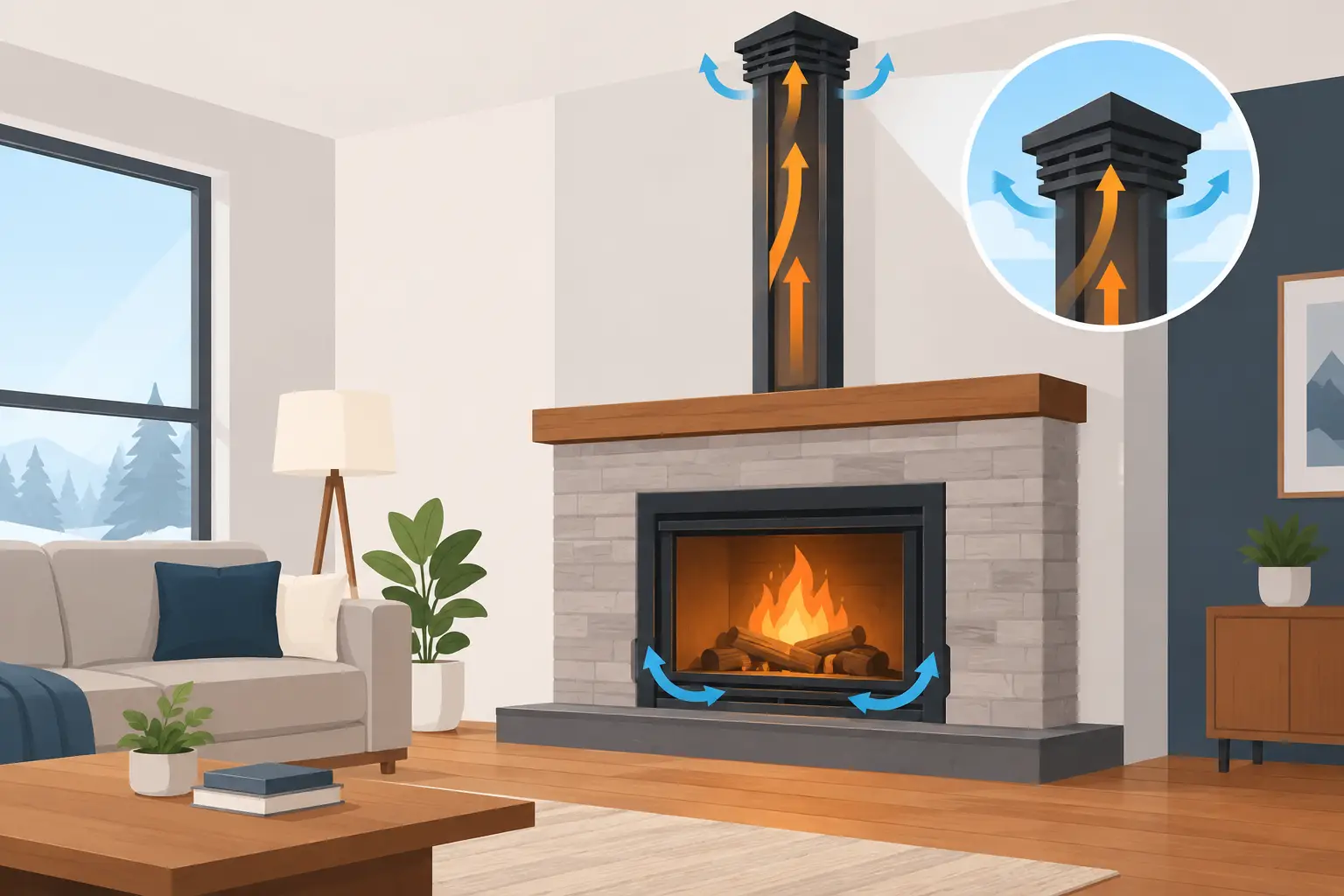
Wood-burning fireplaces, inserts, stoves, and many gas appliances need a dependable path to move combustion byproducts outdoors. In a traditional masonry fireplace, warm smoke rises through the firebox, past the damper, into the flue, and out the chimney. The flue is the passage inside the chimney that carries heat, smoke, and gases away from the house.
That upward movement is called draft. Draft depends on the difference between warm air in the flue and cooler outdoor air. It also depends on a clear, properly sized chimney, an open damper, adequate combustion air, and a chimney that is in sound condition.
Ventilation is not simply about whether smoke eventually goes outdoors. A properly functioning system should establish draft without sending smoke into the room, should vent gases reliably throughout the burn, and should not allow excessive heat or moisture to damage the chimney structure. When one part of the system is compromised, the effects can show up somewhere else.
The damper is often the first item homeowners check, and for good reason. A closed or partly closed damper restricts the chimney immediately. Before lighting a wood-burning fireplace, confirm that the damper is fully open. If the handle is hard to operate, the damper does not open fully, or you cannot tell its position, do not force it. Corrosion, broken components, and accumulated debris can all interfere with its operation.
The flue has an equally important job. Creosote, soot, animal nests, leaves, damaged liner sections, and fallen masonry can narrow or block the passage. A chimney may look acceptable from the roofline while the interior flue has serious deterioration. This is one reason routine sweeping and a Level 1 chimney inspection are practical safety measures, not optional housekeeping.
The chimney cap and exterior masonry also support ventilation. A properly fitted cap helps keep out rain, nesting animals, and wind-driven debris. A cracked crown, damaged flashing, missing mortar, or loose brick can allow water into the chimney. Over time, moisture can damage liners and masonry, creating obstructions or air leaks that change how the system drafts.
For wood stove inserts, the liner deserves special attention. Many older fireplaces were converted to inserts without a properly sized, continuous liner. A correctly selected and installed liner helps contain combustion products, improves draft, and protects the original chimney from heat and corrosive byproducts. Whether a liner is needed depends on the appliance, the existing flue, the manufacturer requirements, and local code conditions.
A fireplace does not need to fill the room with smoke to signal a ventilation issue. Some problems begin quietly and become more noticeable as the season continues. Watch for these changes:
If a carbon monoxide alarm sounds, get people and pets into fresh air, contact emergency services as appropriate, and do not use the fireplace or stove again until the cause has been identified. Carbon monoxide has no color or odor. It is not something to troubleshoot by trial and error.
A cold flue is one common cause, especially at the beginning of a fire. Cold air can settle in the chimney and resist the upward flow of smoke. Opening the damper fully and starting with dry kindling and a small, hot fire can help establish draft. Burning seasoned firewood is also essential. Wet wood produces more smoke, more creosote, and less heat to warm the flue.
However, not every draft issue is solved by better fire-starting technique. Exhaust fans, clothes dryers, range hoods, and high-efficiency HVAC equipment can pull air out of a tightly sealed home. If the house is under negative pressure, the chimney may struggle to pull smoke upward. In some cases, cracking a nearby window briefly helps confirm that makeup air is part of the problem. It is a clue, not a permanent repair plan.
Wind conditions can also matter. Nearby trees, rooflines, additions, or a chimney that is too short can create turbulence around the chimney top. This may push air down the flue or weaken draft. A qualified chimney professional can assess the overall system rather than assuming a new cap will solve every windy-day problem.
Start with safe operating habits. Use only dry, seasoned firewood in wood-burning appliances, open the damper fully before lighting, and keep fireplace doors open or closed according to the appliance design and manufacturer instructions. Never burn trash, treated lumber, cardboard boxes with coatings, or construction scraps. These materials can create damaging deposits and harmful fumes.
Keep the area around the hearth clear, and make sure smoke and carbon monoxide alarms are working. Alarms are a critical backup, but they do not replace inspection, cleaning, or repair. They warn occupants after a problem has developed.
It is also wise to pay attention to patterns. Does smoke occur only on damp days? Does the fireplace smell after rainfall? Did performance change after a roof replacement, new windows, a kitchen exhaust upgrade, or storm damage? Those details help a chimney technician narrow down the cause quickly and make a recommendation that fits the condition of your home.
Avoid reaching into the flue, climbing onto the roof, or attempting to remove a suspected blockage yourself. Chimneys involve fall hazards, hidden structural damage, and contamination from soot or creosote. A camera inspection may be needed to see the full condition of the liner and interior masonry.
A chimney sweeping can restore airflow when soot, creosote, or light debris is the main restriction. It is an essential service for fireplaces and stoves that are used regularly. But cleaning does not repair a cracked liner, failed crown, loose brick, damaged flashing, or an improperly sized venting system.
A Level 1 inspection is a sensible starting point for routine annual maintenance and for a system that has no known problems. If there are performance concerns, a suspected blockage, water damage, a change in appliance, or a long period of disuse, the inspection may need to go further. The right scope depends on what is found and how the appliance is being used.
Honest recommendations matter here. Some chimneys need a targeted repair, such as a cap replacement, crown repair, repointing, or liner work. Others may only need cleaning and continued monitoring. Chimney Sweeps and Masonry of America evaluates the whole chimney and hearth system so homeowners can make informed decisions without treating every issue as a full replacement.
Gas fireplaces often produce less visible residue than wood-burning systems, but they still require professional care. Direct-vent models use a sealed venting arrangement, while other gas units may vent through a chimney or use a different approved system. Blocked terminations, damaged vent connections, burner issues, and improper flame characteristics can affect safe operation.
Do not assume that a gas fireplace is maintenance-free because it does not create wood ash. Annual cleaning and inspection can identify dust buildup, failing components, venting concerns, and signs of moisture or animal intrusion before they disrupt performance.
A well-vented fireplace should provide comfort without making you wonder whether the air in your home is safe. If your system is smoky, drafty, damaged, or overdue for service, schedule a professional assessment before your next fire and enjoy the season with greater confidence.
We are a member of The National Chimney Guild. Certified Chimney Professional