- 330-505-6800
- Info@alifeprotector.com
- 11 North Main St , Niles Ohio 44446.
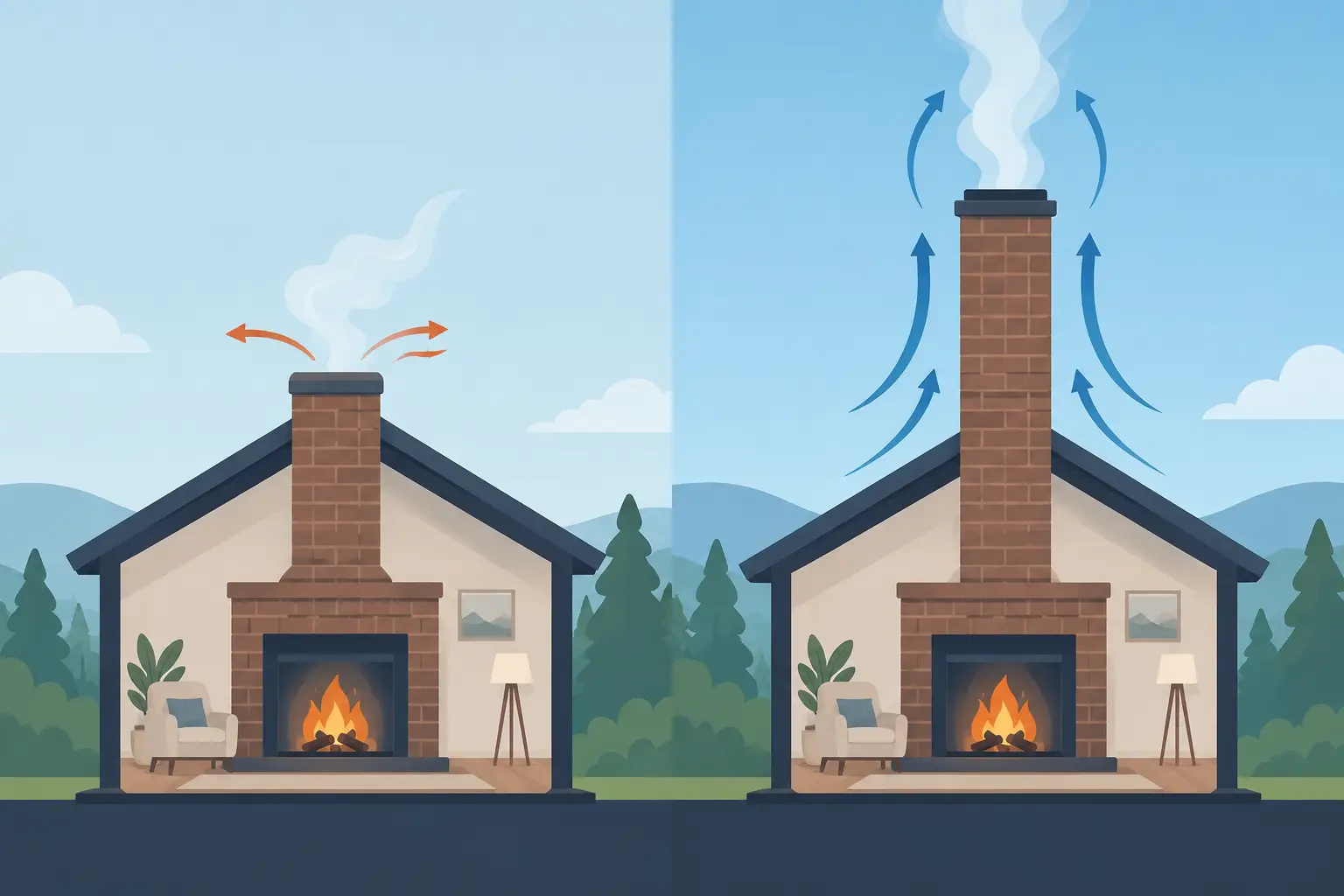
A fireplace that sends smoke into the room, burns poorly, or gives off a persistent odor may have a chimney height draft problem. The chimney is not simply an exhaust pipe. Its height, location, condition, and relationship to the roof all affect whether combustion gases move safely out of the home. For homeowners in northeastern Ohio and western Pennsylvania, where cold weather puts fireplaces and wood stoves to regular use, proper draft is a safety and comfort issue.
Chimney draft is the upward pull that carries smoke, gases, and combustion byproducts from the firebox to the outdoors. It occurs because the warm gases inside the flue are lighter than the colder air outside. As those gases rise, they create a pressure difference that draws more air into the appliance and supports continued combustion.
Height gives that rising column of warm air more distance to develop momentum. In general, a taller chimney can produce a stronger draft than a shorter chimney with the same flue size and temperature. That does not mean adding height is automatically the answer to every smoking fireplace. A chimney that is too tall for its flue or appliance can draft excessively, sending heat up and out of the house faster than intended.
The goal is balanced performance. The system should move exhaust reliably without pulling so much conditioned air from the home that heating efficiency suffers. A qualified chimney professional evaluates the complete system rather than treating height as an isolated number.
Roof design often determines whether a chimney has clear access to moving outdoor air. Wind flowing over a roof can create areas of positive pressure, negative pressure, and turbulence. If a chimney terminates too low beside a taller roof section, ridge, dormer, or nearby structure, wind may push down the flue instead of allowing exhaust to rise.
A common residential guideline is often called the 3-2-10 rule. It generally requires a chimney to extend at least 3 feet above the point where it passes through the roof and at least 2 feet higher than anything within 10 feet horizontally. Local codes, appliance instructions, roof configuration, and fuel type can create additional requirements, so this rule should not be used as a substitute for a site-specific assessment.
A chimney on the lower side of a steep roof, for example, may need more consideration than one that exits near a simple roof ridge. Tall trees, adjacent homes, additions, and multi-level rooflines can also alter wind conditions. A cap or termination installed at the wrong height may look finished from the ground while still leaving the system vulnerable to downdrafts.
Cold outdoor temperatures usually improve natural draft once the flue is warm. Yet winter also exposes problems that remain hidden during mild weather. A cold masonry chimney can act like a large heat sink, cooling smoke before it reaches the top. Starting a fire in a cold flue may briefly reverse the airflow, allowing smoke to spill into the room.
Windy days can make the problem more noticeable, especially when gusts strike a roofline or chimney top from a certain direction. If your fireplace works well on calm days but smokes during wind, chimney height, cap design, or roof-related turbulence may be involved.
A chimney extension is not a cure for every draft complaint. Several common conditions can reduce draft or cause smoke spillage, and addressing the wrong one can lead to unnecessary work.
A dirty flue is one possibility. Soot, creosote, animal nesting material, fallen masonry, or a damaged liner can restrict the path for exhaust. Regular chimney sweeping and a Level 1 inspection help identify these concerns before the heating season.
The flue size also matters. An oversized flue may allow gases to cool too quickly, while an undersized flue can restrict exhaust flow. This is particularly relevant when a fireplace has been converted, when a wood stove insert has been installed, or when an older chimney serves a newer appliance. A properly sized liner can improve safety and performance, but liner decisions should be based on the appliance, chimney dimensions, and manufacturer requirements.
House pressure can be another factor. Exhaust fans, bathroom fans, clothes dryers, range hoods, and tightly sealed replacement windows can pull air out of the home. When the house needs replacement air, it may draw air down the chimney. Opening a nearby window slightly can sometimes help diagnose this condition, but it is not a permanent safety solution.
Fuel and fire-building habits also influence results. Wet firewood burns cooler and creates more smoke. A fire built with too little kindling or insufficient air may smolder instead of establishing the hot flue temperatures needed for reliable draft. For wood-burning equipment, seasoned wood and proper operation are part of responsible chimney care.
An occasional puff of smoke when lighting a cold fireplace does not always mean the chimney is defective. Repeated symptoms, however, deserve professional attention. Watch for smoke entering the living area after the fire is established, a strong smoky odor when the fireplace is not in use, difficulty keeping a wood fire burning, stains above the fireplace opening, or rattling and noise from wind at the chimney top.
Outdoor signs matter as well. Cracked crowns, loose bricks, deteriorated mortar joints, damaged flashing, and missing or poorly fitted caps can affect both chimney longevity and draft performance. Water intrusion can weaken masonry, damage liners, and accelerate the deterioration that eventually changes how the chimney functions.
A chimney that appears too short relative to a remodel, new roof, roof addition, or nearby building should also be reviewed. Changes around the chimney can alter airflow even when the chimney itself has not changed.
A dependable evaluation begins with the appliance and ends at the chimney termination. The technician should look at the firebox or stove connection, damper operation, flue condition, liner sizing, visible obstructions, cap condition, masonry stability, and clearance above the roof.
For a masonry chimney, the exterior should be checked for crown damage, failed mortar, leaning sections, and flashing problems. These repairs are not merely cosmetic. A crown that admits water or loose masonry near the top can compromise the chimney’s structure and create hazards over time.
If height is contributing to poor performance, a professional may recommend a properly engineered extension, a different approved cap, liner work, or repairs that restore the flue to safe operating condition. The best option depends on the existing chimney, the appliance it serves, local requirements, and the source of the draft problem. Honest recommendations should explain what is causing the issue and why a particular repair is warranted.
Homeowners sometimes try to solve a draft problem by removing the cap, blocking room vents, burning hotter fires, or adding an unapproved pipe section to the top of a chimney. These measures can introduce fire, carbon monoxide, water intrusion, or structural risks.
A chimney cap is especially easy to misunderstand. The right cap helps keep out rain, debris, and animals while allowing exhaust to leave the flue. A damaged, undersized, or poorly designed cap may interfere with draft, but removing it altogether is rarely the responsible answer. The solution is selecting and installing the correct termination for the system.
Do not ignore carbon monoxide alarms when diagnosing a draft concern. Working alarms should be installed and maintained according to manufacturer instructions, but they are not a substitute for correcting a chimney that is spilling combustion gases into the home.
Chimney Sweeps and Masonry of America can inspect the full chimney and hearth system, explain the findings in clear terms, and recommend repair only when it supports safety, reliable operation, or long-term preservation. If smoke, wind, or a recent roofing change has affected how your fireplace performs, scheduling an evaluation before regular winter use can help protect both your home and the people in it.
We are a member of The National Chimney Guild. Certified Chimney Professional