- 330-505-6800
- Info@alifeprotector.com
- 11 North Main St , Niles Ohio 44446.

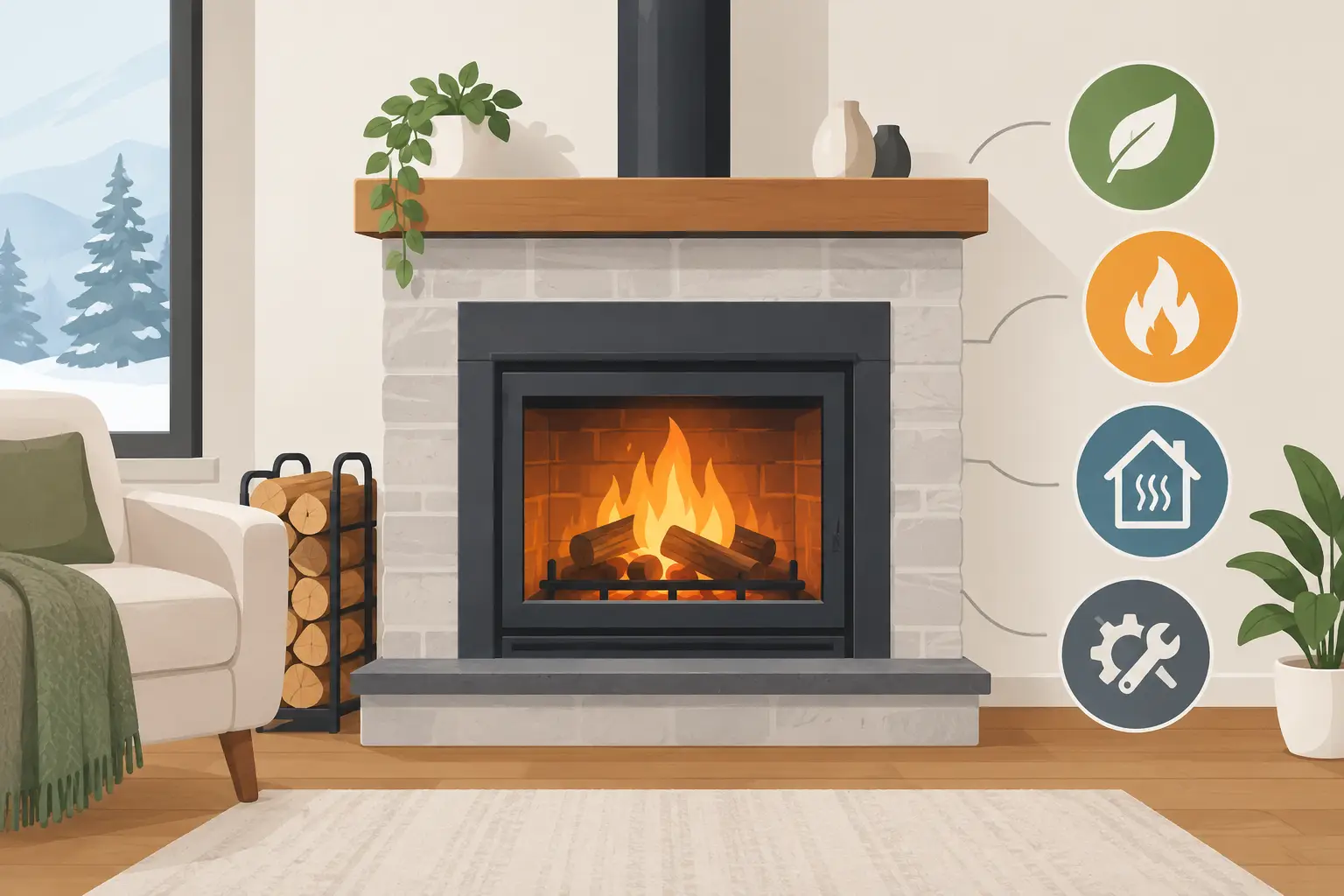
A fireplace should feel warm and dependable, not leave the living room chilly while sending expensive heated air up the chimney. Knowing how to improve fireplace efficiency starts with an honest look at the type of appliance you own. An open wood-burning fireplace creates atmosphere, but it is not designed to heat a whole home efficiently. With sound burning habits, proper maintenance, and the right upgrades, it can perform better and waste less energy.
For homeowners in northeastern Ohio and western Pennsylvania, this matters most during long heating seasons. Cold outdoor temperatures, older masonry chimneys, and air leaks around the fireplace can all affect comfort, fuel use, and safety.
Not every fireplace has the same efficiency potential. A traditional open masonry fireplace draws air from the room to feed the fire. Much of the heat rises with the smoke, and the chimney can continue pulling warm household air outdoors after the fire is out. Improving its performance is worthwhile, but there are limits.
A factory-built fireplace, gas fireplace, wood stove, or wood-burning insert works differently. Many of these systems are designed to deliver more usable heat into the room, especially when they are properly installed and maintained. Before investing in upgrades, identify whether your unit is an open fireplace, an insert, a stove, or a gas appliance. The right recommendation depends on that answer.
The simplest improvements usually begin before the match is lit. Burn only dry, seasoned firewood with a moisture content of about 20 percent or less. Wet or unseasoned wood spends much of its energy boiling off water. It produces more smoke, creates more creosote in the chimney, and provides less heat for the amount of wood burned.
Use appropriately sized splits rather than oversized logs, and build fires that establish a clean, hot flame quickly. A top-down fire lay can help: larger logs go on the bottom, followed by smaller wood and kindling, with the fire started at the top. This approach allows the fire to burn more cleanly as it moves downward.
Avoid burning painted wood, construction scraps, cardboard, trash, or treated lumber. These materials can release harmful chemicals, create excessive ash, and contribute to damaging deposits in the chimney. A hotter fire is not always a better fire if it is fueled by the wrong material.
Keep the damper fully open while a wood fire is burning. Closing it too soon can force smoke and carbon monoxide into the home. Once the fire is completely out and ashes are cool, close the damper to reduce heat loss. If your damper does not seal well, it may be worth having it evaluated rather than forcing it closed.
A fireplace can act like an open window when it is not in use. If you feel a cold draft near the hearth, notice odors coming down the chimney, or see movement in nearby curtains, air leakage may be affecting your comfort.
A top-sealing chimney damper is one option for masonry fireplaces. Unlike a throat damper located above the firebox, a top-sealing damper closes near the top of the flue and can create a tighter barrier against cold air, rain, animals, and debris. It is not right for every chimney, but it can make a noticeable difference for a fireplace that is rarely used or has a worn throat damper.
Glass fireplace doors can also reduce room-air loss when the fireplace is not operating. They should be installed and used according to the manufacturer’s instructions. With a traditional wood-burning fireplace, doors are commonly opened while the fire is actively burning unless the door system is specifically rated for closed-door operation. Blocking needed combustion air is not an efficiency fix.
Outside-air kits may help certain fireplaces and inserts by supplying combustion air from outdoors instead of drawing as much conditioned air from the room. Their value depends on the appliance, the home’s construction, and local installation requirements.
Efficiency and maintenance go together. Soot, creosote, nesting material, damaged flue tiles, or a partial blockage can interfere with draft. When the chimney does not draft correctly, fires may burn poorly, smoke may spill into the room, and the appliance may not deliver the heat you expect.
A yearly Level 1 chimney inspection is a practical starting point for regularly used fireplaces, stoves, and inserts. It allows a qualified professional to check accessible portions of the chimney and venting system, look for visible damage, and identify cleaning needs. Sweeping removes combustible creosote and soot that can restrict the flue and increase chimney-fire risk.
Water protection matters just as much. Damaged crowns, missing chimney caps, deteriorated mortar joints, and failed flashing allow moisture into the masonry system. Over time, water can weaken brick and mortar, rust metal components, damage dampers, and shorten the life of liners and fireplace parts. A chimney that stays structurally sound is more likely to vent as intended.
If your goal is to use wood as a real supplemental heat source, a wood stove insert is often the most significant upgrade for an existing open fireplace. An insert fits into the firebox and uses a controlled combustion system to send more heat into the room. Many models also use a blower to circulate warm air more effectively.
Proper installation is essential. In many situations, an appropriately sized stainless steel liner is installed from the insert to the top of the chimney. The liner helps match the flue to the appliance, improves draft, and provides a more direct path for exhaust. Whether a liner is needed depends on the existing chimney, appliance requirements, condition of the flue, and applicable code.
An insert is not automatically the best choice for every household. It requires an upfront investment, regular ash removal, dry wood storage, and routine service. For homeowners who mainly want occasional ambiance, maintaining the existing fireplace and reducing air leakage may be the more sensible path. For those who want dependable zone heating, an insert can be a worthwhile long-term improvement.
Gas fireplaces need attention too. They may be convenient and efficient, but dirty burners, worn ignition components, damaged logs, venting problems, or a failing blower can affect performance. A gas fireplace should produce a stable flame pattern and operate without unusual odors, soot buildup, delayed ignition, or repeated shutdowns.
Annual professional cleaning and inspection can help keep the appliance operating safely and efficiently. Technicians can clean the burner area, inspect the pilot and ignition system, check accessible venting components, and identify parts that need repair. Never alter gas logs, burner components, or venting yourself in an effort to increase heat output.
A fireplace works within the larger house, so a few home-efficiency measures can make its heat feel more useful. Weatherstripping nearby doors, sealing obvious gaps around windows, and using ceiling fans on a low winter setting can help distribute warmth through the room. Closing doors to unused rooms may also help a supplemental heating source serve the space where people actually gather.
Be careful with fans and HVAC returns near an open fireplace. Strong air movement can disrupt draft and pull smoke into the living area. If your fireplace smokes only when the furnace, kitchen exhaust fan, bathroom fan, or clothes dryer is running, the home may be experiencing negative pressure. That is a safety issue worth evaluating, not something to solve by simply opening a window every time you build a fire.
Poor efficiency sometimes points to a larger issue. Smoke entering the room, persistent odors, black staining above the firebox, excessive creosote, crumbling mortar, water leaks, or a damper that will not operate properly all deserve professional attention. Do not continue using a fireplace that shows signs of a damaged flue or unreliable draft.
Carbon monoxide alarms should be installed and maintained according to manufacturer instructions and local requirements. They are especially important in homes with fuel-burning appliances, but an alarm is not a substitute for proper inspection, cleaning, and repair.
Chimney Sweeps and Masonry of America helps property owners assess the complete system, from the firebox and flue to the cap, crown, flashing, and masonry. A clear inspection can separate a simple maintenance need from a repair or upgrade that will genuinely improve performance.
A more efficient fireplace is usually the result of several practical decisions: burn dry fuel, protect the chimney from water, maintain clear venting, control air loss when the fireplace is idle, and choose an insert or repair only when it fits your goals. A well-cared-for hearth provides more than warmth. It gives your family a safer, more comfortable place to gather when the weather turns cold.
We are a member of The National Chimney Guild. Certified Chimney Professional
 Optimized by Seraphinite Accelerator