- 330-505-6800
- Info@alifeprotector.com
- 11 North Main St , Niles Ohio 44446.
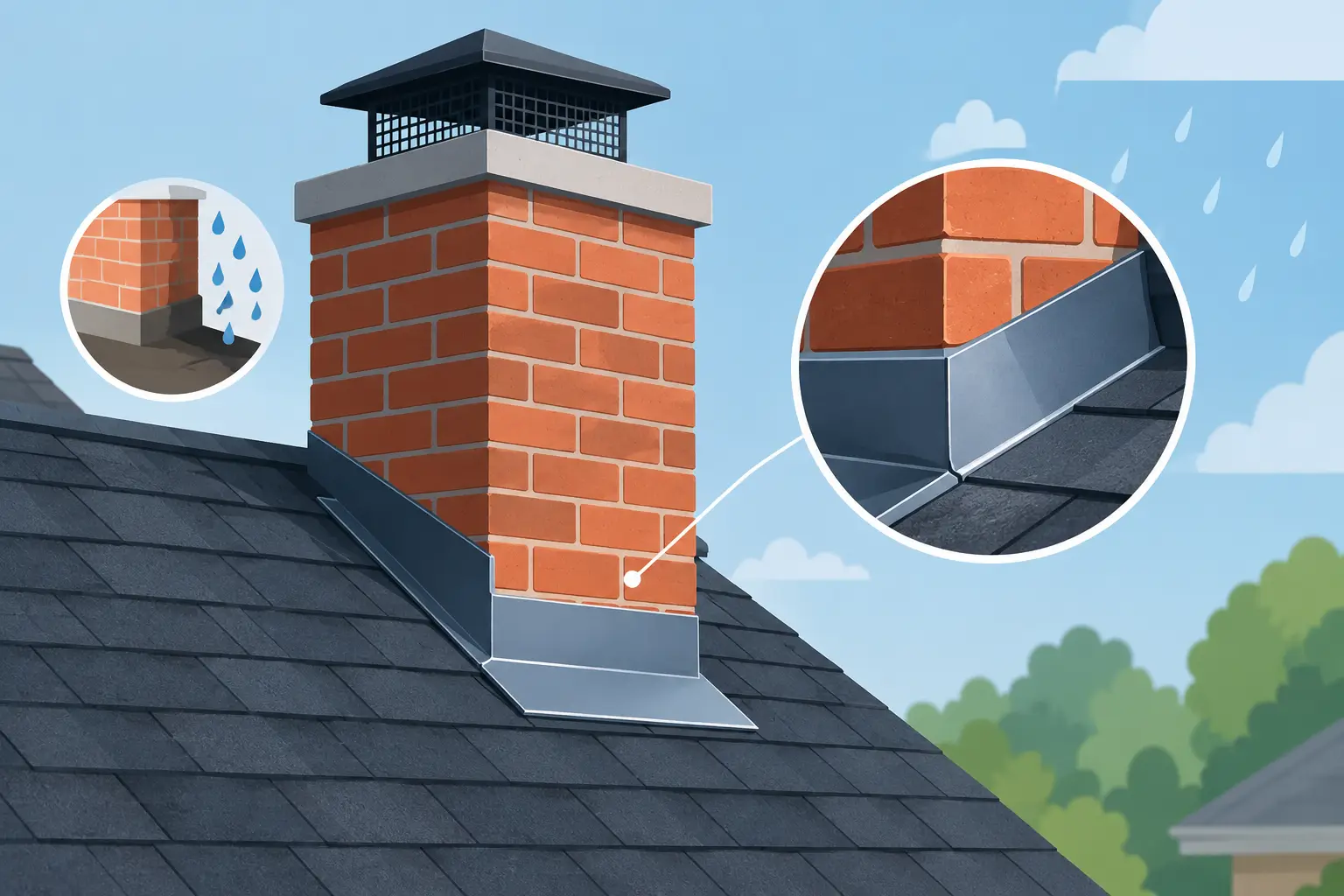
A chimney leak often shows up far from the actual problem. You may notice a brown ceiling stain near the fireplace, damp masonry in the attic, peeling paint, or a musty odor after a hard rain. So, does flashing stop chimney leaks? It can, when water is entering at the joint where the chimney meets the roof. But flashing is only one part of a chimney’s weather-defense system.
For homeowners in northeastern Ohio and western Pennsylvania, that distinction matters. Freeze-thaw cycles, wind-driven rain, snow buildup, and older masonry can create more than one route for water to enter. A reliable repair starts with identifying the source rather than applying sealant where the water happens to appear.
Flashing is the metal barrier installed where the roof surface meets the chimney. Because that intersection is vulnerable to moving water, properly installed flashing directs rain and melting snow away from the chimney and onto the roof.
When flashing has pulled loose, rusted through, cracked, or was installed incorrectly, water can slip behind it and enter the roof structure. In that situation, repairing or replacing the flashing can stop the leak and protect the sheathing, framing, insulation, and interior finishes below.
However, flashing cannot solve every chimney leak. If water is entering through a broken crown, missing cap, open mortar joints, cracked bricks, or a failed roof covering farther uphill, new flashing alone will not provide a lasting answer. It may reduce one source of water while the real issue continues to damage the chimney.
That is why a qualified chimney assessment should look at the complete system: the roof-to-chimney connection, the chimney top, the masonry, and the interior where moisture may be visible.
A proper flashing system usually includes more than a strip of metal pressed against brick. The lower section, often called base or step flashing, works with the roof shingles to guide water downslope. Counterflashing is set into the chimney mortar joints or otherwise secured over the upper edge of the base flashing. This layered approach keeps water from working behind the metal.
On many homes, the chimney’s uphill side also needs a cricket, sometimes called a saddle. This small peaked structure diverts water, leaves, and snow around wider chimneys instead of allowing debris to collect against the back wall. Without it, standing moisture and ice can put extra stress on both the flashing and the masonry.
Flashing must fit the roof pitch, chimney shape, roofing material, and drainage pattern. A quick patch with roofing cement may slow a leak temporarily, but it is rarely a substitute for correctly integrated metal flashing. Caulk can dry out, split, or pull away as temperatures change, especially through Ohio winters.
Water near a chimney does not automatically mean the flashing has failed, but certain signs point strongly in that direction. You may see lifted or bent metal, gaps between the flashing and the brick, exposed fasteners, rust stains, dried or cracked sealant, or shingles that are damaged along the chimney edges.
Inside the home, staining or dampness that worsens after heavy rain can also suggest a roof or flashing issue. If the problem is most noticeable after snow melts, water may be collecting on the uphill side of the chimney or finding an opening under deteriorated flashing.
Do not assume a visible gap is the only concern. Water can travel along framing or roofing materials before it reaches a ceiling. The stain in your living room may be several feet from the point where water entered. A hands-on inspection is more dependable than diagnosing the leak from the interior stain alone.
The crown is the sloped concrete or masonry surface at the top of the chimney. Its job is to shed water away from the flue and chimney walls. Cracks in the crown let moisture soak into the structure, where freezing temperatures can make small damage much worse.
A sound crown should extend past the chimney walls and direct water outward. Simply brushing sealant over a severely cracked crown may not address deeper deterioration or improper slope.
A chimney cap covers the flue opening while allowing smoke and combustion gases to vent. It helps keep rain, snow, leaves, nesting materials, and animals out of the flue. A missing cap can allow a surprising amount of water into the chimney, especially during repeated storms.
A cap does not replace flashing, and flashing does not replace a cap. Both protect different vulnerable areas of the system.
Brick masonry is durable, but it is not maintenance-free. Mortar joints can wear away, brick faces can spall, and previous repairs can fail. Once masonry absorbs water, freezing and thawing can widen cracks and loosen more material over time.
Repointing, masonry repair, and appropriate waterproofing may be needed when water is entering through the chimney walls. A breathable masonry treatment can help reduce absorption after repairs are completed, but it should never be used to hide structural defects.
Worn shingles, damaged valleys, blocked gutters, ice dams, or roof penetrations above the chimney can send water toward the same area. In these cases, the chimney may look guilty even though the roof is the source. A thorough evaluation helps prevent paying for chimney work that will not solve the problem.
Water intrusion is not only a cosmetic concern. Damp masonry can deteriorate faster, and wet framing can lead to rot, mold growth, and costly interior repairs. Moisture inside a chimney can also affect liners, dampers, firebox components, and other parts of the venting system.
For homes that use a fireplace, wood stove, or gas appliance, water damage can become a safety and performance issue. Masonry movement may create gaps, a damaged flue system may need closer evaluation, and debris or moisture can interfere with normal operation. If a leak appears around an actively used chimney, it is wise to have the chimney and venting components checked before the heating season.
This is also where honest recommendations matter. Not every leaking chimney needs a complete rebuild. Some need a focused flashing repair. Others need crown work, repointing, a cap, or coordination with a roofing professional. The right repair is based on the actual condition of the system, not a one-size-fits-all solution.
The best repair method depends on the chimney and roof. Loose sections may be re-secured if the metal remains sound and the underlying installation is correct. Rusted, undersized, or improperly layered flashing generally requires replacement.
During a quality repair, the contractor should assess the condition of the surrounding shingles and roof deck, remove failed materials as needed, and install flashing that works with the roof’s drainage pattern. Counterflashing should be properly attached to the chimney rather than relying only on exposed sealant. If masonry joints are too deteriorated to hold flashing securely, masonry repair may need to come first.
A final check should also include the crown, cap, mortar joints, and the uphill side of the chimney. Addressing these items together can prevent a return visit for another leak that was present from the beginning.
Schedule a professional inspection if you see fresh water stains, smell dampness near the fireplace, notice crumbling mortar, find rust on metal chimney components, or see loose flashing from the ground. It is also sensible to schedule service after major windstorms or when preparing an older home for the heating season.
Avoid climbing onto a wet or steep roof to investigate. Chimney leaks are often visible from the roofline, but safe access and close inspection are essential to determining whether the problem is flashing, masonry, the chimney top, or a combination of issues.
Chimney Sweeps and Masonry of America helps property owners throughout Trumbull, Mahoning, and Mercer counties evaluate chimney water problems with clear, practical recommendations. A repair that protects both the roof connection and the chimney structure can preserve your home for years to come.
If rain has started leaving its mark indoors, do not wait for another freeze-thaw season to make the damage larger. A careful inspection can turn an uncertain leak into a clear repair plan and help keep your chimney dry, safe, and ready for the weather ahead.
We are a member of The National Chimney Guild. Certified Chimney Professional