- 330-505-6800
- Info@alifeprotector.com
- 11 North Main St , Niles Ohio 44446.

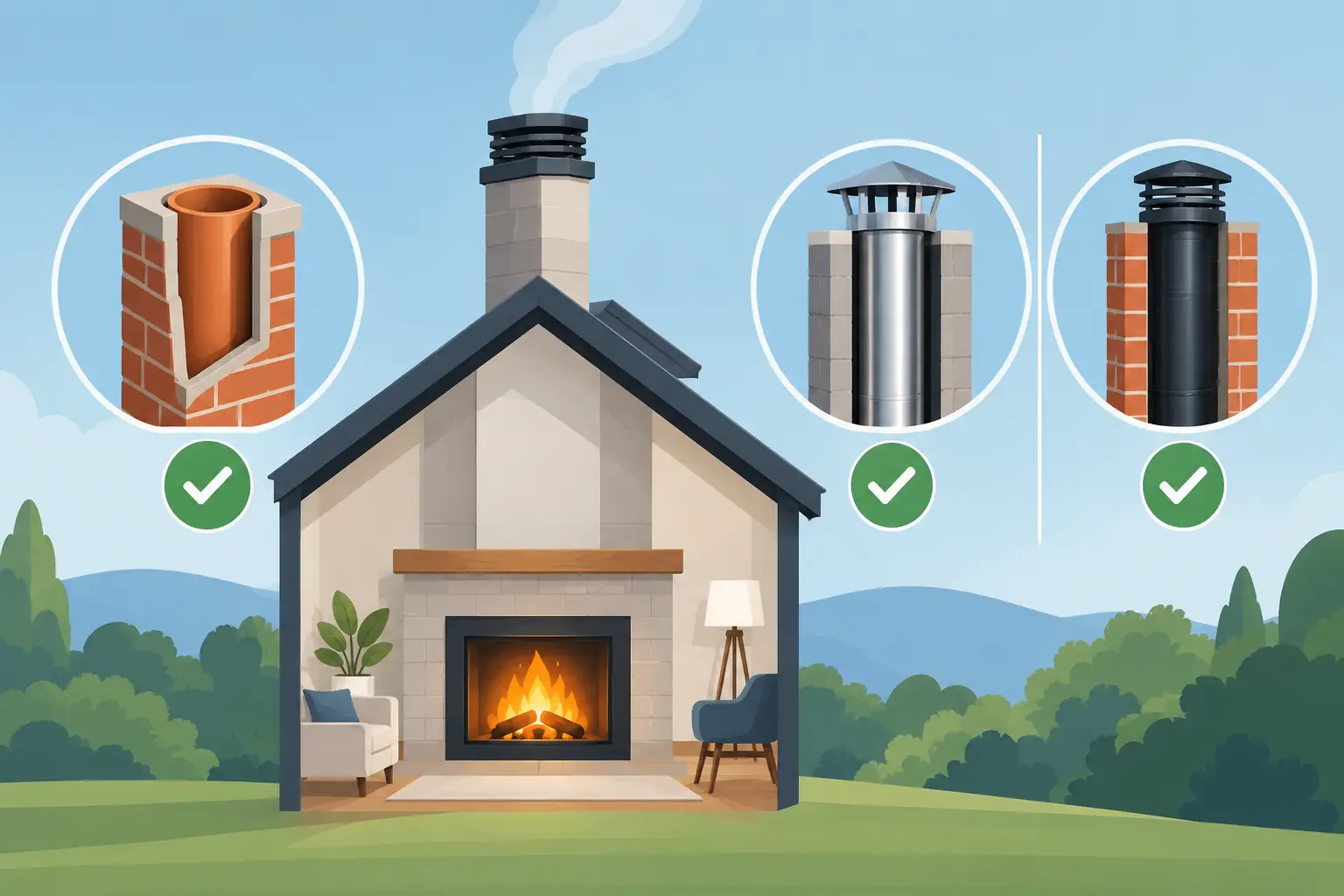
A fireplace can look perfectly normal from the living room while the passage carrying smoke, gases, and heat through the chimney is cracked, undersized, or deteriorating. That is why a chimney flue comparison should start with the appliance you use and the actual condition inside the chimney – not with the least expensive material or a one-size-fits-all recommendation.
For homeowners in Trumbull, Mahoning, and Mercer counties, the right flue can improve draft, protect surrounding masonry, and support safer operation through long Ohio winters. The wrong choice may contribute to smoke backup, condensation damage, carbon monoxide concerns, or premature failure of the liner itself.
The flue is the protected channel inside a chimney that directs combustion byproducts outdoors. It also separates high heat and corrosive gases from the chimney’s brick, mortar, framing, and other nearby materials. A flue is not simply a pipe dropped into a chimney. Its material, diameter, insulation, connection method, and termination all affect performance.
A properly selected flue needs to match the appliance’s fuel type and manufacturer requirements. It must be sized correctly so the appliance can draft as intended, while avoiding an oversized passage that allows exhaust to cool too quickly. It must also be installed in a chimney structure that is sound enough to support the system.
This is why a visual look at the top of the chimney is not enough to make a decision. A Level 1 chimney inspection can identify obvious conditions in accessible areas, but suspected liner damage, hidden offsets, or major performance issues may call for a more detailed evaluation before recommending repair or replacement.
Clay tile liners are common in traditional masonry chimneys throughout northeastern Ohio and western Pennsylvania. They are formed from fired clay sections stacked inside the chimney as it is built. When intact and properly installed, clay tile can provide many years of service, particularly with wood-burning fireplaces.
The advantage of clay is durability at high temperatures and its long history in masonry construction. It is also a familiar solution in many older homes. However, clay tiles can crack from chimney fires, freeze-thaw movement, settling, moisture exposure, or years of heating and cooling. Mortar joints between tiles may fail as well.
Repairing a damaged clay liner is not always straightforward. Replacing individual tiles inside an existing chimney can require significant demolition, depending on access and the extent of damage. Clay liners also do not adapt easily to bends, offsets, or a change from an open fireplace to a modern wood stove insert.
A clay tile flue may still be the right choice when a chimney is being built or reconstructed and the design supports it. For an existing chimney with liner damage, homeowners should compare the scope of masonry work against other approved relining options rather than assuming the entire chimney must be torn down.
Stainless steel liners are often used to reline existing masonry chimneys. They are available in rigid sections and flexible configurations, allowing qualified installers to work through many chimney offsets without removing large sections of brick. For homeowners converting a fireplace to a wood stove insert, stainless steel is frequently part of the conversation.
The major benefit is versatility. A properly selected stainless liner can be sized to the appliance, connected correctly at the top and bottom, and insulated where needed to help maintain flue-gas temperature and draft. It can also shield older masonry from the acidic and moisture-related effects of combustion byproducts.
Still, stainless steel is not one material with one rating. Different grades are designed for different fuels and venting conditions. A liner suitable for a wood-burning appliance may not be the correct specification for oil, pellet, or gas equipment. The appliance manufacturer’s installation instructions and applicable code requirements should guide the choice.
Insulation is another important consideration. In a large exterior chimney, an uninsulated liner can lose heat rapidly, especially during cold weather. That can weaken draft and increase condensation or creosote formation. In other chimneys, clearance and existing construction influence whether insulation is necessary or practical. The best answer depends on the system, not a blanket rule.
Aluminum liners are lighter and often less costly than stainless steel, but they are not a universal substitute. They are generally used only with certain gas-fired appliances that produce relatively low-temperature exhaust and are approved for aluminum venting.
Aluminum should not be used for wood-burning appliances, coal appliances, or applications where the venting environment could cause rapid corrosion or expose the liner to excessive heat. It is also not the right material for every gas appliance. Condensing equipment and modern high-efficiency units may require specialized venting materials based on the manufacturer’s instructions.
When a homeowner changes appliances, an existing aluminum liner should be evaluated again. A liner that worked with an older gas unit may not be compatible with a replacement unit. This is one reason appliance installation and chimney evaluation should be coordinated rather than handled as separate projects.
Cast-in-place liner systems use a cement-like material to create a new passage inside an existing chimney. In some situations, this approach can both restore the flue and help stabilize compromised chimney walls. It may be considered where clay tiles are damaged and the chimney’s interior needs more than a simple metal liner.
The trade-off is that cast-in-place work is specialized and may not be the best fit for every appliance or chimney layout. The finished flue must still be correctly sized for the connected appliance. A chimney that needs extensive crown repair, repointing, flashing work, or rebuilding may also need exterior masonry repairs addressed at the same time.
This option is worth discussing when the chimney has broad internal deterioration, but it should be recommended because it solves a documented problem – not simply because it is a more extensive project.
A useful chimney flue comparison looks at the full heating system. Start with the fuel source: wood, gas, oil, pellet, or another approved appliance type. Then consider the appliance’s venting specifications, the chimney height and route, the flue’s current condition, and whether the chimney is inside the home or exposed along an exterior wall.
For example, an open wood-burning fireplace may have different flue-sizing needs than a wood stove insert. A wood stove insert often performs best with a correctly sized continuous liner running from the appliance to the top of the chimney. Connecting an insert to only part of an oversized existing flue can create draft and maintenance problems.
Gas appliances require equal care. Venting decisions depend on whether the appliance is naturally drafting, direct vent, power vented, or high efficiency. A gas fireplace may not use the masonry chimney in the same way as a traditional wood fireplace, and a professional should verify the appliance’s approved venting path before any liner work begins.
Avoid using a chimney flue for multiple appliances unless the system has been specifically designed and approved for that use. Shared venting can create backdrafting and safety concerns when appliances operate at different times or produce different exhaust conditions.
A new liner cannot correct every chimney problem by itself. Water entering through a damaged crown, missing chimney cap, failed flashing, or open mortar joints can continue to harm the masonry and eventually affect the liner system. Exterior repair and interior venting work often belong in the same plan.
Likewise, cleaning matters. Creosote, animal nesting material, debris, and damaged components can interfere with a clear evaluation of the flue. Regular sweeping and inspection give homeowners a clearer picture of what is happening inside the chimney before a small problem becomes a major repair.
Chimney Sweeps and Masonry of America approaches liner recommendations with the same practical standard used for masonry repair: explain what is found, identify the safety concern, and recommend work that fits the home and appliance. Some chimneys need a full relining project. Others need cleaning, targeted repair, or exterior water protection first.
A flue should quietly do its job every time you use your fireplace, stove, or heating appliance. If you have noticed smoke, odors, poor draft, water damage, crumbling tile, or an upcoming appliance change, schedule a professional chimney evaluation before the heating season puts the system to work.
We are a member of The National Chimney Guild. Certified Chimney Professional
 Optimized by Seraphinite Accelerator