- 330-505-6800
- Info@alifeprotector.com
- 11 North Main St , Niles Ohio 44446.
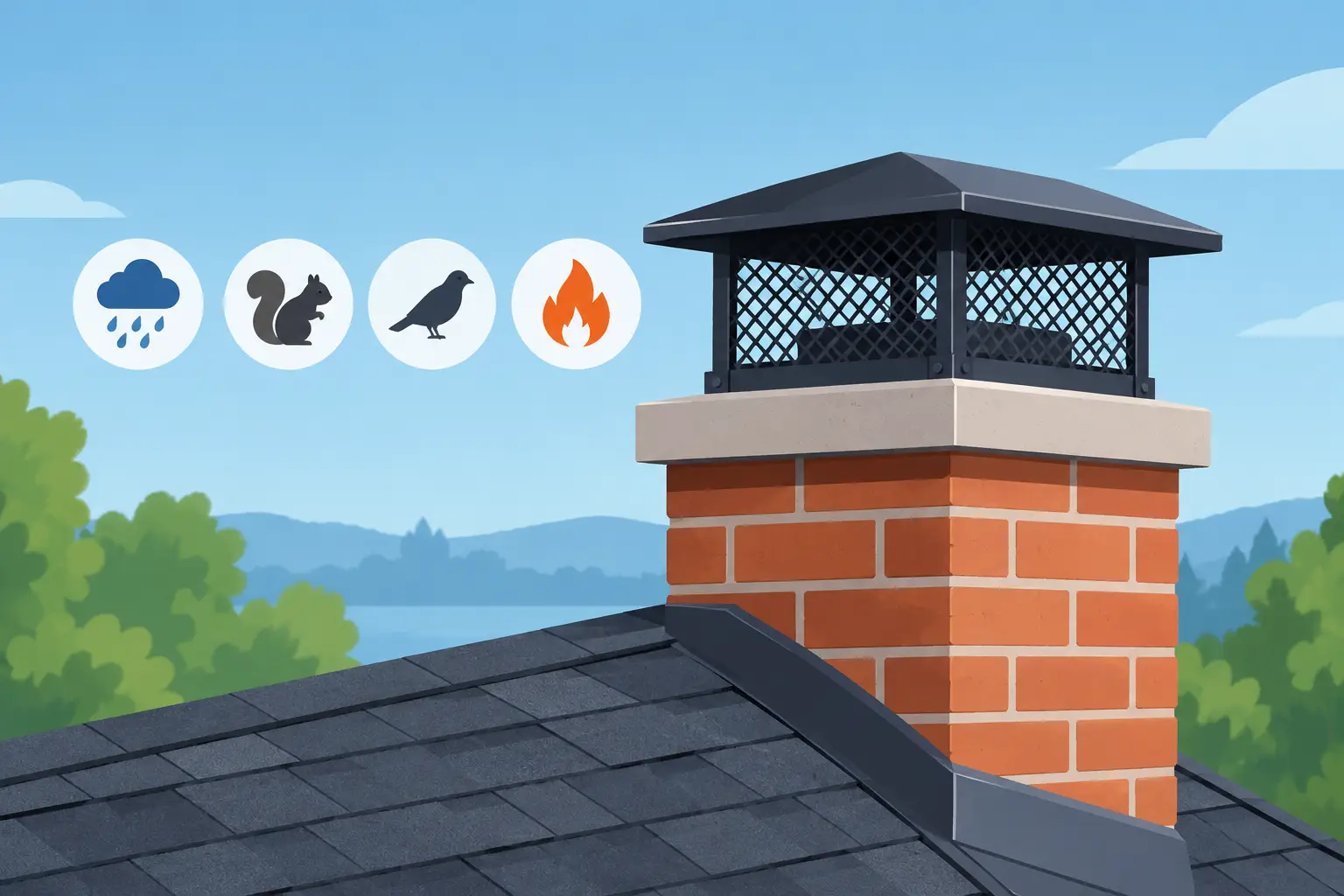
A missing or damaged chimney cap can create problems that start at the top of the chimney but show up throughout the house. Chimney caps are a relatively small part of the system, yet they help protect the flue, chimney crown, masonry, fireplace, and the interior of your home from water, animals, and debris.
For homeowners in northeastern Ohio and western Pennsylvania, that protection matters through every season. Wind-driven rain, freeze-thaw cycles, heavy snow, falling leaves, and nesting animals can all take a toll on an uncovered chimney. A properly fitted cap is not a decorative finishing touch. It is a practical layer of protection that helps prevent avoidable repairs.
A chimney cap sits over the top of a chimney flue or chimney structure. Most quality caps have a solid top that sheds water, a screen or mesh around the sides, and a secure mounting system. The design allows smoke and combustion gases to exit while reducing the chance of unwanted material entering from above.
Its first job is keeping water out of the flue. Masonry chimneys are built to handle outdoor exposure, but they are not immune to moisture. When rain enters an open flue, it can saturate the chimney interior, damage metal components, contribute to liner deterioration, and carry moisture down to the firebox. In winter, absorbed water can freeze and expand, worsening cracks in mortar joints, crowns, and brick faces.
A cap also helps keep birds, squirrels, raccoons, bats, and other animals from entering the chimney. Animals may build nests that restrict airflow or create a fire hazard. If an animal becomes trapped in the flue, removal can be stressful for the homeowner and may require professional service before the fireplace can be used safely.
The screen portion of many chimney caps can also act as a spark guard. This feature is particularly relevant for wood-burning fireplaces and stoves, where hot embers can travel upward with the exhaust. The correct cap design depends on the appliance, the chimney configuration, and local requirements, so it should be selected with the whole venting system in mind.
Water is often the main reason a chimney that looked sound a few years ago begins to need repair. An open flue gives rain a direct path inside, but even a loose, undersized, or rusted cap can allow water to reach vulnerable areas. Once moisture gets into masonry, the damage is not always visible right away.
You may first notice a musty odor from the fireplace, white staining on the chimney exterior, rust on the damper, peeling paint near the chimney breast, or damp spots in the firebox. These symptoms do not automatically mean the cap is the only issue. A damaged crown, failed flashing, cracked mortar, or liner problem may also be involved. That is why a professional inspection is more useful than treating a visible symptom alone.
An appropriate cap can reduce the amount of water entering from the top, but it cannot correct existing crown cracks or leaking flashing. Chimney repairs work best when the source of moisture is identified and addressed as a system. For example, installing a new cap while leaving a severely deteriorated crown untreated may provide some protection, but it will not stop water from entering through the crown itself.
Not every chimney needs the same cap. Some chimneys have a single round flue tile, while others have multiple rectangular flues or a large masonry chimney top that benefits from a full-width cap. The right choice should fit securely without blocking exhaust or interfering with the appliance’s operation.
Stainless steel caps are a dependable choice for many homes because they resist rust and hold up well in wet weather. Galvanized steel may cost less initially, but it is more likely to corrode over time, especially when exposed to moisture and combustion byproducts. Copper can be long-lasting and attractive, although it usually comes at a higher price.
For a single flue, a flue-mounted cap may be appropriate. For chimneys with multiple flues, an outside-mount or multi-flue cap can cover the entire chimney top. A full-width cap can be especially helpful when the chimney crown has an irregular shape or when broader coverage is needed to protect several flues.
Appearance matters, but performance should lead the decision. A cap that looks good but fits poorly can rattle in the wind, blow loose, allow water entry, or create draft concerns. An experienced chimney professional can measure the flue or chimney top and recommend a material and style suited to the home, fuel type, and local weather conditions.
Some homeowners look for a cap after smoke backs up into the room or the fireplace seems difficult to start. Certain specialized cap designs may help with downdrafts in the right circumstances, but a cap is not a universal fix for draft problems.
Poor draft can result from a cold flue, inadequate chimney height, a blocked liner, house pressure issues, an oversized flue, wet wood, or a damaged damper. Installing a wind-resistant cap without identifying the cause can waste money and leave the underlying safety issue unresolved. If smoke is entering the living area, stop using the appliance until the system can be evaluated.
A quick look from the ground may reveal obvious damage, but climbing onto a roof without proper safety equipment is not recommended. During a chimney inspection or cleaning, a technician can check the cap closely and assess the crown, flue tile, and upper masonry at the same time.
Schedule an evaluation if you notice any of these issues:
A dirty screen can be a concern, too. Creosote and soot can accumulate on some caps used with wood-burning appliances, especially when wood is damp or fires burn inefficiently. Restricted screens can interfere with proper exhaust. Regular sweeping and inspection help catch this condition before it affects fireplace performance.
A chimney cap should be properly sized, securely attached, and installed without damaging the flue tile or crown. Improvised fasteners, poorly fitted covers, and lightweight materials may fail during high winds or create gaps that let in water and animals.
Professional installation also provides an opportunity to inspect conditions that are easy to miss from the ground. If the crown has cracks, mortar joints are deteriorating, or the flashing is separating from the roofline, those repairs may be better handled before moisture creates more extensive damage. Honest recommendations should explain what needs immediate attention, what can be monitored, and what is not necessary at the moment.
At Chimney Sweeps and Masonry of America, chimney cap installation is approached as part of the larger chimney system. That means considering the condition of the flue, crown, masonry, liner, and appliance venting rather than simply installing the first cap that fits.
A quality cap is low-maintenance, not maintenance-free. Have it checked during routine chimney sweeping and Level 1 inspections, particularly before the heating season. This is a sensible time to confirm that the cap remains secure, the mesh is clear, and no animal nesting or storm damage has occurred.
Homeowners can also watch for changes after severe weather. A cap that suddenly rattles, leans, or disappears may have been loosened by wind or struck by a falling branch. Do not use the fireplace if debris may have fallen into the flue or if the cap appears to be obstructing the outlet.
The right chimney cap protects a part of your home that is easy to overlook until water, wildlife, or masonry damage makes it impossible to ignore. A timely inspection and a properly fitted cap can help keep a small repair from becoming a larger chimney restoration project.
We are a member of The National Chimney Guild. Certified Chimney Professional