- 330-505-6800
- Info@alifeprotector.com
- 11 North Main St , Niles Ohio 44446.
Smoke should move up the chimney, not drift into the room. When it does not, homeowners often assume the fireplace simply needs a quick cleaning. Sometimes that is true. But knowing how to spot chimney obstructions can help you recognize a potentially dangerous venting problem before using the system again.
A chimney blockage can prevent smoke, combustion gases, and carbon monoxide from leaving your home as designed. In northeastern Ohio and western Pennsylvania, seasonal weather, falling leaves, nesting animals, and freeze-thaw damage all create conditions that can affect a chimney’s ability to draft properly. The safest response is never to force a fire to burn through a suspected blockage. Stop using the appliance and arrange for a qualified inspection.
The clearest warning sign is smoke entering the living area when you light a fire or add wood. A small amount of smoke may occur briefly when a cold chimney is first warming up, particularly in mild or damp weather. Persistent smoke, however, is not normal. If it continues after the fire is established, put the fire out safely if possible, ventilate the area, and do not use the fireplace again until the cause is identified.
Strong, unusual odors can also point to an obstruction. A damp, musty smell may come from wet creosote, leaves, or animal nesting material inside the flue. A sharp smoky odor can mean soot or creosote has built up and is being pulled back into the home. With gas fireplaces, any unusual exhaust-like odor or signs of poor burner performance deserve prompt professional attention.
You may also notice that your fireplace, stove, or insert has become harder to start than it was in previous seasons. Flames may look lazy, flicker weakly, or struggle to stay lit because the appliance is not receiving enough air and exhaust is not moving upward. This can also happen when a chimney is cold, the house is tightly sealed, or a kitchen exhaust fan is running. The difference is that these conditions should be evaluated rather than guessed at, especially if the problem keeps returning.
Other visible clues include soot collecting around the fireplace opening, dark staining near the damper area, bits of leaves or nesting material falling into the firebox, or water stains that suggest a damaged cap or crown. These signs do not confirm the exact location of a blockage, but they do tell you the chimney needs attention.
Chimney obstructions are not always dramatic. A completely plugged flue is possible, but partial restrictions are more common and can still create serious venting concerns.
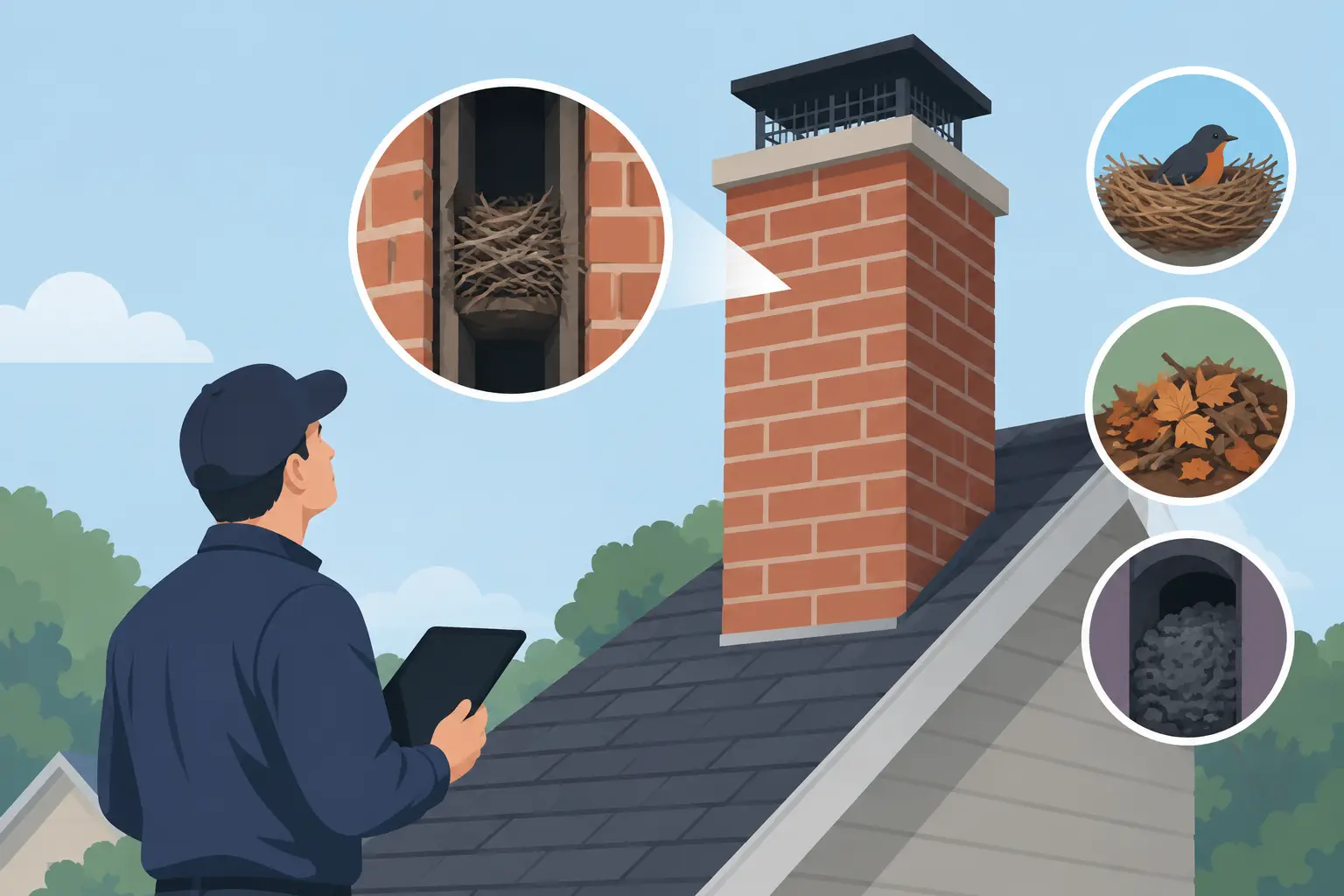
Birds, squirrels, raccoons, and other wildlife may build nests in an uncapped or damaged chimney. In spring and early summer, nesting material can accumulate quickly. Animals can also become trapped inside a flue, which calls for careful removal and inspection before the fireplace is used.
Leaves, twigs, and windblown debris can enter through a missing, loose, or damaged chimney cap. Heavy storms may shift caps or damage masonry at the top of the chimney. If the cap no longer protects the flue opening, debris can enter while rain and snow add moisture to the system.
Creosote is another common restriction in wood-burning systems. This flammable residue forms when wood smoke cools and condenses inside the flue. Burning wet wood, operating a fire at low temperatures, and using an oversized or poorly matched appliance can increase creosote buildup. A chimney may appear open at the fireplace while the upper flue has a thick, restrictive deposit that requires professional sweeping.
Masonry damage can contribute as well. Broken flue tiles, deteriorated mortar, loose bricks, or pieces of a failing chimney crown can fall into the flue. Older chimneys may also have liner problems that reduce the passage available for exhaust. These conditions require more than cleaning. They need a careful assessment of the chimney’s structure and liner system.
Homeowners can watch for warning signs, but the inside of a chimney is not a safe place for a do-it-yourself investigation. Climbing onto the roof, reaching into the flue, or using a fire to clear debris can cause injuries, chimney damage, or a fire.
From the ground, look for obvious exterior concerns such as a missing cap, a cap that appears tilted, loose masonry near the chimney top, or branches hanging directly over the chimney. Inside, check whether the damper opens fully if your fireplace has a throat damper. Do not force it if it sticks. A stuck damper may be caused by rust, debris, or a mechanical issue that should be evaluated.
Pay attention to when the problem occurs. If smoke enters the room only on windy days, during very mild weather, or when bathroom fans and range hoods are running, the issue may involve draft or house pressure rather than a solid obstruction. That does not make it harmless. A trained chimney professional can distinguish between a blockage, a drafting issue, a damaged liner, or an appliance installation concern.
Carbon monoxide alarms are an essential safeguard, but they are not a substitute for chimney maintenance. If a carbon monoxide alarm sounds, get everyone outside into fresh air immediately and call emergency services. Do not reenter the building until it is safe to do so. Do not attempt to troubleshoot the fireplace or furnace yourself.
A chimney does not need to be fully blocked to create trouble. Even a partial obstruction can slow the movement of smoke and exhaust gases, leaving more creosote behind and increasing the chance of smoke spillage. Over time, restricted venting can affect heating efficiency, damage chimney components, and raise the risk of a chimney fire.
For wood stoves and inserts, correct liner sizing and clear venting are especially important. A system that was installed years ago may need attention if the appliance has changed, the liner has deteriorated, or the chimney has suffered water damage. Gas appliances also need clear, properly sized venting paths. Clean glass and a flame that appears normal do not guarantee that the venting system is functioning correctly.
This is why an inspection is useful even when the chimney seems to work most of the time. A Level 1 chimney inspection can identify readily accessible concerns, including visible deposits, damaged components, or signs that further evaluation is needed. If there is a suspected obstruction deeper in the system, a more detailed inspection may be recommended based on the condition found.
Stop using the system immediately if smoke repeatedly enters the room, you smell strong exhaust odors, hear animal activity inside the chimney, find debris in the firebox, or see signs of a chimney fire such as loud cracking, popping, dense smoke, or an unusually hot chimney exterior. Call emergency services if you believe a chimney fire is occurring.
It is also wise to pause use after a major storm if you see damage to the cap, crown, flashing, or upper masonry. Water intrusion can weaken chimney materials and carry debris into the flue. Addressing a small exterior repair early can protect both the chimney structure and the heating system it serves.
A professional chimney sweep and inspection provides a clear answer without unnecessary guesswork. Chimney Sweeps and Masonry of America helps homeowners in Trumbull, Mahoning, and Mercer counties evaluate venting concerns, remove buildup, and address related cap, liner, masonry, or flashing issues when they are genuinely needed.
Your fireplace or stove should add comfort to your home, not uncertainty. If its behavior has changed, treat that change as a reason to schedule a knowledgeable inspection before the next fire.
We are a member of The National Chimney Guild. Certified Chimney Professional