- 330-505-6800
- Info@alifeprotector.com
- 11 North Main St , Niles Ohio 44446.
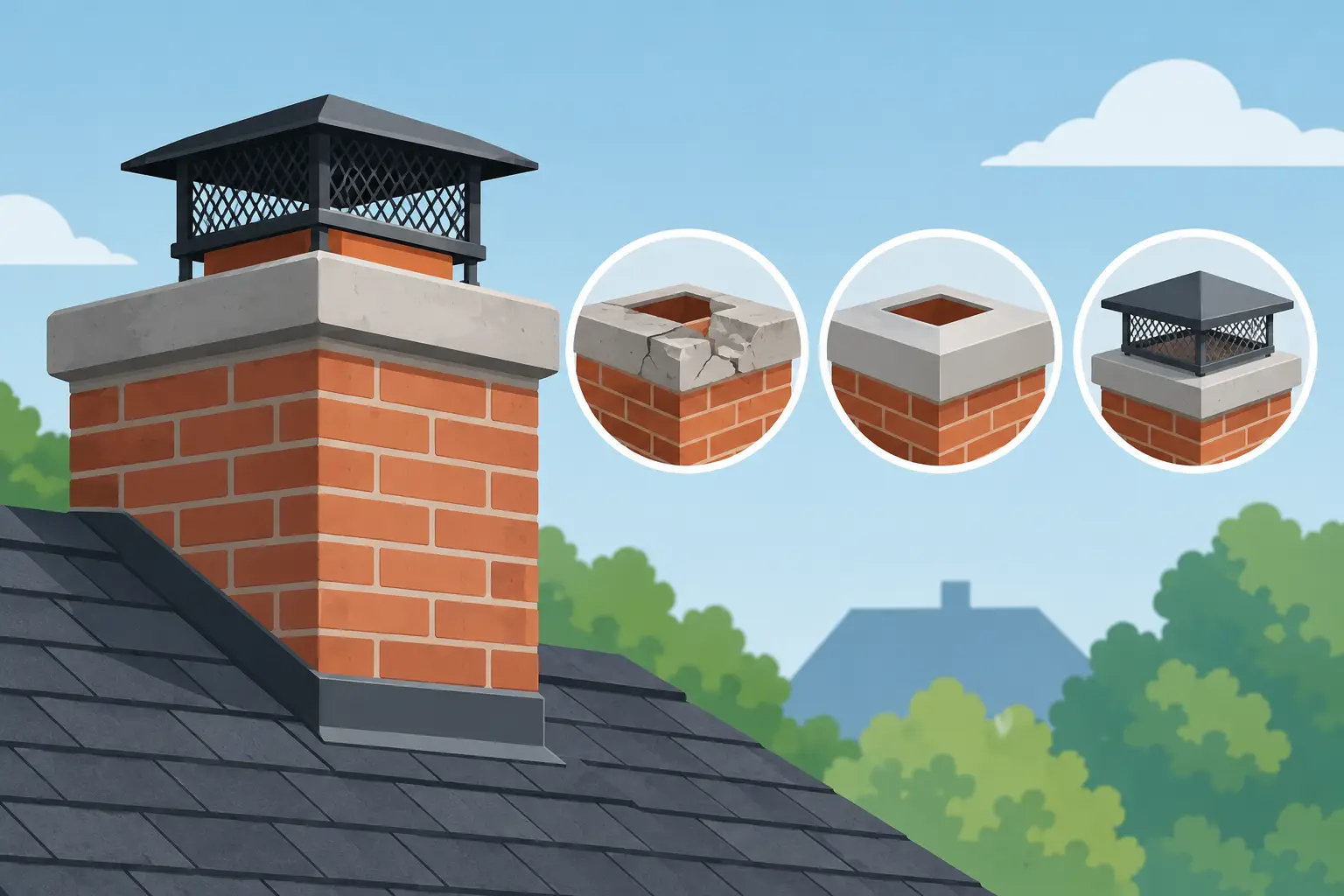
A chimney crown may be a small part of the structure, but it carries a major responsibility. This concrete surface sits at the very top of the chimney, directing rain, snow, and melting ice away from the brickwork below. When it cracks, flakes, or pulls away from the chimney, water can work its way into the masonry, liner area, attic, and home. Understanding your chimney crown repair options helps you act before a manageable repair becomes a costly rebuild.
For homeowners in northeastern Ohio and nearby western Pennsylvania, freeze-thaw weather makes crown condition especially important. Water enters even a hairline crack, freezes when temperatures drop, expands, and gradually opens the crack wider. A timely professional evaluation can identify whether the crown needs protection, patching, resurfacing, or complete replacement.
A chimney crown is the sloped concrete slab that covers the top of a masonry chimney. It should extend beyond the chimney walls with a drip edge underneath, so water falls clear of the brick instead of running down its face. It also seals the space around the flue tile or metal liner where it exits the chimney.
The crown is different from a chimney cap. A cap is a separate metal cover that helps keep out rain, animals, and debris while allowing smoke and combustion gases to vent. A quality chimney should have both. Installing a cap can prevent certain water and animal problems, but it will not repair a cracked crown underneath it.
A crown can deteriorate for years without being visible from ground level. During a Level 1 chimney inspection or exterior masonry assessment, a trained professional can evaluate its condition safely. Property owners should arrange an inspection sooner if they notice several of these warning signs:
A damaged crown does not always mean the entire chimney needs to be rebuilt. The correct repair depends on the size and depth of the damage, the condition of the surrounding masonry, and whether water has already affected the flue, liner, or interior components.
When a crown is structurally solid and has only small surface cracks, a breathable, flexible crown sealant may be the most practical option. This specialized coating is designed for chimney crowns, not ordinary paint or general-purpose caulk. It helps keep water out while accommodating minor expansion and contraction caused by changing temperatures.
Sealing is a preventive repair, not a cure for a failed crown. It works best after the surface is properly cleaned and prepared, and only when the crown still has a stable slope and intact edges. If the concrete is deeply cracked, loose, or separating from the chimney, coating it may only hide a problem that continues underneath.
Moderate damage may be addressed by removing loose material and repairing specific cracks, chips, or deteriorated edges with a compatible masonry repair product. The goal is to restore a continuous surface that sheds water correctly and protects the joint around the flue.
This option can offer good value when deterioration is limited to one area. It is less appropriate when cracks run across the crown, the surface has widespread scaling, or the crown has become too thin to remain durable through another Ohio winter. A reliable contractor should explain that difference clearly rather than treating every cracked crown the same way.
Resurfacing involves applying a new, properly bonded protective layer over a prepared existing crown. This can be a suitable middle-ground solution when the underlying concrete remains stable but the weather-exposed surface has begun to wear away.
A successful resurfacing job requires more than applying material over old damage. Loose concrete must be removed, the crown needs proper preparation, and the finished surface should retain adequate slope away from the flue. The repair should also preserve or create an overhang and drip edge where feasible. Without those water-management details, even a fresh-looking surface can allow moisture to reach the brickwork below.
When a crown is badly cracked, crumbling, improperly sized, or missing its overhang, replacement is often the most durable solution. The old crown is removed and a new reinforced concrete crown is formed and installed to fit the chimney correctly. A properly built replacement should slope away from the flue, extend past the chimney walls, and include a drip edge to direct runoff away from the masonry.
Replacement costs more than sealing a few small cracks, but it can prevent repeated patching and protect a much larger investment in the chimney. It may also be the sensible choice if nearby brick, mortar joints, flashing, or flue tiles require repair at the same time. Completing connected work together can help ensure water is not simply redirected toward another weak point.
The best repair is not always the least expensive immediate option. A small, stable crack on an otherwise sound crown may respond well to sealing. A crown with major breaks, exposed aggregate, failed edges, or years of moisture damage is more likely to need replacement.
The chimney’s age and construction also matter. Older homes may have crowns that are too thin, flat, or nearly flush with the brick. These designs tend to hold water or allow it to track down the sides of the chimney. A new crown can correct those construction issues while protecting the masonry beneath it.
It also matters whether water has reached other parts of the system. Damaged mortar joints, cracked flue tiles, rusted dampers, and deteriorating flashing can all point to a broader moisture issue. A complete chimney assessment helps prevent a crown repair from becoming an isolated fix that overlooks related damage.
Chimney crowns face direct sun, wind, rain, snow, ice, and dramatic temperature changes. Materials that are not intended for this exposure can fail quickly. Household caulk, roofing tar, and thin coatings may appear to stop a leak temporarily, yet they can crack, trap moisture, or make later repairs more difficult.
Professional crown work is about water control as much as concrete repair. The crown needs a durable mix, sound attachment, sufficient thickness, appropriate slope, and a clear path for water to drip away from the chimney. Attention to the flue opening is equally important. The flue needs room to expand and contract without creating a gap that invites water inside.
For chimneys serving fireplaces, wood stoves, or other fuel-burning appliances, exterior repairs should also be considered alongside safe venting and inspection needs. A crown that allows water into the flue system can contribute to liner deterioration and affect the long-term performance of the appliance.
Water rarely stays in one place. A failed crown can lead to damaged mortar, spalling brick, corroded metal components, interior leaks, and more extensive masonry restoration. Once freeze-thaw cycles begin breaking apart wet brick, the repair scope can grow quickly.
Homeowners can help by watching for changes after heavy storms and by keeping a properly fitted chimney cap in place. However, crown work should not be a do-it-yourself project for most property owners. Chimney tops are difficult to access safely, and accurate diagnosis requires distinguishing between a crown problem, flashing leak, cap issue, or broader masonry failure.
Chimney Sweeps and Masonry of America provides clear recommendations based on the condition of the entire chimney, not a one-size-fits-all sales approach. Whether a crown needs protective sealing, focused repair, or replacement, skilled masonry work can preserve the structure and help reduce future water intrusion.
If you have noticed cracking near the top of your chimney or signs of moisture around the fireplace, schedule a professional inspection before the next stretch of hard weather gives that water another chance to spread.
We are a member of The National Chimney Guild. Certified Chimney Professional