- 330-505-6800
- Info@alifeprotector.com
- 11 North Main St , Niles Ohio 44446.
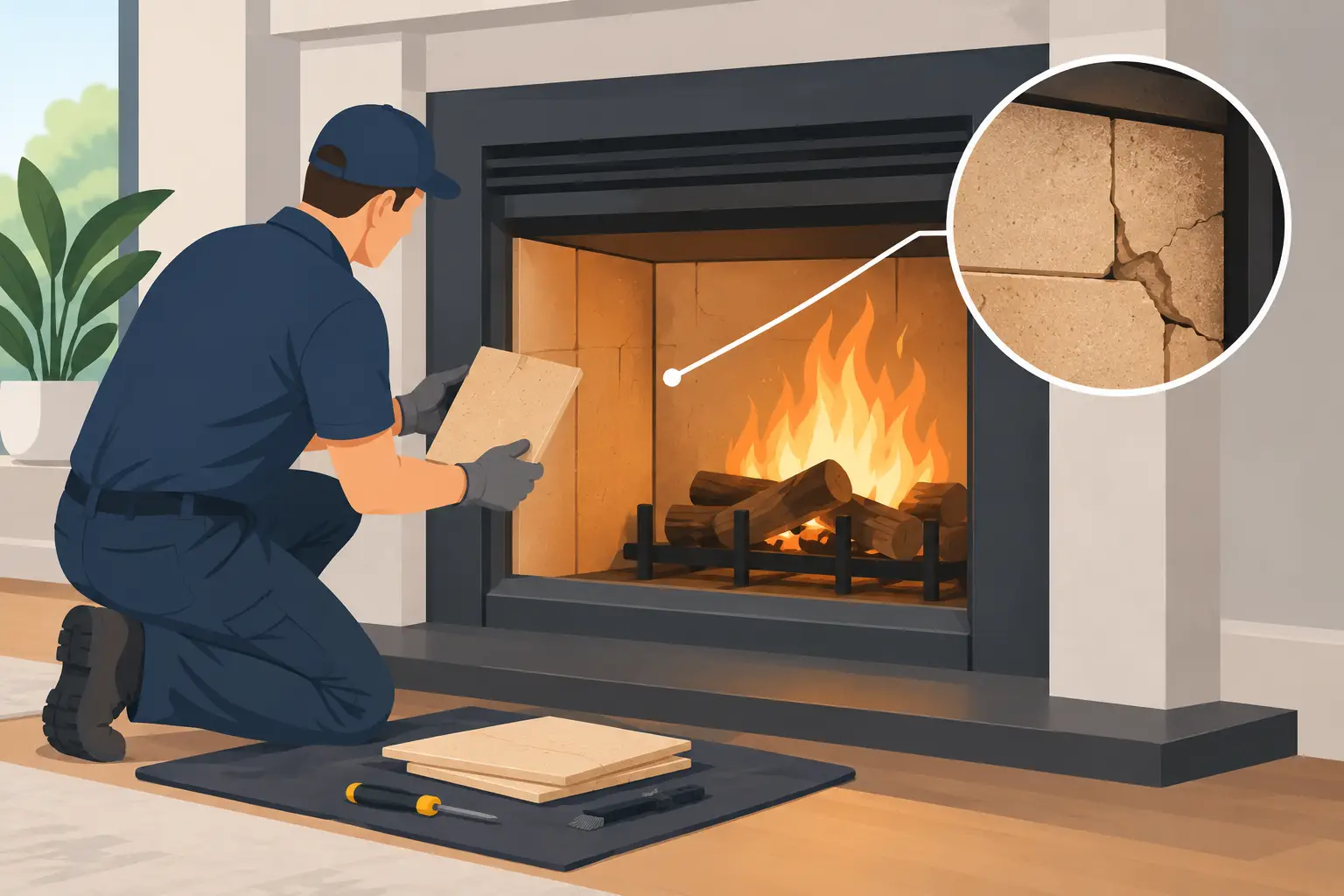
A crack in the back wall of a fireplace can look like a minor cosmetic issue, especially after a long winter of use. But fireplace refractory panel repair is not a job to put off without an assessment. Those panels protect the firebox and surrounding structure from extreme heat, and a damaged panel can allow heat to reach areas not designed to handle it.
For homeowners in northeastern Ohio and western Pennsylvania, the right response depends on the type, location, and severity of the damage. Some very small surface cracks may be monitored or addressed with an approved refractory product. A broken, loose, warped, or deeply cracked panel often needs replacement. A qualified chimney and fireplace professional can help separate a repairable condition from one that creates a real fire-safety concern.
Refractory panels, sometimes called fireplace liners or firebox panels, are the insulated panels installed along the back and sides of many factory-built fireplaces. They are made to tolerate repeated high temperatures while reflecting heat back into the firebox. This helps the fireplace burn more efficiently and protects the metal shell, framing, and other nearby materials.
These panels are not the same as standard brick or ordinary mortar. A traditional masonry fireplace typically has a firebrick-lined firebox, while a prefabricated fireplace commonly uses specially manufactured refractory panels. The correct repair method is different for each system.
That distinction matters because a material that looks suitable may not be approved for your fireplace. Ordinary cement, brick mortar, drywall compound, or a generic patching material can fail under fireplace temperatures. Worse, an improper repair can interfere with clearances, alter the way the unit handles heat, or conceal damage that needs closer attention.
A fireplace should be inspected when you notice a change in the firebox, not only when it stops working. Hairline cracks can develop over time from normal heating and cooling cycles. They deserve attention, but they do not all mean the same thing.
More concerning signs include a crack that widens, a panel split into separate pieces, crumbling edges, missing sections, visible gaps behind the panel, or a panel that has shifted out of position. Discoloration, bowing, or flaking can also point to repeated overheating or moisture-related deterioration. If pieces of the panel fall into the firebox, stop using the fireplace until it has been evaluated.
Pay attention to performance as well. Smoke entering the room, unusual odors, poor draft, or a fire that seems harder to control may not be caused by the panel alone, but they are reasons to schedule an inspection. The firebox, damper, chimney flue, cap, and venting system work together. Looking only at the visible crack can miss the condition that caused it.
It depends on the fireplace manufacturer’s instructions and the condition of the panel. A narrow, stable surface crack in an otherwise solid panel may sometimes be addressed with a manufacturer-approved refractory cement or repair kit. The repair material must be rated for the application and installed according to the product and fireplace specifications.
That said, patching is not always the safer or longer-lasting option. A crack that extends through the panel, reaches an edge, creates a gap, or allows the panel to move is generally a replacement issue. Refractory panels protect against intense heat, so their structural condition matters more than their appearance.
Replacement is also the better choice when a panel is severely worn, has multiple cracks, or has been repaired before and continues to deteriorate. Trying to get another season from a compromised panel can expose the fireplace body and nearby combustible materials to excessive heat. An honest recommendation should account for the remaining condition of the panel, the availability of approved replacement parts, and the overall condition of the fireplace.
Many refractory panel problems are visible, but the cause is not always obvious. Overfiring is a common culprit. Burning oversized fires, using too much fuel, leaving doors open when the appliance is not designed for it, or burning materials other than seasoned firewood can place excessive stress on the firebox.
Water intrusion is another possibility. A damaged chimney cap, crown, flashing, or exterior masonry joint can allow moisture into the system. Freeze-thaw cycles, corrosion, and moisture exposure can create problems that eventually affect the fireplace area. In a factory-built unit, incorrect installation, aging components, or a mismatched replacement panel may also contribute.
A professional inspection looks beyond the crack. The technician can check whether the panel is original and properly seated, evaluate adjacent panels, inspect the firebox shell, and assess the chimney or venting system for conditions that affect safe operation. This approach avoids unnecessary replacement while ensuring that a serious issue is not treated as a simple cosmetic repair.
Safe refractory panel replacement begins with identifying the fireplace make and model. Panels are often designed for a specific unit, and dimensions alone are not enough to confirm compatibility. Approved panels have the proper thickness, material composition, shape, and fit for the fireplace’s heat-management system.
The damaged panel is carefully removed without disturbing other components. The firebox is then checked for warping, corrosion, cracks, or heat damage behind the panel. If the surrounding components are in good condition, the correct replacement panel can be installed and secured as specified by the manufacturer.
After installation, the fireplace should be checked to confirm that panels sit flush, joints are properly aligned, and the firebox is ready for use. If a replacement part is unavailable because the fireplace is obsolete, a professional can explain whether an approved alternative exists or whether the unit requires more extensive repair or replacement. This is one area where a universal, cut-to-fit solution is not always appropriate.
The biggest mistake is continuing to use a fireplace with a broken or displaced panel. It can be tempting to wait until the next service appointment, but active use sends more heat into an already compromised area.
Homeowners should also avoid covering a crack with regular mortar, caulk, spray foam, or paint. These materials are not designed for firebox temperatures and may release odors, fail quickly, or create additional hazards. Do not drill into panels or alter their shape to make a non-approved part fit.
Another common issue is treating the panel as the only maintenance need. Fireplace cleaning and Level 1 chimney inspections help identify soot buildup, creosote, draft concerns, moisture entry, and component wear before they become more costly repairs. Regular service also helps homeowners use their heating systems more efficiently and with less environmental impact.
Once a panel has been repaired or replaced, use the fireplace according to its design. Burn only dry, seasoned firewood in a wood-burning fireplace, build appropriately sized fires, and avoid burning trash, treated lumber, cardboard loads, or other materials that create excessive heat and deposits.
Keep the firebox clean enough to see the panel surfaces during routine checks. A quick look before fireplace season can reveal new cracks, loose sections, or damage caused by an accidental impact. Exterior maintenance matters too: a sound chimney cap, crown, flashing, and masonry joints help keep water from entering the system.
Chimney Sweeps and Masonry of America provides clear, safety-focused evaluations for fireplace and chimney concerns throughout Trumbull, Mahoning, and Mercer counties. When a refractory panel shows damage, scheduling service early gives you time to make the right repair before cold weather makes the fireplace part of your daily routine.
A fireplace should provide comfort, not uncertainty. If you see a damaged refractory panel or are unsure whether a crack is safe to use, leave the fireplace off and arrange a professional assessment. A timely, properly matched repair can protect your home, preserve your fireplace, and help you enjoy the next fire with confidence.
We are a member of The National Chimney Guild. Certified Chimney Professional