- 330-505-6800
- Info@alifeprotector.com
- 11 North Main St , Niles Ohio 44446.
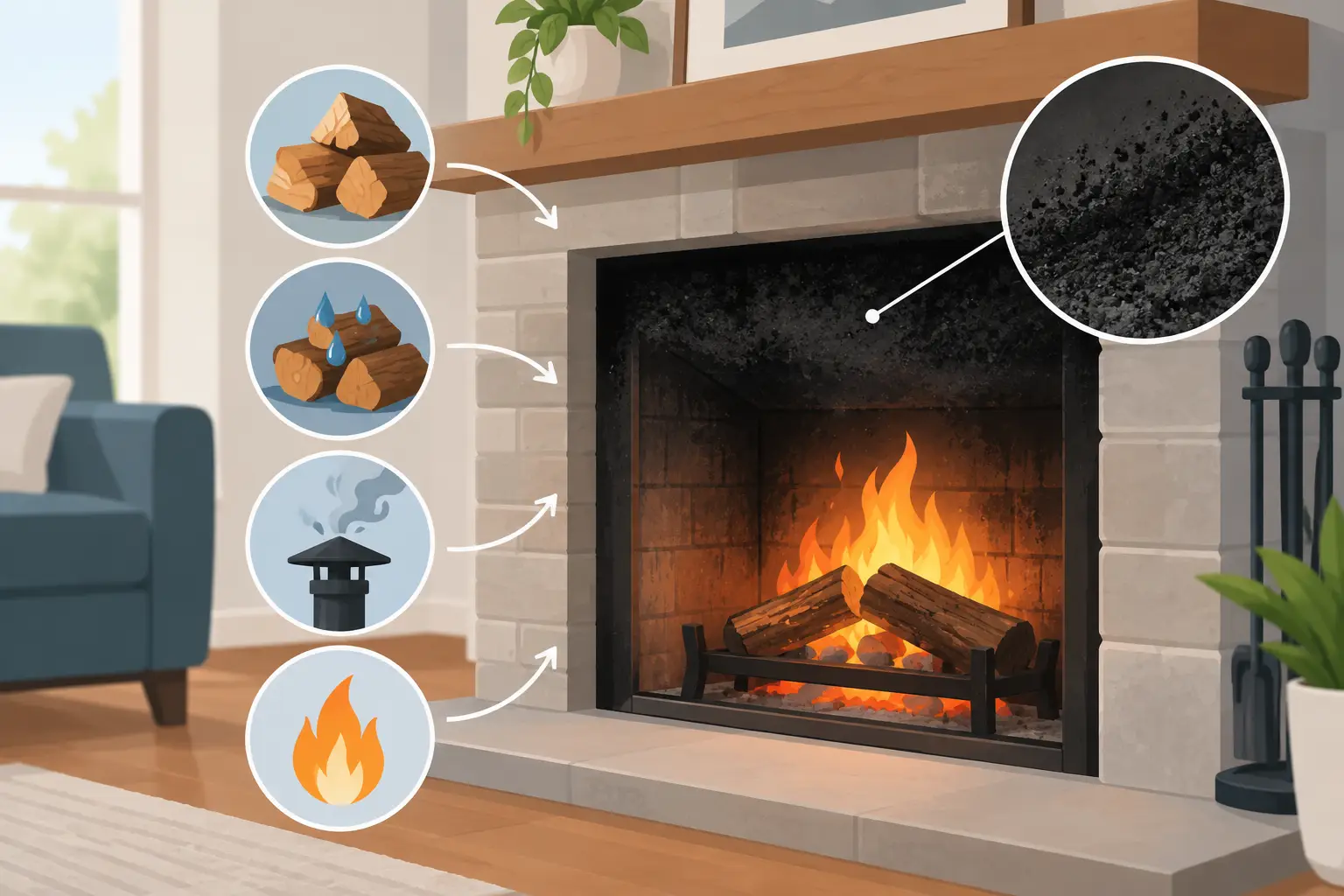
A light dusting of soot near a wood-burning fireplace can be normal after use. Thick black deposits on the firebox, glass doors, damper, or surrounding masonry are different. If you are asking what causes fireplace soot buildup, the short answer is incomplete combustion: the fire is not receiving the fuel, heat, or oxygen it needs to burn cleanly.
That answer still leaves an important question for homeowners: why is the combustion incomplete? The cause may be as simple as damp firewood, or it may point to a draft, chimney, liner, or appliance issue that deserves professional attention. Finding the underlying reason protects your home from unnecessary mess, poor fireplace performance, and avoidable fire hazards.
Soot is a fine black carbon residue created when wood, gas, or another fuel does not burn completely. A clean-burning fire converts more fuel into heat, water vapor, and gases. A smoky, oxygen-starved, or low-temperature fire leaves more unburned particles behind.
Soot is not the same as creosote, although the two often appear together in a wood-burning system. Soot is dry, powdery carbon that can coat the firebox and chimney. Creosote is a darker, sticky or glazed combustion byproduct that can build inside the flue. Both indicate that the system needs attention, but creosote is particularly concerning because it is combustible and can contribute to chimney fires.
The amount of soot that forms depends on how you operate the fireplace, the condition of the fuel, the weather, and whether the chimney is drafting as designed. An occasional darkening of the firebox is expected. Rapid buildup, smoke entering the room, or black stains around the fireplace are not conditions to ignore.
Burning unseasoned wood is one of the most common reasons for excessive soot. Fresh-cut wood can contain a substantial amount of moisture. Before it can burn efficiently, the fire must use heat to evaporate that water. The result is a cooler, smokier fire that produces more soot and creosote.
For most fireplaces and wood stoves, properly seasoned firewood should be split, stored off the ground, protected from rain, and allowed to dry thoroughly before burning. Well-seasoned wood is lighter, has cracks at the ends, and produces a sharper sound when two pieces are knocked together. A moisture meter offers a more dependable check, with firewood generally burning best at 20 percent moisture content or less.
Wood species and wood condition also matter. Painted, stained, pressure-treated, or manufactured wood should never be burned in a residential fireplace. These materials can release harmful chemicals and leave damaging deposits. Avoid burning trash, cardboard, glossy paper, or household materials as well. They may flare quickly, but they do not provide a stable, clean fire.
A fire needs enough kindling, air, and dry fuel to establish a hot bed of coals. Starting with oversized logs or restricting the air supply too early can make a fire smolder instead of burn. Smoldering fires produce visible smoke, heavy soot, and more creosote in the chimney.
Do not overload the firebox. A few appropriately sized pieces of dry wood burn more efficiently than a crowded fire with limited airflow between the logs. Once the fire is established, add wood gradually rather than placing a large load on dying coals.
A fireplace moves smoke upward because warm air rises through the chimney. This movement is called draft. When the flue is cold, blocked, undersized, damaged, or unable to receive enough replacement air from the house, smoke can linger in the firebox and deposit soot on every nearby surface.
Before lighting a wood fire, confirm that the damper is fully open. A partially closed damper restricts exhaust flow and can send smoke into the room. If your fireplace has glass doors, follow the manufacturer guidance for using them. Many traditional wood-burning fireplaces require doors to remain open while the fire is active, while certain EPA-certified units are designed to operate with doors closed.
Cold weather can also affect startup. A cold flue may initially push cold air downward, making the first few minutes of a fire smoky. Starting with dry kindling and a small, hot fire helps warm the chimney gradually. If smoke routinely spills into the room even after the flue warms, the issue may be more than a cold start.
Exhaust fans, range hoods, bathroom fans, clothes dryers, and tightly sealed windows can compete with the fireplace for air. This is especially common in newer or weatherized homes. The fireplace may struggle to draft because the home is under negative pressure. Opening a nearby window slightly for a brief test can help identify whether makeup air is part of the problem, but it is not a permanent fix for a persistent drafting issue.
A chimney needs a clear, correctly sized path from the fireplace to the outdoors. Bird nests, leaves, animal activity, fallen mortar, damaged flue tiles, or a deteriorated liner can reduce that path. A chimney cap helps keep out rain and wildlife, but it must be properly fitted and maintained to do its job without restricting exhaust.
Masonry problems can contribute as well. Water entering through a cracked crown, failed flashing, missing cap, or damaged brickwork can weaken chimney materials over time. Pieces of tile or mortar may eventually fall into the flue. Exterior damage does not always mean the chimney is unsafe, but it should be assessed before it affects draft or allows moisture to accelerate deterioration.
An improperly sized chimney liner can create its own performance concerns. A liner that is too large may not stay warm enough to maintain strong draft. One that is too small can restrict exhaust. This is particularly relevant when a fireplace is converted, a wood stove insert is installed, or an appliance is replaced without evaluating the full venting system.
Gas fireplaces are cleaner than wood-burning fireplaces in normal operation, but they should not create heavy black soot. Small amounts of discoloration can occur on ceramic logs over time. Black residue on the glass, walls, or vents may indicate a burner, air-shutter, venting, log-placement, or gas-pressure problem.
Never rearrange gas logs unless the manufacturer instructions specifically allow it. Decorative logs are positioned to keep flames moving correctly. Improper placement can disrupt combustion and cause soot. A yellow flame can be normal in some gas log sets, but unusually lazy flames, black tips, delayed ignition, odors, or rapidly darkening glass warrant professional service.
The best prevention is steady, hot, properly vented combustion. Burn only dry, appropriate firewood in a wood-burning fireplace or stove. Open the damper fully before lighting, use small dry kindling to establish draft, and avoid choking down the fire too soon. Keep combustible materials and ashes managed according to the appliance instructions, and never assume a fireplace can burn any material safely.
For gas units, keep the glass, burner area, and venting system serviced according to the manufacturer’s recommendations. Do not use household cleaners or abrasive tools on fireplace glass unless they are approved for that appliance. Some deposits are stubborn, and the wrong cleaning method can damage glass, gaskets, finishes, or burner components.
A chimney sweeping removes accumulated soot and creosote, but cleaning alone does not correct the reason deposits formed. If buildup returns quickly, an inspection can identify draft problems, flue damage, liner concerns, appliance issues, or water-related masonry deterioration. A Level 1 chimney inspection is a practical starting point for a regularly used system, while visible damage or operating problems may call for a more detailed evaluation.
Schedule service promptly if you notice smoke entering the living area, strong smoky odors when the fireplace is not in use, black stains on walls or ceilings, falling debris in the firebox, a damaged damper, or a sudden increase in soot. Stop using the fireplace if you suspect a chimney blockage or see signs of liner damage until it can be inspected.
Chimney Sweeps and Masonry of America helps homeowners throughout Trumbull, Mahoning, and Mercer counties evaluate the complete system, from the firebox and flue to the chimney cap, crown, flashing, and masonry. Clear findings and practical recommendations help you address the condition that is creating soot rather than paying for work you do not need.
A fireplace should add warmth and comfort without filling your home with smoke or leaving black residue behind. When the fire no longer burns cleanly, a timely inspection can turn a frustrating mess into a safer, more efficient heating system.
We are a member of The National Chimney Guild. Certified Chimney Professional