- 330-505-6800
- Info@alifeprotector.com
- 11 North Main St , Niles Ohio 44446.

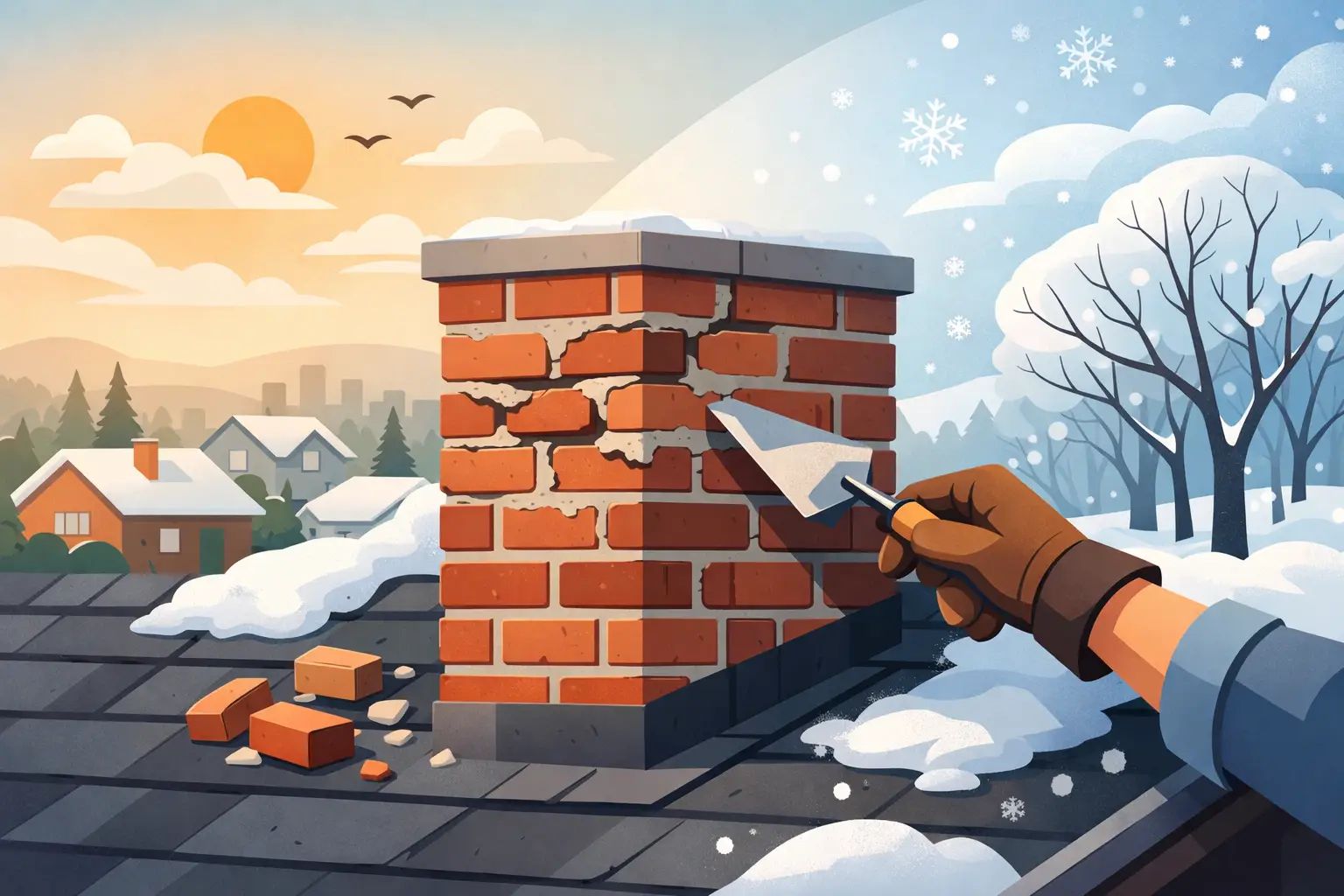
A chimney can look solid from the driveway while its mortar joints are quietly failing. In northeastern Ohio and western Pennsylvania, repeated freeze-thaw cycles, wind-driven rain, and years of seasonal heating can wear down the mortar that holds chimney brick together. Knowing the signs a chimney needs repointing helps you address a manageable masonry repair before it becomes a leak, a structural concern, or a much larger restoration project.
Repointing means carefully removing deteriorated mortar from between sound bricks and installing new, compatible mortar. It is not simply applying a thin layer over damaged joints. Done correctly, it restores the chimney’s weather resistance and stability while preserving brick that still has years of useful life.
The most direct sign is mortar that is no longer intact. You may notice sandy material on the roof, porch, or ground below the chimney, gaps between bricks, or joints that can be scraped away easily with a key. Small surface wear is common on older masonry, but deep cracks and missing sections leave the chimney exposed to moisture.
Once water enters open mortar joints, it can travel behind the brick face. When temperatures drop below freezing, that absorbed water expands. The result is often more mortar loss, loosened brick, and damage that spreads farther than the original opening.
A close visual check from the ground can reveal obvious deterioration, but avoid climbing onto the roof to investigate. Chimney masonry can be less stable than it appears, and a qualified professional can assess the joints, crown, flashing, and upper chimney safely.
Healthy mortar joints generally sit close to the face of the brick. When mortar has eroded well behind the brick edges, the joints become recessed and create shallow channels that collect water and debris. This is a common condition on chimneys exposed to years of rain, snow, and direct sun.
Recessed joints do not always mean the entire chimney needs rebuilding. If the bricks remain sound and the deterioration is limited to the mortar, repointing can be an effective, durable repair. The key is addressing it before the exposed brick edges begin to chip or break away.
Brick damage, often called spalling, can be a warning that moisture has been entering the masonry system for some time. Look for brick faces that are peeling, flaking, pitted, or breaking into small pieces. You may also see hairline cracks running through individual bricks.
Repointing may be part of the solution, but it is not always the only repair needed. Damaged bricks should be evaluated for replacement, and the source of moisture must be identified. A failed chimney crown, missing cap, damaged flashing, or improper previous repair can allow water into the masonry even after new mortar is installed.
This is why an honest inspection matters. Repointing sound brickwork is worthwhile; applying new mortar around brick that is severely deteriorated without correcting the water entry point is not a long-term fix.
White, powdery staining on brick is known as efflorescence. It occurs when water moves through masonry and leaves behind mineral salts as it evaporates. The staining itself is usually not the primary problem, but it is useful evidence that moisture is present where it should not be.
In some cases, a small amount of efflorescence may follow a heavy rain and disappear over time. Persistent staining, especially near failing joints or below the chimney crown, deserves closer attention. The condition may point to worn mortar, water entering from above, or moisture trapped within the chimney structure.
Cleaning the white deposits without resolving the moisture source only treats the symptom. A masonry professional should evaluate the chimney as a complete system, including its mortar joints, crown, cap, flashing, and brick condition.
A chimney leak often first appears inside the home. Brown stains on ceilings or walls near the chimney, dampness in the attic, peeling paint, or a musty odor around the fireplace should not be ignored. Water may be entering through deteriorated mortar, but it can also come through damaged flashing, cracked crown material, or an uncovered flue.
The location of the stain does not always identify the exact entry point. Water can travel along framing or masonry before becoming visible indoors. That is why a proper chimney inspection is more reliable than guessing based on where the stain appears.
Prompt repairs protect more than the chimney. Moisture can damage insulation, drywall, wood framing, and nearby finishes, turning an exterior masonry issue into an interior repair project as well.
A chimney that appears to lean, bow outward, or develop a stepped crack pattern needs prompt professional attention. These can be signs that water damage and mortar deterioration have affected the chimney’s structural stability. Loose bricks near the top of the stack are another concern, particularly after winter weather.
At this stage, simple spot repointing may not be enough. The right repair depends on the extent of damage, the condition of the brick, and whether the chimney’s base and support are sound. A qualified assessment can determine whether selective rebuilding, brick replacement, or more extensive masonry work is necessary.
Do not use a fireplace, wood stove, or connected heating appliance if the chimney has visibly loose masonry or significant structural damage until it has been evaluated. A safe venting system depends on a stable chimney structure.
Not every previous repair was completed with the right materials or preparation. Mortar that looks like a thin coating smeared over the brick edges may be a cosmetic patch rather than true repointing. If that material is separating, cracking, or falling away, water may still be reaching the original joints.
Older homes also require care in selecting mortar. Mortar that is too hard for historic or softer brick can cause the brick itself to deteriorate under weather stress. Proper repointing involves matching the mortar to the masonry, preparing joints to an appropriate depth, and finishing them to shed water effectively.
The lowest price is not always the best value when masonry is involved. A repair that addresses the actual cause of deterioration can help preserve the chimney for many years, while a surface patch may need attention again after only a few seasons.
Spring through fall is often a practical time to plan exterior masonry repairs because mortar needs suitable weather conditions to cure properly. Still, the right timing depends on the severity of damage. If joints are open, bricks are loose, or water is actively entering the home, waiting for a convenient season can allow the problem to grow.
It is also smart to have the chimney checked before regular fireplace or wood stove use begins. A Level 1 chimney inspection can help identify visible masonry concerns alongside issues affecting the flue, liner, cap, and venting system. For homeowners who use wood-burning appliances, this provides a clearer picture of both exterior condition and operating safety.
Reliable repointing starts with determining whether the mortar joints are truly the source of the problem. The work should include removing failed mortar to a proper depth without damaging surrounding brick, installing compatible mortar, and finishing joints carefully. Any compromised brick should be replaced as needed rather than hidden behind new mortar.
A complete recommendation may also include crown repair, chimney cap installation, or flashing repair if those components are allowing water into the masonry. These repairs work together. New mortar cannot perform as intended if rainwater is still being directed into the chimney from above or around its roof connection.
For property owners in Trumbull, Mahoning, and Mercer counties, Chimney Sweeps and Masonry of America provides chimney inspections and masonry assessments designed to explain what the chimney needs – and what it does not. Clear recommendations make it easier to plan repairs confidently and protect both the structure and the heating system connected to it.
If your chimney is shedding mortar, showing water stains, or developing damaged brick, schedule an evaluation before another Ohio or Pennsylvania winter adds more moisture to the problem. Timely, skilled repointing can preserve sound masonry and keep a small warning sign from becoming a major repair.
We are a member of The National Chimney Guild. Certified Chimney Professional
 Optimized by Seraphinite Accelerator