- 330-505-6800
- Info@alifeprotector.com
- 11 North Main St , Niles Ohio 44446.

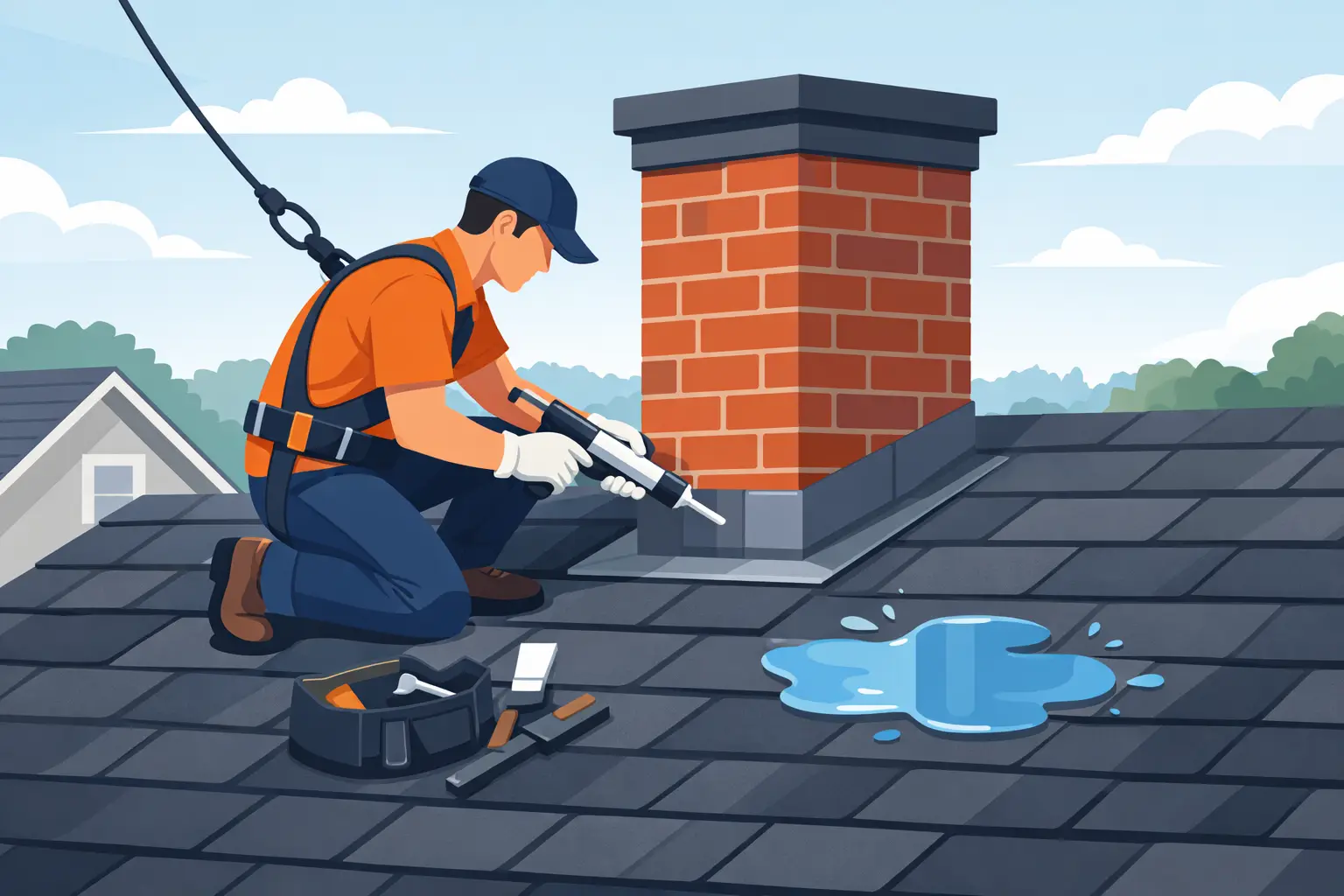
Water stains near a fireplace rarely begin where they appear. Rain can enter at the chimney roofline, travel along framing or masonry, and show up on a ceiling or wall several feet away. Knowing how to fix chimney flashing leak problems starts with identifying the true source before applying sealant or replacing materials that may still be sound.
Chimney flashing is the metal system that seals the joint where your chimney meets the roof. It is one of the most exposed parts of a home, especially through northeastern Ohio and western Pennsylvania winters, where snow, ice, wind, and freeze-thaw cycles put constant pressure on roofing and masonry. A reliable repair protects more than the roof. It helps preserve framing, insulation, ceilings, brickwork, and the chimney structure itself.
Flashing is designed to move water away from the chimney, not simply block it with caulk. Most chimney systems use step flashing woven into the shingles along the sides of the chimney, with counterflashing set into the mortar joints above it. The counterflashing covers the upper edge of the step flashing so water cannot work behind the metal.
Leaks often develop when sealant dries out, bends or gaps form in the metal, or mortar around the counterflashing deteriorates. Rust can create holes in older galvanized steel flashing. Storm damage, lifted shingles, and poorly installed flashing can also allow water beneath the roof covering.
The leak may not be flashing at all. A cracked chimney crown, missing cap, open mortar joints, damaged brick, or worn roof shingles can send water into the same area. This is why a close inspection matters. Treating every chimney leak with a tube of roofing cement can hide the symptom while water continues damaging the home.
A flashing leak is most likely when moisture appears after wind-driven rain or snowmelt, particularly around the chimney chase, attic, or upper fireplace wall. You may see brown ceiling stains, peeling paint, damp insulation, musty odors, or discoloration on rafters near the chimney.
Outside, look from the ground for visibly lifted metal, missing sections, rust streaks, loose shingles at the chimney base, or gaps where the brick meets the roof. Do not climb onto a wet, steep, icy, or aging roof to investigate. A roof inspection is not worth a fall, and walking near a chimney can crack brittle shingles or damage weakened flashing.
If you have access to the attic, inspect during daylight and again after a rainstorm. Wet wood, drips, dark staining, and damp insulation can help narrow the location. Keep in mind that the entry point may be higher than the visible water trail.
The appropriate repair depends on what has failed. A small gap in otherwise secure counterflashing may need old sealant removed and replaced with a high-quality exterior sealant compatible with masonry and metal. This can be a reasonable limited repair when the flashing is sound, the surrounding mortar is stable, and there is no corrosion.
When counterflashing has pulled away from the brick or the mortar joint has failed, the repair should address both materials. A qualified mason may carefully remove deteriorated mortar, reset or replace the counterflashing, and repoint the joint with appropriate mortar. Simply smearing sealant over crumbling mortar does not restore the joint or provide a durable attachment point.
Damaged step flashing generally requires more involved work because it sits beneath shingles. The shingles around the chimney must be lifted or removed carefully, compromised metal must be replaced, and new step flashing needs to be integrated correctly with the roof covering. Each piece should overlap in a way that directs water down and away from the chimney. The bottom apron and upper back-pan flashing also need to be sized and installed for the roof slope and chimney width.
For a wide chimney, a cricket may be needed on the uphill side. A cricket is a small peaked roof structure that divides water and snow around the chimney instead of allowing it to collect against the back wall. It is particularly valuable where a broad chimney sits on a sloped roof and repeated pooling has contributed to leaks.
Temporary sealants have a place, but they are often overused. Roofing cement or caulk applied across the top of flashing may stop a drip briefly, yet it can trap water, crack with temperature changes, or make future repairs harder. Sealant should support a properly layered flashing system, not replace one.
Avoid fastening metal directly through areas where water naturally flows unless the installation method specifically calls for it and the fastener is properly sealed. Do not cover rusted or perforated flashing with more caulk and expect a long-term result. Corrosion usually means the metal has reached the end of its service life.
It is also wise not to assume a new roof solves every chimney issue. Roofers do excellent work, but chimney counterflashing, masonry joints, crowns, and brick repairs may require specialized chimney and masonry expertise. The best repair considers the roof-to-chimney transition and the condition of the chimney above it.
Professional service is the safer choice when flashing is loose, rusted, improperly layered, or difficult to access. It is also recommended when there are signs of interior water damage, repeated leaks, missing mortar, cracked crowns, deteriorating brick, or a chimney that has shifted over time.
A thorough assessment should examine the flashing, shingles, chimney crown, cap, mortar joints, brick condition, and attic evidence of water entry. That full-picture approach prevents unnecessary replacement work and helps ensure that the actual cause is repaired. If water has been entering for more than one season, the contractor may also recommend checking nearby roof decking and framing for decay.
For homeowners in Trumbull, Mahoning, and Mercer counties, Chimney Sweeps and Masonry of America can evaluate both the chimney masonry and the flashing system. Having one local team assess the entire area helps avoid a patchwork of repairs that overlooks the connection between the roof, metalwork, and chimney structure.
Flashing lasts longer when the chimney and roof are maintained together. An annual visual check from the ground, plus a professional chimney inspection when appropriate, can catch open mortar joints, crown cracks, damaged caps, and roof wear before water reaches the home interior.
After severe storms, look for fallen branches, displaced shingles, or new staining near the fireplace. Keep gutters clear so water does not back up at roof edges, and address moss or debris that holds moisture against roofing materials. If you are planning a roof replacement, ask for the chimney flashing to be inspected rather than automatically covered or reused.
A chimney is built to manage heat, smoke, weather, and time. When rain finds its way through the roofline, a careful repair now can protect the home for many seasons of safe, efficient use.
We are a member of The National Chimney Guild. Certified Chimney Professional
 Optimized by Seraphinite Accelerator