- 330-505-6800
- Info@alifeprotector.com
- 11 North Main St , Niles Ohio 44446.

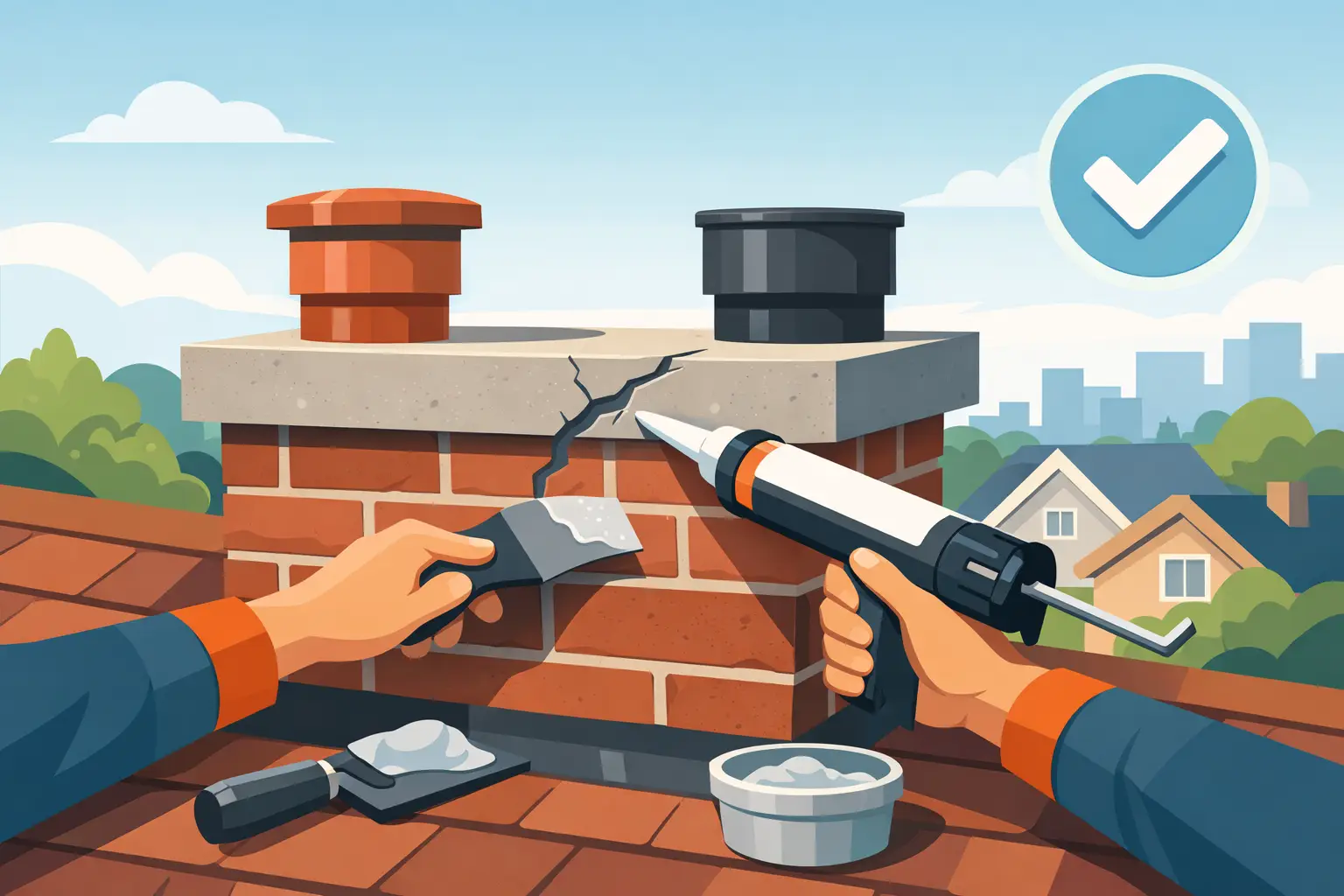
A crack across the concrete at the top of a chimney may look minor from the ground, but it can become the entry point for a much larger masonry repair. In northeastern Ohio and western Pennsylvania, repeated freezing, thawing, rain, and snow can push water into a damaged crown. Knowing how to fix chimney crown cracks starts with understanding whether the damage is a surface-level issue or a sign that the crown is failing.
The chimney crown is the sloped concrete surface that covers the top of the chimney around the flue tile. Its job is simple but essential: shed water away from the brickwork, mortar joints, and flue. When it is properly built and maintained, it helps keep the entire chimney structure dry. When it cracks, water can travel where it does not belong.
Concrete expands and contracts as temperatures change. Over time, this movement can cause hairline cracks, especially on older crowns or crowns made with unsuitable mortar. Water enters those openings, freezes during cold weather, expands, and widens the damage. What starts as a narrow line can eventually become loose concrete, crumbling brick, deteriorated mortar, and moisture inside the fireplace or home.
Crown damage can also affect the flue system. If the crown has separated from the flue tile or has large open cracks, rainwater may enter the space around the liner. This can contribute to rusted fireplace components, staining, odors, and masonry deterioration. A crown repair is often far less costly when handled before those secondary problems develop.
Not every crack requires complete crown replacement. The correct repair depends on the crack’s width, depth, location, and the overall condition of the concrete and chimney masonry.
A safe inspection begins from the ground with binoculars or during a professional chimney inspection. Avoid climbing onto a steep roof or leaning a ladder against a chimney without the right equipment. Beyond the fall risk, walking near a weakened crown or aging roof surface can cause additional damage.
Look for fine surface cracks, wider gaps, missing chunks of concrete, exposed aggregate, and separation where the crown meets the flue tile. Also watch for signs below the crown: spalling brick faces, worn mortar joints, white mineral staining, dampness in the firebox, or water marks on the ceiling near the chimney.
Hairline cracks in an otherwise solid crown may be suitable for sealing. Wider cracks, cracked-through sections, or a crown that slopes toward the flue or chimney instead of away from it usually call for more substantial repair. If the crown is soft, crumbling, or heavily patched already, replacement is generally the longer-lasting choice.
A repair will not last if the cause of the damage remains in place. Crowns often crack because they were built too thin, lack a proper overhang, were formed from mortar rather than durable crown material, or have poor drainage. A missing or damaged chimney cap can add to the problem by allowing water and debris directly into the flue.
In some cases, settling masonry, a loose flue tile, or deteriorated flashing is contributing to the issue. A complete assessment looks at the crown as part of the whole chimney system, not as an isolated slab of concrete.
For small, stable hairline cracks, a flexible, waterproof crown sealant can be an appropriate maintenance repair. Use a product made specifically for chimney crowns or exterior masonry – not ordinary household caulk. The material needs to withstand sunlight, temperature swings, and moisture while remaining flexible enough to move with the crown.
Choose a dry day with temperatures within the manufacturer’s recommended range. The crown must be clean and completely dry before any coating or sealant is applied. Brushing away loose debris is necessary, but do not use a pressure washer if it could force water into existing cracks or saturate the masonry shortly before repair.
Small cracks can be filled according to the product instructions, then the sealant is applied across the crown surface in a continuous, even layer. Pay close attention to the area around the flue tile, where movement often creates separation. The repair material should create a watertight surface without blocking the flue opening or covering a chimney cap’s mounting points.
This approach works best when the concrete is still structurally sound. A sealant is a protective repair, not a way to rebuild missing concrete or stabilize a crown that has broken apart. Applying coating over loose, damp, or deteriorated material may hide the problem briefly while allowing water damage to continue below.
Larger cracks often need to be opened, cleaned, and repaired with a compatible exterior masonry repair material before a waterproof coating is applied. That work requires careful preparation. Loose concrete must be removed without damaging the flue tile, and the repair needs to bond securely to a clean, stable surface.
If a crack extends through the full thickness of the crown, the crown has separated in sections, or there are multiple areas of deterioration, replacement is usually more reliable than repeated patching. The same is true when a crown lacks slope or does not extend beyond the chimney’s brickwork. Water that runs down the chimney face will continue to wear away mortar joints and brick, even if the crack itself is filled.
A professionally rebuilt crown is typically formed with a proper slope, a drip edge or overhang, and a separation joint around the flue tile to allow for movement. Those details matter. A flat crown or a crown locked tightly to the flue tile is more likely to hold water and crack again.
The materials and details used on a chimney are different from those used on a sidewalk or interior wall. Quick fixes can create more work later. Avoid these common mistakes:
It also helps to resist the temptation to repair only what is visible from the ground. Water often follows a longer path than expected. A small opening at the crown can show up later as a leaking ceiling, a rusty damper, or loose masonry several feet below.
A chimney professional can determine whether the crown crack is superficial or whether water has already affected the masonry, flue, liner, or fireplace components. This is especially valuable for homes with older chimneys, wood-burning fireplaces, inserts, or active leaks.
A Level 1 chimney inspection can identify visible conditions that affect safe operation and help distinguish necessary repair from work that can reasonably wait. For example, a small sealed crack may only need monitoring, while a loose flue tile or crown separation should be addressed promptly to prevent water intrusion and potential chimney instability.
Chimney Sweeps and Masonry of America provides local chimney and masonry assessments for homeowners and businesses in Trumbull, Mahoning, and Mercer counties. The goal should be a clear recommendation based on the actual condition of the chimney, whether that means targeted crack sealing, crown rebuilding, repointing, flashing repair, or no immediate repair at all.
Once the crown is repaired, keep water management at the center of ongoing maintenance. A properly fitted chimney cap helps keep rain, leaves, and animals out of the flue. Annual chimney inspections provide an opportunity to check the crown, cap, mortar joints, flashing, and liner before seasonal fireplace use.
After severe storms or a hard winter, look for new staining, fallen masonry debris, or visible changes at the chimney top. Catching small defects early protects both the chimney and the heating system it serves. A sound crown is not a decorative detail – it is one of the chimney’s first and most effective defenses against water damage.
We are a member of The National Chimney Guild. Certified Chimney Professional
 Optimized by Seraphinite Accelerator