- 330-505-6800
- Info@alifeprotector.com
- 11 North Main St , Niles Ohio 44446.

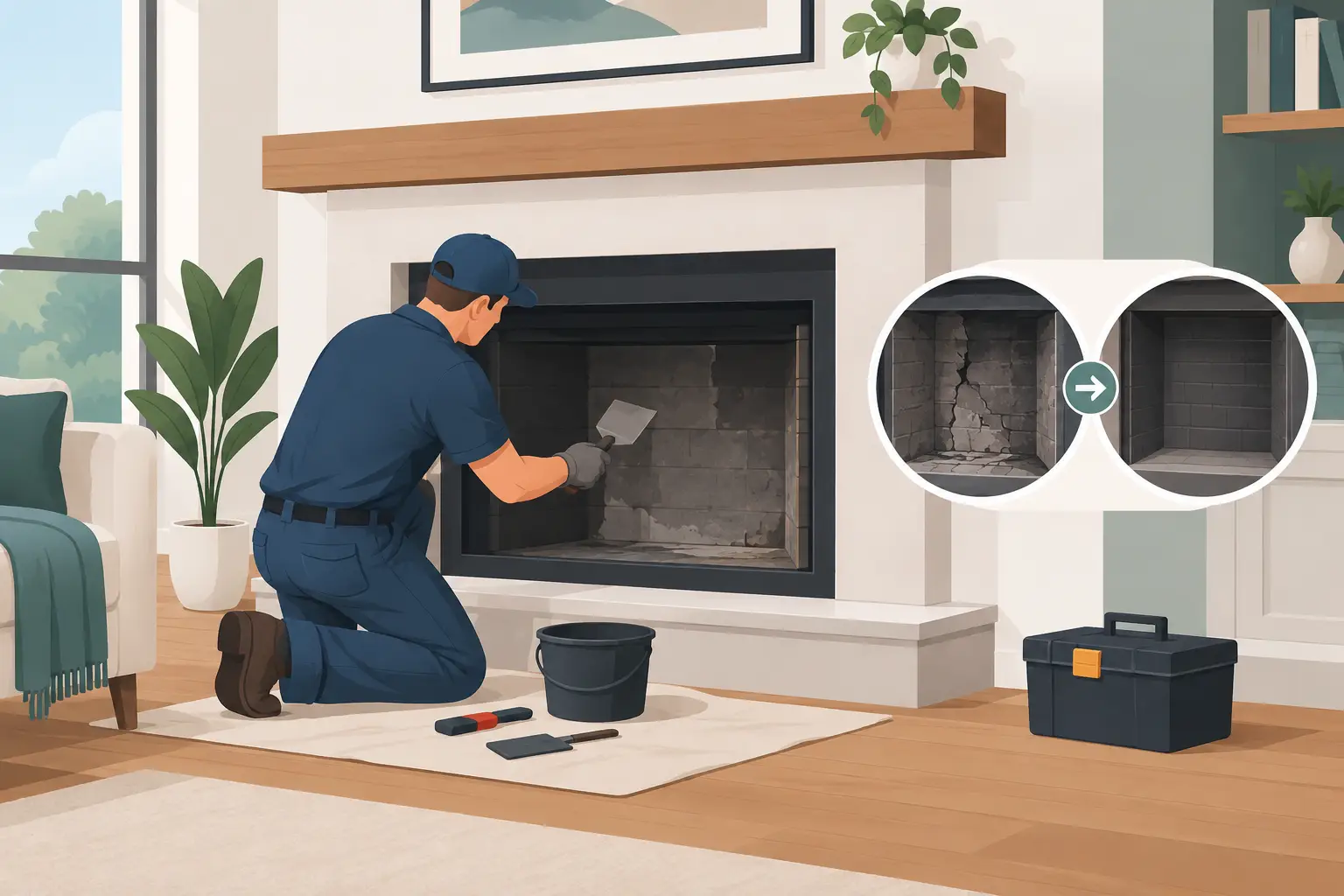
A firebox is built to contain intense heat, but it is not indestructible. Cracked firebrick, failing mortar joints, rusted metal panels, and loose refractory material can all compromise how safely your fireplace handles a fire. This guide to fireplace firebox repair explains what homeowners should look for, which repairs may be appropriate, and when it is time to stop using the fireplace and schedule a professional evaluation.
The firebox is the area where wood or gas burns. In a traditional masonry fireplace, it is typically lined with firebrick and heat-resistant mortar. Those materials protect the surrounding masonry and combustible framing from extreme heat while directing smoke and gases toward the smoke chamber and chimney.
Factory-built fireplaces work differently. Their fireboxes may include prefabricated steel components, refractory panels, insulation, and manufacturer-specific parts. Although both types serve the same basic purpose, their repair methods are not interchangeable. A repair that is acceptable for a masonry firebox can be unsafe in a factory-built unit.
That distinction matters because a firebox problem is not simply cosmetic. Damage can allow heat to reach areas that were never meant to be exposed to it. It can also worsen draft issues, create a path for smoke, and contribute to more expensive chimney or masonry repairs later.
A careful visual check before the heating season can catch concerns early. Ash and soot can hide small cracks, so the firebox should be clean enough to inspect. A few hairline surface marks in refractory materials are sometimes normal, especially in older systems, but gaps, loose material, or visible deterioration deserve a closer look.
Common warning signs include cracked or spalling firebrick, missing pieces of mortar between bricks, bricks that move when touched, and a firebox floor that is uneven or breaking down. White staining, dampness, rust, or crumbling material may point to water intrusion from a damaged chimney cap, crown, flashing, or exterior masonry. Water is often the underlying cause of firebox deterioration, even when the visible damage is inside the home.
Watch for performance changes as well. Smoke entering the room, an unusual odor, poor draft, or a fireplace that seems harder to light can signal a larger chimney-system issue. If you see exposed metal, damaged refractory panels, or warped components in a factory-built fireplace, discontinue use until the unit has been inspected.
The visible crack is not always the complete problem. A dependable repair begins by identifying why the firebox failed. Age and repeated heating cycles can wear down mortar, but water penetration, improper prior repairs, chimney movement, and excessive heat are also common causes.
For example, a few failed mortar joints may be repaired with the proper refractory mortar after the damaged material is removed and the surrounding brick is evaluated. But if several bricks are loose, the back wall is bowing, or moisture is continually entering through the chimney structure, patching joints alone will not provide a lasting solution.
A professional inspection can also determine whether the problem extends above the firebox. Damage in the smoke chamber, flue liner, damper area, or chimney masonry may affect fireplace safety and performance. Addressing the whole system is often more cost-effective than making the same interior repair every few years.
Masonry fireboxes can often be restored when deterioration is limited and the structure remains sound. Repair may involve removing damaged firebrick, resetting or replacing brick, and repointing joints with a mortar rated for high temperatures. The goal is to restore a smooth, durable surface that can safely contain heat.
Not every mortar product belongs in a firebox. Ordinary exterior masonry mortar, construction adhesive, caulk, and quick patch products are not designed for direct exposure to fire. They can fail under heat, release odors, or create an unsafe condition. Firebrick and refractory mortar must be selected for the application and installed correctly.
If the firebox floor has deteriorated, the repair may be more involved. The floor must support the weight of logs and endure repeated heating and cooling. A repair should preserve the intended dimensions and relationship between the firebox, hearth, smoke chamber, and damper. Small changes made without understanding the system can affect draft or clearance requirements.
Factory-built fireplaces are tested and listed as complete systems. Their refractory panels, metal fireboxes, grates, doors, and components are designed to work together under specific installation requirements. Generic firebrick, metal patching, or refractory cement may not be approved for use in that appliance.
When a refractory panel is cracked through, broken, missing, or severely deteriorated, replacement with the correct listed part is typically the safer path. The same applies to warped metal panels, damaged baffles, and failed components around the firebox. If the manufacturer or model information is available, it can help a qualified technician identify compatible replacement parts.
Do not assume a factory-built fireplace can be repaired like a site-built masonry fireplace. In some cases, age, unavailable parts, or extensive heat damage may make replacement of the unit the more responsible recommendation. An honest assessment should explain the options clearly rather than pushing replacement when a proper repair is still feasible.
Stop using the fireplace if firebrick is loose or missing, mortar joints have opened significantly, refractory panels are broken, metal components are warped, or smoke is entering the living space. You should also pause use when there are signs of water damage, such as persistent dampness, rust, staining, or crumbling masonry.
Avoid building a smaller fire to “test” a damaged firebox. Lower flames do not eliminate the risks associated with heat transfer, smoke leakage, or shifting materials. A damaged firebox should be evaluated before the next fire, particularly if the fireplace is a primary source of heat during an Ohio or western Pennsylvania winter.
Firebox repair works best as part of complete chimney care. A Level 1 chimney inspection can assess accessible areas of the fireplace and chimney, helping identify conditions that affect safe operation. Chimney sweeping also removes soot and creosote that can obscure damage and increase fire risk.
If moisture is contributing to deterioration, exterior repairs may be just as important as work inside the firebox. A worn crown, missing cap, failing flashing, open mortar joints, or damaged brick can send water into the chimney system. Correcting those conditions helps protect the new firebox repair and the structure around it.
For wood-burning fireplaces, proper fuel and operating habits also help extend service life. Burn seasoned firewood, keep fires within the fireplace’s intended size, and avoid burning trash, treated lumber, or large amounts of paper. These materials can create excessive heat, corrosive residue, and unnecessary stress on the firebox and flue.
A firebox repair should never be based on appearance alone. The right approach depends on whether you have a masonry or factory-built fireplace, the extent of the damage, the condition of the chimney, and whether water or structural movement is involved. A qualified chimney professional can explain what needs immediate attention, what can be monitored, and what work may be unnecessary.
Chimney Sweeps and Masonry of America provides clear assessments for homeowners throughout Trumbull, Mahoning, and Mercer counties, with repair recommendations focused on safe, lasting results. A well-repaired firebox protects more than the fireplace itself – it helps preserve the comfort, efficiency, and peace of mind your home deserves every heating season.
We are a member of The National Chimney Guild. Certified Chimney Professional
 Optimized by Seraphinite Accelerator