- 330-505-6800
- Info@alifeprotector.com
- 11 North Main St , Niles Ohio 44446.

A fireplace can look perfectly sound from the living room while a critical area just above the firebox is rough, damaged, or full of debris. This guide to chimney smoke chambers explains what happens in that hidden space, why its condition affects fireplace performance and safety, and when a professional inspection is the right next step.
For homeowners across northeastern Ohio and western Pennsylvania, smoke chamber concerns often show up as smoke entering the room, stubborn odors, poor draft, or questions raised during a chimney inspection. The answer is not always a major rebuild. In some cases, targeted cleaning or repair is appropriate. In others, the chamber is part of a larger issue involving the flue, fireplace, crown, or masonry.
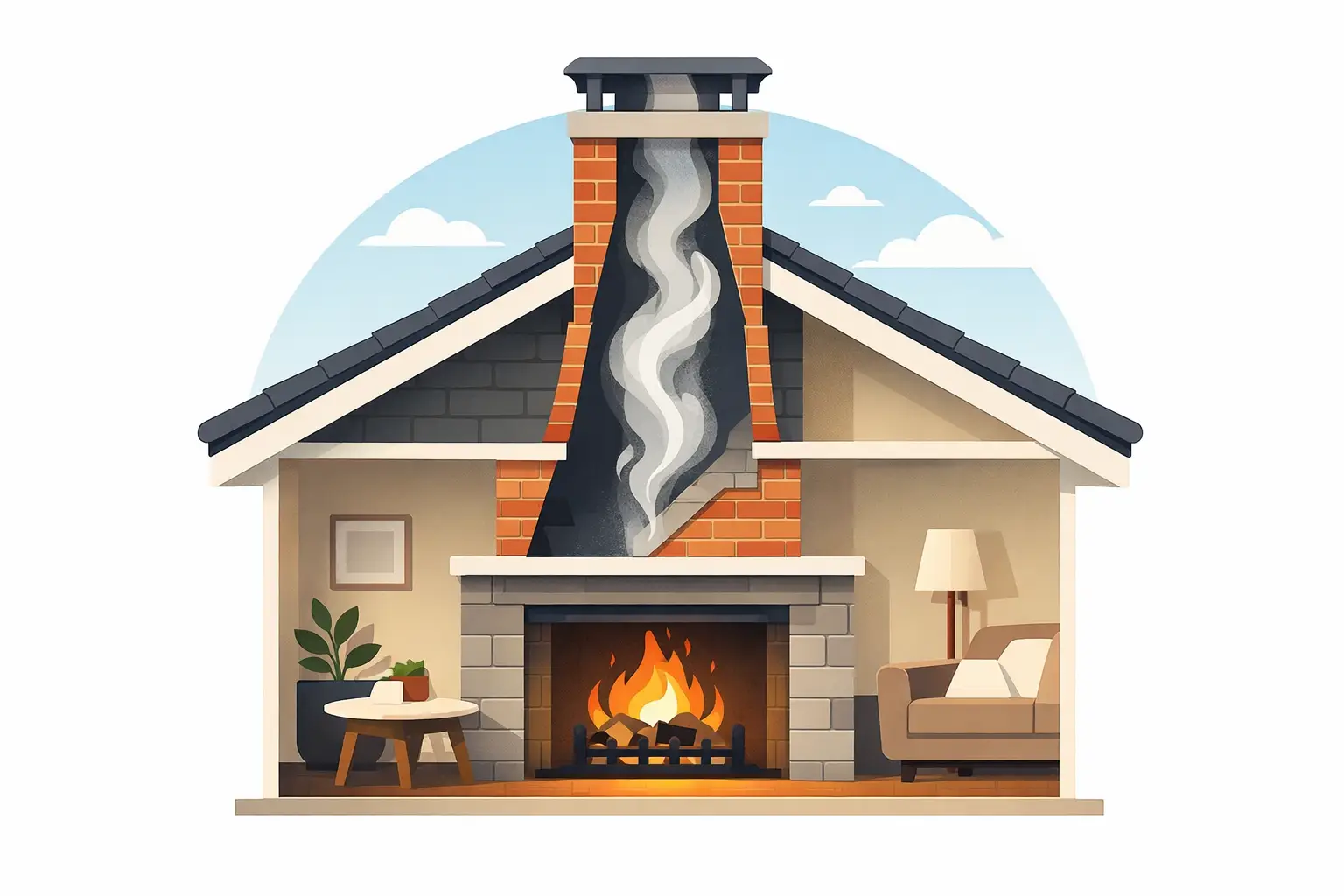
The smoke chamber is the area directly above the fireplace’s firebox and below the flue. Its job is simple but essential: it narrows the broad opening above the fire into the smaller flue passage that carries smoke, gases, and heat safely outdoors.
In a traditional masonry fireplace, the chamber is often formed with angled brickwork. This stepped construction is sometimes called corbeling. A properly built chamber creates a smooth path for rising smoke. When the surfaces are uneven, cracked, deteriorated, or coated with heavy creosote, the flow of exhaust can be disrupted.
The smoke chamber is not the same as the damper. The damper is the movable metal plate or throat component that opens when you use the fireplace and closes when it is not in use. The smoke chamber sits above that area and remains part of the chimney structure at all times.
Wood smoke carries heat, moisture, gases, and unburned particles. As it moves upward, it needs a clear, appropriately sized path. The smoke chamber helps direct that flow into the flue. If the chamber is poorly shaped or obstructed, smoke can slow down, swirl, cool too quickly, and deposit more residue on interior surfaces.
Creosote is a concern in any wood-burning system, including the smoke chamber. It can be flaky, tar-like, or hard and glazed depending on how the appliance has been used and how the chimney drafts. Because creosote is combustible, a buildup increases the risk of a chimney fire.
Damaged mortar joints, loose brick, or deteriorated parging can also create hazards. Pieces of masonry may fall into the firebox, restrict the passage, or signal that heat and moisture have been affecting the chimney for a long time. A smoke chamber should never be treated as an afterthought simply because it is not visible during everyday fireplace use.
A smoky fireplace does not automatically mean the smoke chamber needs repair. Cold outdoor temperatures, negative air pressure in a tightly sealed home, a closed damper, wet firewood, a blocked cap, or an undersized flue can all contribute to draft trouble.
Still, the chamber is a logical place to evaluate when smoke spills into the room or a fireplace has never performed well. A trained chimney professional can examine the full system rather than recommending a repair based on one symptom alone.
Homeowners cannot usually inspect the entire smoke chamber safely from the hearth. However, several warning signs deserve a closer look. Smoke entering the room when the fire is lit is one of the most obvious. Strong smoky odors during humid weather or after rainfall can also point to creosote, moisture, or airflow concerns inside the chimney.
Falling debris in the firebox is another warning sign. Small amounts of soot after use are normal, but chunks of mortar, tile, or brick are not. If you see deteriorating material above the damper, stop using the fireplace until it has been assessed.
Other signs can include a fireplace that is difficult to start, soot staining around the opening, unusually poor heat performance, or evidence of water intrusion in the chimney structure. Water and freeze-thaw cycles can damage exterior masonry, while moisture entering the chimney can worsen interior deterioration over time.
A Level 1 chimney inspection is a sensible starting point for a regularly used fireplace or when no recent evaluation has been completed. If the inspection identifies an inaccessible concern, additional diagnostic work may be recommended. That recommendation should be based on what was found, not on a one-size-fits-all sales pitch.
The right repair depends on the construction of the fireplace, the extent of the damage, and the condition of the flue above it. Minor surface defects may be addressed by cleaning the chamber and applying a suitable high-temperature chamber coating or parging material. This can help create a smoother, more durable surface when the underlying masonry is still stable.
If brickwork is loose, deeply deteriorated, or improperly constructed, more extensive masonry repair may be necessary. The work might involve rebuilding portions of the smoke chamber, restoring proper transitions, or correcting damage connected to the throat and damper area.
In some fireplaces, the condition of the smoke chamber leads to a broader conversation about relining the chimney. A properly sized liner can improve the path for exhaust gases, particularly when an appliance has been changed or the existing flue is damaged. A liner is not automatically the answer for every masonry fireplace, but it can be an important safety improvement in the right situation.
A well-finished smoke chamber has fewer ledges and rough gaps where soot and creosote can collect. Smoother surfaces also reduce turbulence as smoke moves into the flue. That does not turn an inefficient fireplace into a high-efficiency heating appliance, but it supports more consistent operation and makes routine maintenance more effective.
The materials matter. Ordinary mortar is not necessarily appropriate for high-heat areas, and shortcuts can fail under repeated heating and cooling. Professional repairs should use materials suited to chimney temperatures and the specific repair being performed.
A proper chimney sweeping addresses more than the section of flue visible from the roof. Depending on the system and access, cleaning may include the firebox, damper area, smoke shelf, smoke chamber, and flue. The goal is to remove soot, creosote, and debris without sending contaminants into the home.
Smoke chambers can be difficult to access because they sit above the fireplace opening and change shape as they rise. Specialized brushes, vacuums, lighting, and inspection tools help a chimney technician evaluate and clean this area safely. Trying to reach deep into the chamber with household tools can damage components, leave combustible deposits behind, or expose you to falling debris and soot.
How often cleaning is needed depends on how frequently the fireplace or stove is used, the type and moisture content of the wood, the appliance design, and the chimney’s draft. Annual inspection is a practical baseline for most homeowners, especially before the heating season. A chimney that sees frequent wood-burning use may need more frequent service.
A smoke chamber repair will last longer when the rest of the chimney is maintained. Water is one of masonry’s most persistent enemies. A sound chimney cap, properly constructed crown, effective flashing, and well-maintained mortar joints help keep water from reaching vulnerable areas.
Outside damage can eventually affect the inside of the chimney. Cracked crowns and missing mortar allow water into the masonry, where freezing temperatures can expand that moisture and worsen the damage. Conversely, an interior issue such as a damaged flue liner can allow heat and combustion byproducts to reach areas not designed to handle them.
This is why chimney care works best as a complete assessment. The fireplace, smoke chamber, flue, liner, cap, crown, flashing, and exterior masonry all have separate roles, but they operate as one system.
Schedule service before using the fireplace if you have smoke in the home, falling masonry debris, a persistent odor, visible damage around the damper, or any concern following a chimney fire. You should also arrange an inspection when buying an older home with a fireplace or returning to a chimney that has not been used or serviced in several years.
Chimney Sweeps and Masonry of America provides clear, professional assessments for homeowners who want to understand their options before approving repairs. A qualified technician can identify whether your smoke chamber needs cleaning, surface repair, masonry restoration, liner work, or simply routine monitoring.
A smoke chamber may be out of sight, but it should not be out of mind. Keeping this passage clean, stable, and properly finished helps your fireplace do what it was built to do: move smoke safely away from the people gathered around it.
We are a member of The National Chimney Guild. Certified Chimney Professional
 Optimized by Seraphinite Accelerator