- 330-505-6800
- Info@alifeprotector.com
- 11 North Main St , Niles Ohio 44446.

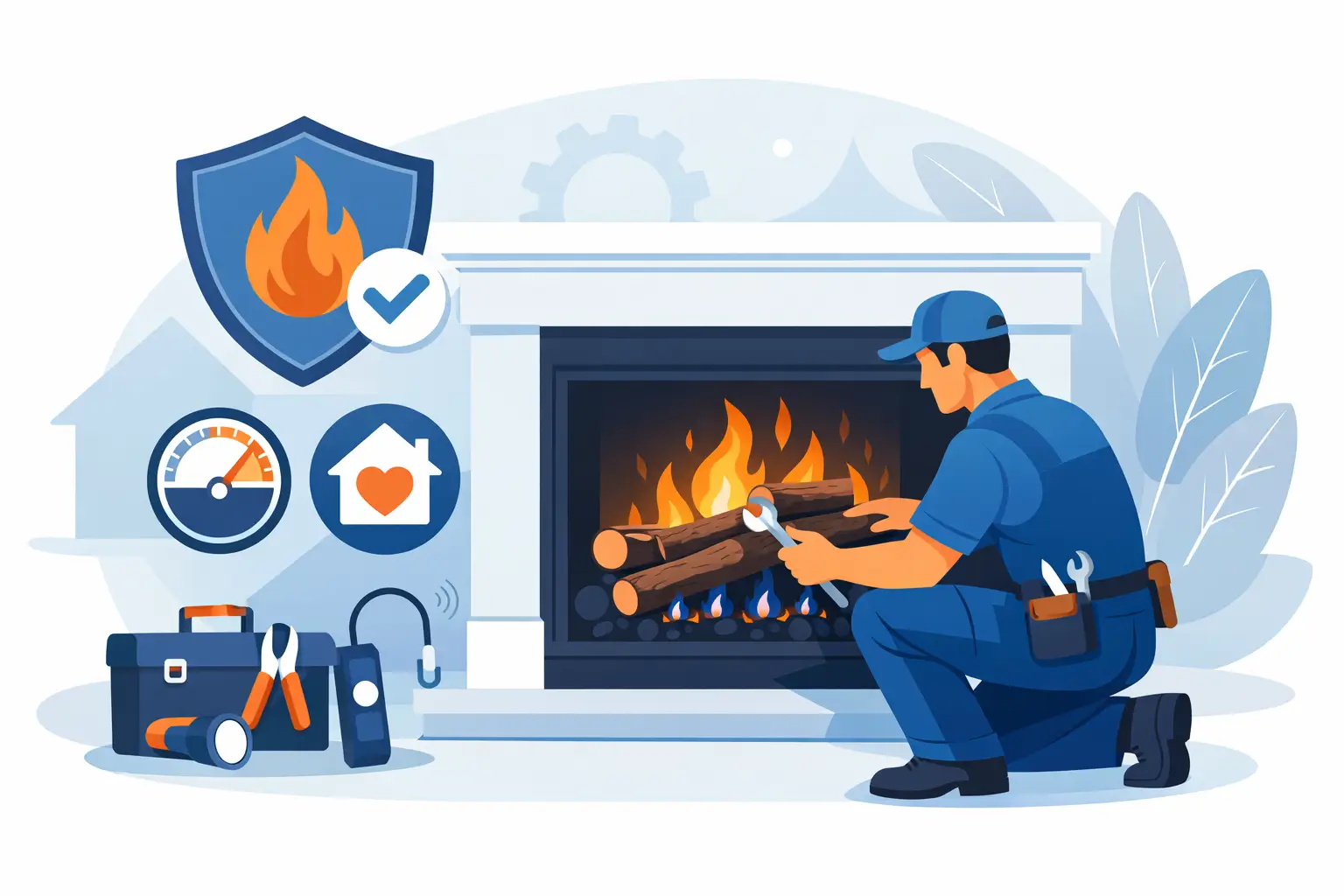
A gas fireplace should start cleanly, burn with a steady flame, and add warmth without leaving you wondering whether something is wrong. When the pilot will not stay lit, the flames look uneven, or a familiar odor changes, it is time to schedule professional gas log service. Routine attention protects the comfort of your home while helping identify small concerns before they become a no-heat problem or a safety issue.
For homeowners in Trumbull, Mahoning, and Mercer counties, gas logs are often used most heavily when cold weather arrives. That makes early fall an ideal time for service, but a fireplace that shows warning signs deserves attention at any point in the year.
Gas logs are not maintenance-free simply because they do not create ash like a wood-burning fireplace. Dust, pet hair, insects, residue, and normal wear can affect ignition, flame appearance, and safe operation. A professional appointment is designed to assess the complete appliance, not just make the flames look better.
A typical service visit begins with a review of how the fireplace has been operating. Technicians look for issues such as delayed ignition, a pilot that goes out, unusual odors, soot, weak flames, or controls that do not respond consistently. They then clean accessible components carefully, including the log set, burner area, pilot assembly, and firebox, following the appliance manufacturer’s requirements.
The technician should also check the gas connections, burner performance, ignition system, safety controls, and the condition of the logs and embers. With vented gas logs, the damper and venting path must be evaluated so combustion products can exit as intended. If the fireplace has a chimney, its condition matters too. A clean-looking firebox does not confirm that the chimney or vent system is clear, sound, and properly sized.
At Chimney Sweeps and Masonry of America, the goal is to give property owners a clear assessment of what is working, what needs attention, and what can wait. Reliable recommendations should be based on the appliance’s condition, not on pressure to replace equipment that can be safely repaired.
An annual service appointment is a practical part of responsible home maintenance. It is especially valuable before the heating season, when fireplace companies are busiest and families are more likely to use their systems regularly.
The most immediate benefit is safety. Gas appliances produce heat through combustion. When components are dirty, worn, damaged, or incorrectly positioned, the appliance may not burn as designed. A trained technician can spot concerns that are easy to miss, including corrosion, burner blockage, damaged wiring, deteriorated seals, or log placement that disrupts the flame pattern.
Service also supports performance. A properly operating gas log set generally lights more reliably and produces a more consistent, attractive flame. Cleaning the pilot and burner ports can help prevent nuisance shutdowns or uneven burning. This does not mean every fireplace problem has a simple cleaning solution. A failed thermocouple, ignition module, valve, remote receiver, or gas supply issue may require repair or replacement. The right approach depends on the appliance, its age, and the availability of approved parts.
There is an efficiency benefit as well. When a gas fireplace is functioning properly, it is less likely to waste fuel through poor combustion or repeated failed starts. For homes using the fireplace as a supplemental heat source, keeping it in good condition can support comfortable, responsible energy use throughout the season.
Do not wait for a complete breakdown if the fireplace is telling you something has changed. Call for service if you notice a gas odor when the unit is not operating, visible soot on the logs or glass, yellow or lazy flames where the manufacturer calls for blue flames, repeated clicking without ignition, or a pilot light that will not remain lit.
Other concerns include a fireplace that shuts off unexpectedly, a remote or wall switch that works only intermittently, a burner that lights with a loud whoosh, or black staining around the appliance. Some vented gas log systems can develop light soot over time, but excessive soot is never something to brush aside. It can point to an air supply, venting, burner, or log-placement issue that needs professional evaluation.
If you smell strong gas, hear hissing near the gas line, or suspect a leak, do not attempt to relight the appliance. Leave the area, avoid operating electrical switches or open flames, and contact the appropriate emergency gas provider or emergency services from a safe location. Fireplace service is important, but suspected gas leaks require immediate precautions.
Not all gas log systems operate the same way. Knowing whether your unit is vented or vent-free helps set the right expectations for maintenance and use.
Vented gas logs are designed to operate with the chimney damper open so exhaust can travel out through the venting system. They typically produce a more natural-looking flame, but much of the heat goes up the chimney. Their performance depends on a sound chimney, a properly operating damper, and clear venting.
Vent-free gas logs are designed to burn very efficiently indoors and do not use the chimney in the same way. Because combustion takes place in the living space, correct setup, clean burners, and functioning oxygen depletion safety systems are particularly important. Local codes, manufacturer instructions, room size requirements, and the condition of the home all matter. A professional can help determine whether your existing setup is appropriate and safe, rather than making assumptions based on appearance alone.
In either case, never move logs, embers, or burner components just to change the flame pattern. Gas log sets are arranged according to a specific design. Even a small adjustment can interfere with combustion and create soot or performance problems.
For vented systems, gas log service should be considered alongside chimney care. A damper that is stuck, a chimney cap that is damaged, deteriorated flashing, or moisture entering the masonry can affect the long-term condition of the fireplace and chimney. Water is one of the most common causes of masonry deterioration in northeastern Ohio and western Pennsylvania, where freeze-thaw cycles can turn minor cracks into larger repairs.
A Level 1 chimney inspection can provide a visual review of readily accessible portions of the chimney and venting system. It is often a sensible choice when purchasing a home, returning a fireplace to use after a long period, or addressing concerns about drafts, odors, water intrusion, or visible damage. More extensive evaluation may be needed when there has been a known chimney event, a change in appliance type, or signs of hidden damage.
This whole-system perspective is valuable because it avoids treating one symptom while overlooking the cause. For example, a draft complaint may involve the fireplace controls, but it may also relate to the chimney, cap, damper, or surrounding masonry.
There are a few simple habits that support safe operation. Keep the area around the fireplace clear of decorations, furniture, and combustible materials. Use the appliance only as directed by its manufacturer, and do not operate it if the glass, controls, logs, or burner components are damaged.
Maintain working carbon monoxide alarms on every level of the home and near sleeping areas, following the alarm manufacturer’s placement guidance. Test alarms regularly and replace batteries or units as required. Carbon monoxide is odorless, so an alarm is an essential layer of protection, not an optional accessory.
It is also helpful to pay attention to changes. Take a quick look at the flame pattern when the fireplace is working normally. If it becomes noticeably different later, you will have a clearer description to share with a technician. Avoid using household cleaners, vacuum attachments, or compressed air on internal fireplace components unless the manufacturer specifically permits it. These products and tools can damage delicate parts or move debris where it does not belong.
A fireplace is easier to repair on a mild fall day than during the first winter cold snap. Scheduling gas log service before regular use gives a technician time to clean, inspect, and address any repair needs without interrupting the comfort of your home when you need the heat most.
If your gas logs have not been serviced recently, if the fireplace is showing a change in performance, or if you are unsure how the system vents, a qualified local professional can provide straightforward answers. A well-maintained fireplace should feel like a dependable part of your home, not another item on your list of worries.
We are a member of The National Chimney Guild. Certified Chimney Professional
 Optimized by Seraphinite Accelerator