- 330-505-6800
- Info@alifeprotector.com
- 11 North Main St , Niles Ohio 44446.

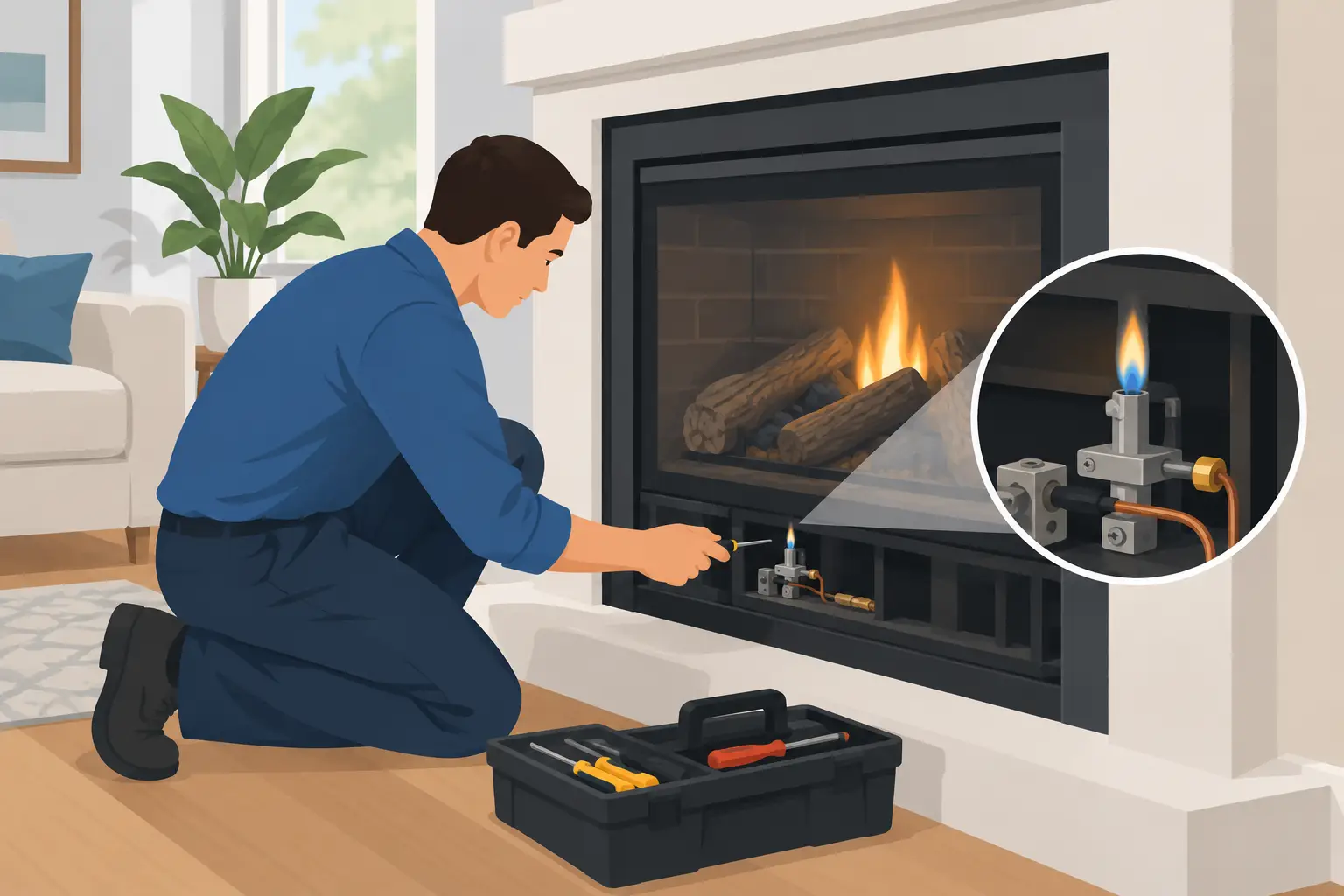
A gas fireplace that will not light is more than an inconvenience on a cold Ohio evening. Whether the pilot will not start, will not stay lit, or the burner will not come on after ignition, gas fireplace pilot troubleshooting should begin with safe observations, not trial and error. Modern gas appliances have safety systems designed to stop operation when something is wrong, and those systems should not be bypassed.
For homeowners in Trumbull, Mahoning, and Mercer counties, the first goal is simple: identify whether the issue is a basic operating problem or a reason to schedule professional gas fireplace service. A few checks are appropriate for a homeowner. Cleaning internal components, testing gas pressures, or working around ignition wiring are jobs for a trained technician.
If you smell gas, hear a persistent hissing sound, or suspect a gas leak, do not attempt to light the fireplace. Avoid switches, phones, lighters, and other possible ignition sources near the appliance. Leave the area, move to a safe location, and contact your gas utility or emergency services as directed.
If there is no gas odor but the fireplace has failed to light, turn the appliance control to the off position and allow it to sit for at least five minutes before trying again. This gives any unburned gas time to clear. Keep children and pets away while you inspect the unit, and make sure working carbon monoxide alarms are installed in the home.
A gas fireplace should also be serviced with its manufacturer instructions in mind. The lighting sequence, control location, and reset procedure vary by model. The rating plate or owner manual can help identify whether you have a standing-pilot fireplace or an intermittent-pilot ignition system.
A standing-pilot fireplace keeps a small pilot flame burning during the heating season. You usually light it manually with a control knob and igniter button. When you turn on the fireplace, that flame heats a safety sensor and allows the main burner to open.
An intermittent-pilot system does not keep a flame burning all the time. Instead, it creates a spark and lights the pilot only when the fireplace receives a call for heat from a wall switch, remote, thermostat, or control module. These systems can be more efficient, but batteries, receiver settings, wiring, and electronic controls can affect operation.
Knowing the type of system narrows the problem. A pilot that will not remain lit on a standing-pilot unit has different likely causes than a fireplace that does nothing when a remote is pressed.
Begin with the simple items that do not require opening the sealed firebox or handling gas components. Confirm that the fireplace gas shutoff valve is open. The valve is often located near the appliance, in a lower control compartment, or along the gas line. If you are unsure which valve serves the fireplace, stop and ask a professional rather than turning multiple valves.
Next, check the power source for the control system. Many electronic gas fireplaces use batteries in the remote, receiver, or backup battery pack even if the unit is connected to household electricity. Replace weak batteries with fresh ones of the correct type. Make sure the receiver is set to “on” or “remote,” rather than “off,” and verify that the wall switch is in the correct position.
If the fireplace uses a standing pilot, look through the viewing area after following the manufacturer’s lighting instructions. A healthy pilot flame is generally steady and positioned to heat the thermocouple or flame sensor. A small, wavering, yellow, or poorly aimed flame can signal a dirty pilot assembly, low gas pressure, or another service issue.
For an intermittent-pilot model, listen and watch during the startup sequence. A clicking sound with no visible spark may point to an ignition issue. A visible spark that does not light the pilot can indicate a fuel supply, pilot-orifice, or gas-pressure concern. If the pilot lights but shuts off immediately, the flame-sensing circuit may not be proving a stable flame.
Do not repeatedly cycle the igniter. Several unsuccessful attempts can drain batteries, add wear to components, and, in some situations, allow unburned gas to accumulate. One careful attempt after the required waiting period is reasonable. Continued failure calls for service.
When a pilot flame starts but goes out as soon as the control knob is released, the most common explanation is that the safety sensor is not receiving enough heat. On older systems, the thermocouple may be worn, dirty, loose, or no longer producing the required electrical signal. On electronic systems, the flame sensor or ignition module may be at fault.
Dust, pet hair, lint, and corrosion can also affect the pilot assembly. Gas fireplaces may look clean from the room, while the control compartment and burner area collect debris over time. Insects are another common cause of blocked pilot openings, particularly after a fireplace has sat unused through spring and summer.
A weak pilot is not always a simple cleaning issue. Improper gas pressure, a damaged component, or venting problems can all affect combustion. This is why a technician should inspect the complete system instead of replacing a single part based only on symptoms.
A lit pilot with no main burner is frustrating, but it provides useful information. It means the appliance has at least some gas supply and ignition function. The remaining issue may involve the wall switch, remote receiver, thermostat, wiring, burner control valve, or safety circuit.
Start by confirming the thermostat setting, if your fireplace has one. Set it above room temperature and wait briefly for the appliance to respond. Then check remote batteries and receiver settings. If the unit has a wall switch, make sure it has not been accidentally turned off.
If those checks do not restore operation, avoid removing panels or jumping wires to force the burner on. Gas fireplace control systems are designed to prevent burner operation when they cannot verify safe conditions. A qualified technician can test the switch circuit, millivolt output, module, valve, and ignition components without defeating those safeguards.
A fireplace that fails once after sitting unused may only need a correct reset procedure or new batteries. Repeated pilot problems deserve a closer look. Schedule professional service if you notice a gas odor, soot on the glass or logs, delayed ignition, frequent pilot outages, unusual burner flames, clicking that continues without ignition, or a carbon monoxide alarm activation.
Soot and yellow, lazy flames deserve particular attention. Gas fireplaces are designed to burn cleanly when the burner, logs, air shutter, venting, and fuel supply are correctly set. Changes in flame appearance can indicate incomplete combustion or a venting concern. Do not continue using the appliance until it has been evaluated.
Annual service is also a practical way to prevent many pilot problems. A proper appointment can include cleaning the burner and pilot area, checking the ignition system, inspecting the glass gasket and firebox, verifying safe operation, and reviewing the venting system. This care supports dependable heat, helps preserve efficiency, and can extend the life of the appliance.
Gas fireplace repairs require an approach that is both careful and complete. Replacing a battery may solve a simple control issue, but replacing parts without diagnosis can waste money and leave the original problem unresolved. A trained fireplace technician should identify why the system failed, explain the recommended repair, and help you understand whether service, cleaning, or component replacement is truly needed.
Chimney Sweeps and Masonry of America provides reliable gas fireplace cleaning and repair for homeowners who want straightforward answers and high-quality workmanship. Our team can evaluate pilot and ignition concerns alongside the condition of the fireplace venting system, helping protect both comfort and combustion safety.
When your gas fireplace will not light, the safest next step is not to keep trying different fixes. Give the appliance time to clear, complete the basic checks appropriate for your model, and arrange professional service if the issue persists. A well-maintained fireplace should bring steady warmth to your home, not uncertainty every time you turn it on.
We are a member of The National Chimney Guild. Certified Chimney Professional
 Optimized by Seraphinite Accelerator