- 330-505-6800
- Info@alifeprotector.com
- 11 North Main St , Niles Ohio 44446.

A chimney can look sound from the roofline while the clay tiles inside tell a different story. Cracked, shifted, or deteriorated flue tiles can allow heat, smoke, and combustion byproducts to reach areas never designed to handle them. Flue tile restoration is not simply a cosmetic masonry project. It is a safety decision that should begin with a qualified inspection of the complete chimney system.
For homeowners in Trumbull, Mahoning, and Mercer counties, this issue often appears in older homes with original masonry chimneys. Years of heating cycles, moisture exposure, chimney fires, and normal settling can all damage a tile liner. The right remedy depends on the extent and location of that damage, the appliance connected to the chimney, and whether the existing flue can still perform safely.
Flue tiles are the clay sections stacked inside many masonry chimneys. Their purpose is to create a contained passage for smoke, gases, and heat as they move from a fireplace, wood stove, furnace, or other appliance to the outdoors. They also help protect the surrounding brick, mortar, framing, and other parts of the home from excessive heat and corrosive byproducts.
A properly sized, continuous liner supports better draft and cleaner operation. When the liner is damaged, the chimney may lose heat too quickly, draft poorly, or allow dangerous gases to escape through gaps. In wood-burning systems, cracked tiles can also create a path for heat and sparks to reach combustible material near the chimney.
The challenge is that most tile damage is hidden. A homeowner may notice a smoky fireplace, an unusual odor, falling pieces of clay in the firebox, or water staining near the chimney. In other cases, there are no obvious warning signs until a camera inspection reveals the condition inside the flue.
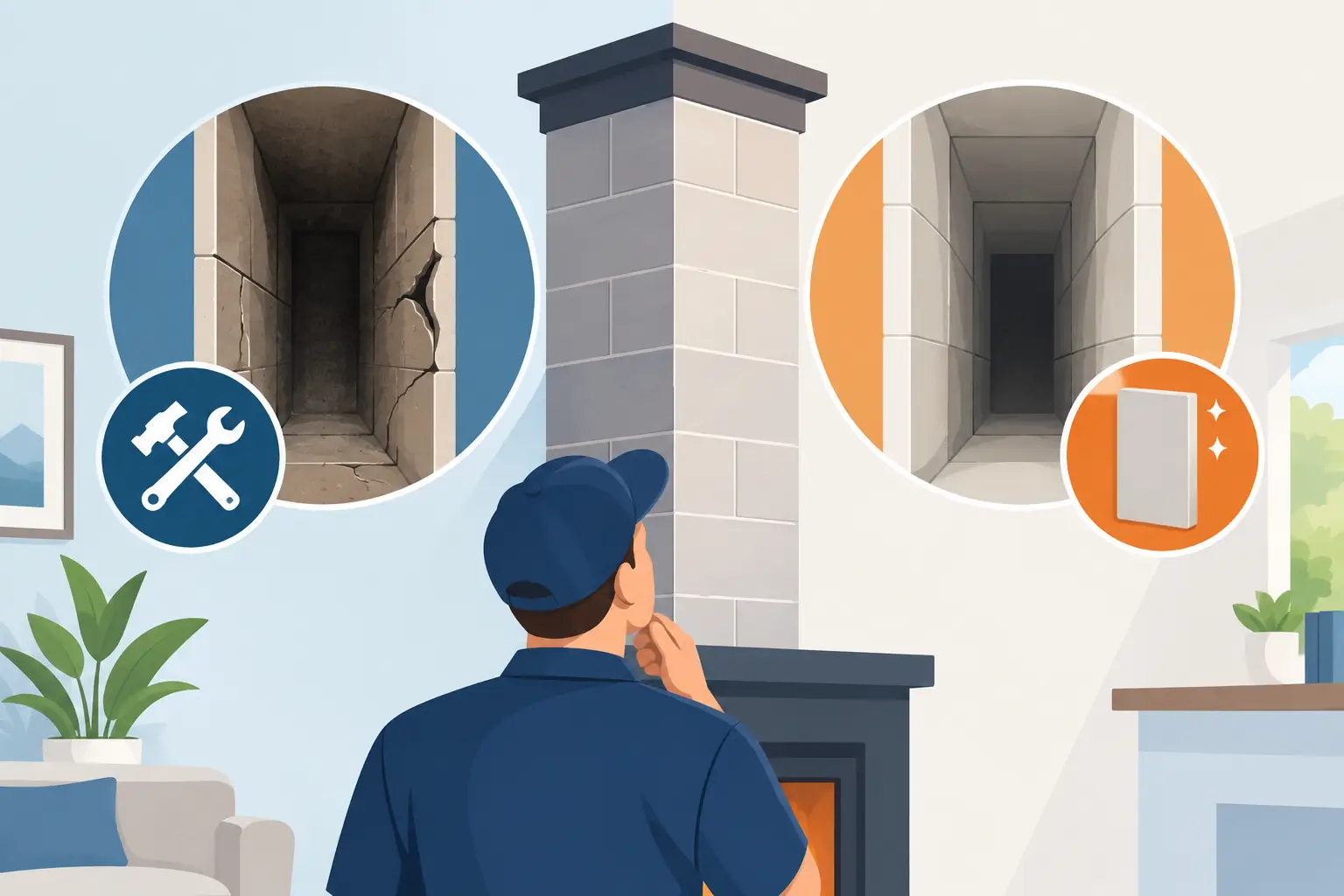
Not every damaged tile liner requires a full rebuild or complete replacement. Restoration may be appropriate when the damage is limited and the flue remains structurally sound. For example, a small area of deteriorated mortar between tile sections, minor surface wear, or localized damage near the top of the chimney may be repairable with the right method.
The key word is localized. A repair should restore a continuous, safe passage for the appliance, not merely cover evidence of a problem. A professional inspection can determine whether the issue is confined to one accessible section or whether it continues farther down the chimney.
In some situations, repairs to the crown, cap, flashing, or exterior mortar are part of preserving the flue tiles. Water is one of masonry’s most persistent enemies. Once it enters through a failed crown or open mortar joints, freeze-thaw cycles can loosen brickwork and accelerate liner damage. Addressing the water source protects both the chimney exterior and the system inside it.
Flue tile restoration can be a sensible choice when it provides a durable repair without disturbing sound portions of the chimney. It is not the right answer when multiple tiles are cracked, displaced, undersized, or damaged by a chimney fire.
Some chimney problems announce themselves clearly, while others remain quiet until an inspection. Schedule an evaluation if you notice persistent smoke entering the room, weak draft, excessive creosote buildup, or a change in how your fireplace or stove performs.
Clay fragments in the firebox or at the base of the chimney are another concern. They can indicate that a tile liner is cracking or breaking apart. A strong smoky odor, discoloration on walls near the chimney, or signs of moisture in the attic can also point to conditions that deserve prompt attention.
A chimney fire is a reason to have the flue inspected before using the system again, even if the fire seemed small or was quickly contained. High heat can crack liners, damage mortar joints, and compromise areas that cannot be seen during a basic visual check.
Older homes deserve particular attention when a new appliance is installed. A wood stove insert, gas appliance, or high-efficiency heating unit may require a liner that is sized and rated for that specific application. An existing tile liner may be intact but still unsuitable for the appliance it is serving.
The decision between repairing flue tiles and relining a chimney should be based on evidence, not assumptions. A Level 1 inspection is often appropriate for a system that has not changed and has no known concerns. When tile damage, a performance problem, or a change in appliance is involved, a more detailed evaluation may be needed to see the full condition of the flue.
Localized tile repair may cost less upfront and preserve the original chimney construction. It can be a good fit where damage is limited, access is practical, and the repaired flue will still be correctly sized for the connected appliance. The trade-off is that a repair does not solve widespread deterioration deeper in the chimney.
A stainless steel liner is frequently recommended when clay tiles are extensively cracked, when a flue is too large or too small for the appliance, or when a new stove insert needs a properly matched venting system. A liner can create a continuous passage from the appliance connection to the chimney top, improving draft and containing combustion byproducts. It may also make future maintenance more straightforward.
In certain chimneys, removing and replacing damaged clay tiles is possible, but it can be labor-intensive and may require significant masonry work. This approach is evaluated case by case. The best solution is the one that safely matches the chimney, appliance, budget, and long-term condition of the home.
A liner problem and a masonry problem are often connected. Chimneys stand above the roof and absorb rain, snow, wind, and seasonal temperature changes year after year. In northeastern Ohio and western Pennsylvania, moisture that enters small cracks can freeze, expand, and turn a manageable issue into major masonry deterioration.
A chimney cap helps keep rain, snow, leaves, and animals out of the flue. A properly built crown directs water away from the chimney structure. Sound flashing prevents water from entering where the chimney meets the roof, while repointing replaces worn mortar before bricks begin to loosen.
These repairs do not replace a damaged liner, but they help prevent further damage to the liner and the chimney around it. When exterior masonry is ignored, a new liner alone may not protect the investment for long. A complete recommendation should consider the flue, firebox, crown, cap, flashing, brickwork, and appliance connection together.
A reliable chimney assessment should give you clear information, not pressure to approve the largest possible project. The technician should explain what was found, where it is located, how it affects safe operation, and what options are reasonable for your chimney.
Photos or video from inside the flue can be especially helpful when discussing tile damage. You should be able to understand whether the concern is a small defect, widespread cracking, a sizing issue, water-related deterioration, or evidence of heat damage. If immediate repairs are necessary for safe use, that should be explained plainly. If monitoring or scheduled maintenance is sufficient, that deserves the same honesty.
At Chimney Sweeps and Masonry of America, our approach is to evaluate the whole system and recommend work that supports safe, long-lasting performance. That may include cleaning, inspection, liner work, crown repair, repointing, or a combination of services. It may also mean confirming that a minor issue does not yet require major restoration.
Waiting until the first cold week of the year can limit your options, especially if a chimney must be taken out of service for repairs. Scheduling cleaning and inspection before regular fireplace or stove use gives you time to understand the condition of the flue and plan any needed work without rushing.
Avoid using a chimney that has known liner damage until it has been professionally evaluated. A fireplace that still draws smoke upward is not necessarily safe. Draft is only one part of the system’s performance, and hidden cracks can remain a serious concern.
A careful inspection can turn uncertainty into a practical plan, whether your chimney needs targeted flue tile restoration, a properly sized liner, or simply maintenance that keeps moisture and wear under control. Giving the system attention now helps protect your home, your heating equipment, and the people gathered around the fire.
We are a member of The National Chimney Guild. Certified Chimney Professional
 Optimized by Seraphinite Accelerator