- 330-505-6800
- Info@alifeprotector.com
- 11 North Main St , Niles Ohio 44446.

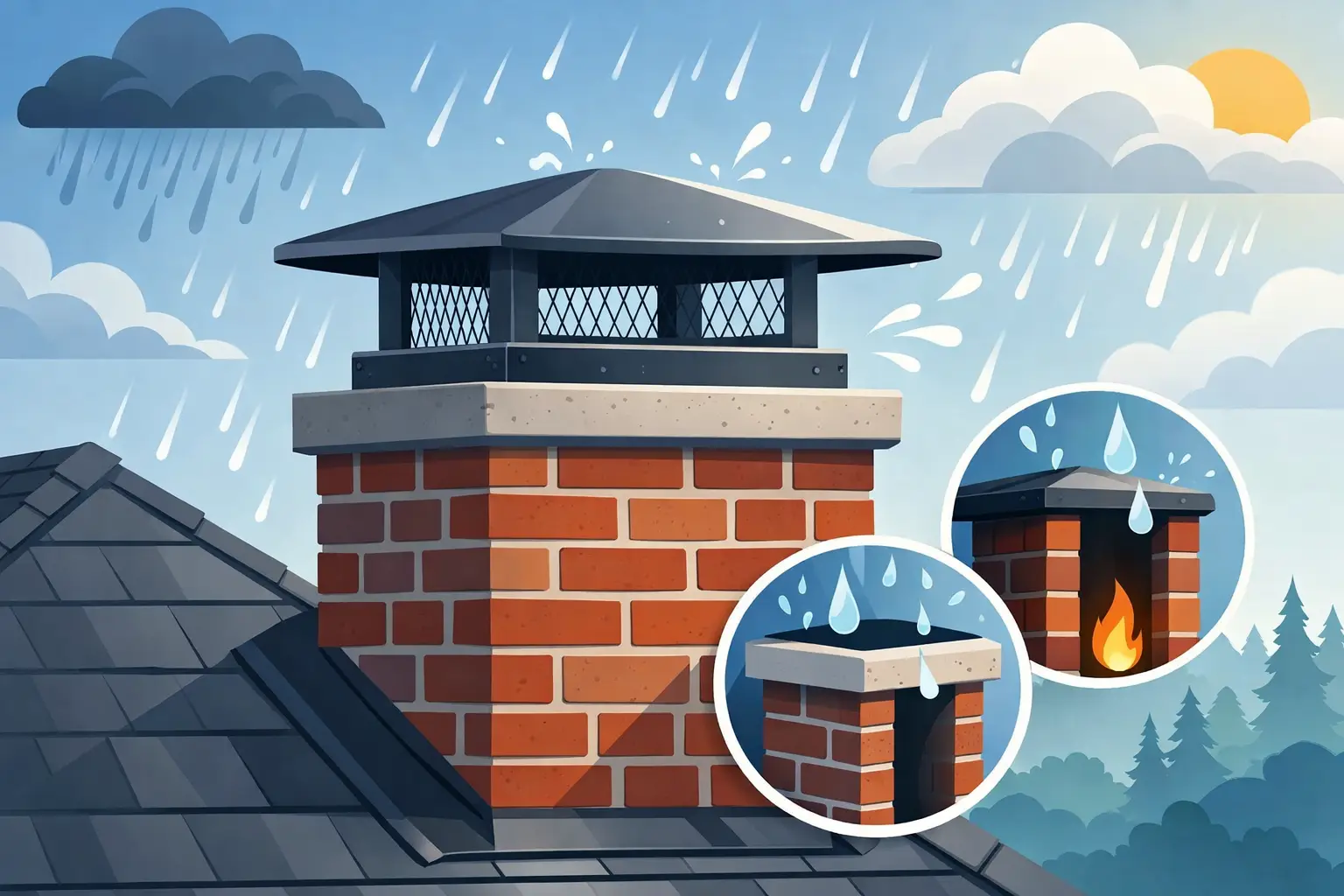
A steady Ohio rain can reveal a chimney problem long before smoke ever does. Do chimney caps keep rain out? Yes, a properly sized and installed chimney cap is one of the most effective ways to limit rain entering the flue. It is not a cure-all for every chimney leak, but it provides essential protection where the chimney is most exposed: at the top.
For homeowners with a fireplace, wood stove, gas appliance, or unused chimney, that protection matters. Water entering a chimney can damage metal components, soak masonry, accelerate freeze-thaw deterioration, and create conditions that lead to expensive repairs. A cap is a relatively straightforward improvement, but its condition and installation need to be taken seriously.
A chimney cap is designed to cover the flue opening while allowing combustion gases to exit. Its solid top deflects direct rainfall away from the opening, and its screened sides help keep out leaves, twigs, and animals. During ordinary rainfall, a well-fitted cap keeps the vast majority of water from traveling straight down the flue.
“Completely” is the part that requires context. Wind-driven rain can still reach areas around the cap, and moisture can enter a chimney through damaged mortar joints, a cracked crown, failed flashing, or porous brick. A cap protects the flue opening. It does not replace a sound chimney crown or properly installed roof flashing.
This distinction is useful when a homeowner sees water in the firebox. The source may be an uncovered flue, but it may also be a crack in the crown, a leak where the chimney meets the roof, or water moving through worn masonry. A professional inspection identifies the actual entry point before repairs are recommended.
Chimneys are built to handle heat, exhaust, and changing weather, but they are not meant to hold standing water. When rain repeatedly enters an open flue, the damage can extend well beyond the fireplace.
Water and combustion byproducts are a damaging combination. In wood-burning systems, moisture can mix with soot and creosote residue. In gas systems, moisture can contribute to corrosion of metal liners, dampers, caps, and connectors. A rusted damper may become difficult to operate or fail to seal properly, allowing conditioned indoor air to escape when the fireplace is not in use.
Metal chimney liners and prefabricated chimney parts also deserve close attention. Once corrosion begins, a part may lose strength or develop openings that affect safe venting. Catching water intrusion early can help preserve components that would otherwise need replacement.
Rainwater may run down the flue and collect on the smoke shelf or inside the firebox. Homeowners sometimes notice a musty odor, rust stains, damp ash, peeling paint near the hearth, or water marks after a storm. These signs should not be ignored, especially if the chimney is used regularly.
Moisture can also affect nearby wood framing, drywall, and finishes if it finds a path outside the masonry structure. The longer a leak continues, the more likely a targeted repair becomes a broader restoration project.
Brick and mortar absorb some moisture naturally. The problem occurs when that moisture cannot drain or dry effectively. In northeastern Ohio and western Pennsylvania, freeze-thaw cycles can turn small cracks into larger failures. Water enters a crack, freezes, expands, and places pressure on the surrounding masonry.
Over time, homeowners may see spalling brick faces, crumbling mortar, white mineral deposits, or visible gaps in joints. A chimney cap cannot repair these conditions, but it reduces one significant source of water entering the system from above.
Rain protection is often the reason homeowners first consider a cap, but a quality cap has several other practical jobs. The screen around its sides can discourage birds, squirrels, bats, and other animals from entering the flue. Nesting materials can obstruct ventilation, create odors, and become a fire hazard in a wood-burning chimney.
The cap also blocks leaves, pine needles, and windblown debris. Even a partial obstruction can interfere with draft and contribute to smoky fireplace performance. In severe cases, debris can combine with creosote buildup and create a safety concern.
A cap may help reduce downdrafts as well, depending on its design and the chimney’s location. However, homeowners should be cautious about treating a cap as a guaranteed solution for smoke entering the room. Draft problems can be caused by chimney height, flue sizing, nearby trees or rooflines, house pressure, appliance setup, or an obstructed flue. The correct answer begins with an inspection, not a guess.
The best cap is not simply the first one that fits over an opening. Chimneys vary widely, from a single round metal flue to multiple clay flue tiles emerging from a masonry chimney. The cap must match the flue or chimney top, allow adequate venting, and be securely fastened without damaging the masonry.
For many masonry chimneys, a multi-flue cap that covers the entire chimney top is a durable choice. It protects several flue openings at once and sheds water away from the crown area. A single-flue cap may be appropriate when one flue needs protection and the configuration allows it.
Material matters, too. Galvanized steel is often less expensive, but it can eventually rust. Stainless steel and copper generally offer better long-term corrosion resistance, particularly in a climate with frequent rain, snow, and temperature swings. The right choice depends on the chimney design, the homeowner’s budget, and the expected service life.
A cap should never restrict the appliance’s required venting area. This is especially important with gas appliances and wood stoves, where venting requirements are tied directly to safe operation. A professional can verify that the cap design is appropriate for the system rather than installing a decorative cover that creates a new problem.
A missing cap is easy to spot, but damage is not always visible from the ground. High winds, falling branches, rust, and years of exposure can loosen or deform a cap. Screens can clog with debris or become damaged by animals. Some older caps are installed with methods that no longer provide a dependable fit.
Schedule an evaluation if you notice water in the firebox, a sudden rust odor, animal sounds in the chimney, debris falling into the fireplace, or streaking on the exterior masonry below the top. It is also wise to have the cap checked during a routine chimney inspection and cleaning. That allows the technician to look at the cap, flue tile, liner, crown, and visible masonry as one connected system.
Do not climb onto a roof or attempt to reach a chimney cap from a ladder unless you have the proper training and equipment. Roof work carries real fall risks, and an unstable cap or deteriorated crown can make the situation more dangerous. A qualified chimney professional can assess the condition safely and explain whether repair, refastening, or replacement is the sensible option.
Think of water protection as a layered system. The chimney cap covers the flue opening. The crown, which is the sloped concrete or masonry surface at the top of the chimney, should shed water away from the flue tiles and brick. Flashing seals the transition where the chimney passes through the roof. Sound mortar and brick help prevent water from entering through the sides.
If one layer fails, water can still find its way in. For example, replacing a missing cap may stop rain from entering the flue but will not stop a leak caused by cracked flashing. Likewise, coating a crown without correcting a damaged cap leaves the flue exposed to direct rainfall. Reliable repairs address the condition that is actually present, rather than treating every chimney leak the same way.
For homeowners in Trumbull, Mahoning, and Mercer counties, regular chimney service is a practical way to catch these issues before another wet season and another freeze-thaw cycle make them worse. Chimney Sweeps and Masonry of America can inspect the full system and provide clear recommendations based on what your chimney needs.
A chimney cap is a small component with a major role: it helps keep rain, animals, and debris out while supporting a drier, safer chimney system. If you have noticed signs of moisture or cannot remember when the cap was last checked, arranging a professional inspection is a sensible next step before minor water entry becomes masonry damage.
We are a member of The National Chimney Guild. Certified Chimney Professional
 Optimized by Seraphinite Accelerator