- 330-505-6800
- Info@alifeprotector.com
- 11 North Main St , Niles Ohio 44446.

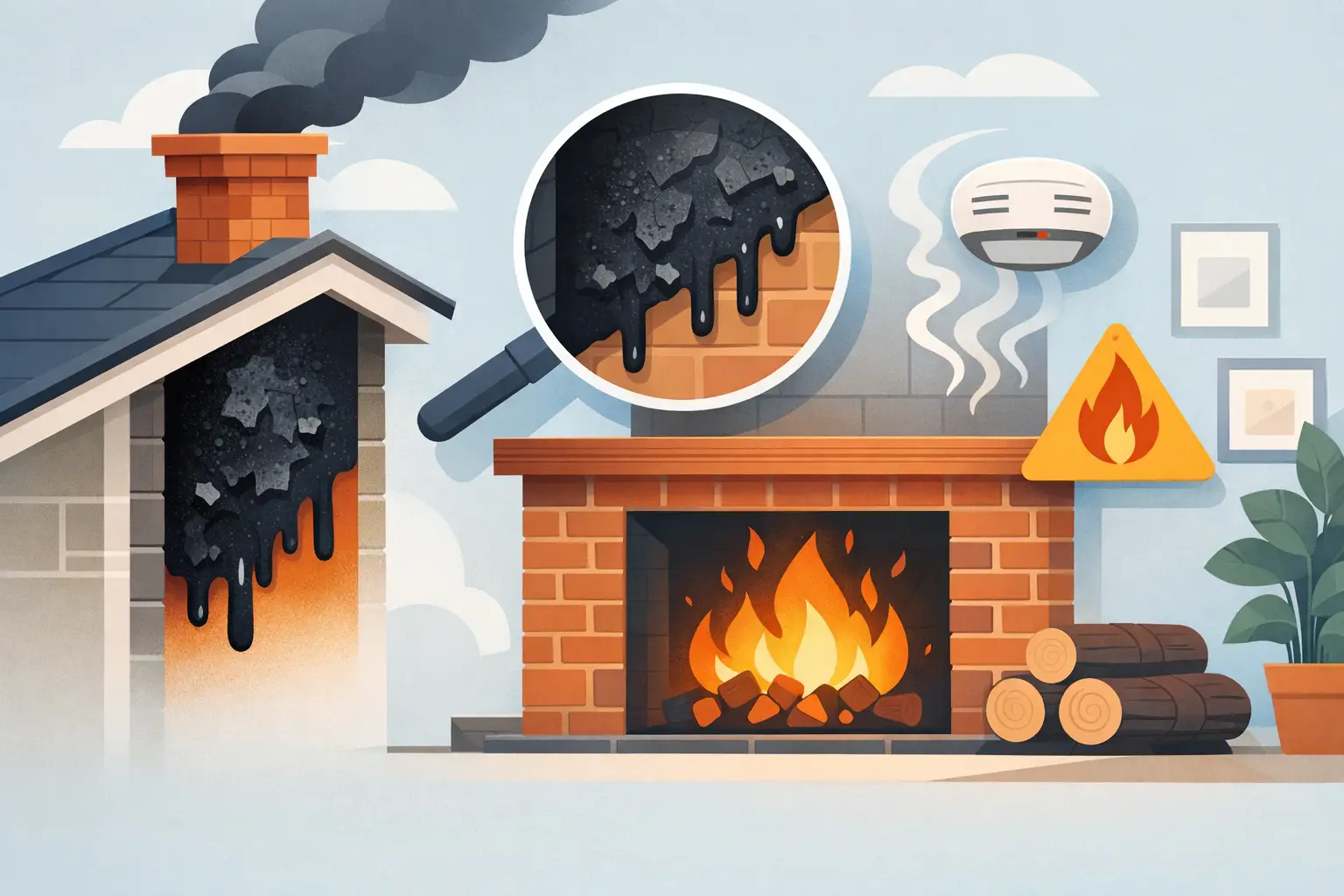
A wood fire can leave a familiar, smoky smell in the room. But when that odor is strong, persistent, or joined by dark residue around the fireplace, it may be one of the creosote buildup signs your chimney needs professional attention. Creosote is a normal byproduct of burning wood, yet allowing it to collect inside a flue creates a preventable fire and draft hazard.
For homeowners across northeastern Ohio and western Pennsylvania, this concern often appears after a long heating season. A fireplace may still seem to work, so it is easy to postpone maintenance. The problem is that creosote accumulates where you cannot see it, and the condition of the chimney matters more than the appearance of the hearth.
Creosote is a dark, combustible material formed when smoke cools and condenses on the interior walls of a chimney or stovepipe. Burning wood releases moisture, gases, and tiny particles. As they travel up the flue, they can stick to the liner and gradually form deposits.
The texture of those deposits can range from a light, dusty soot to a thick, tar-like glaze. The heavier and harder the creosote becomes, the more difficult it is to remove and the more readily it can fuel a chimney fire. A small, contained chimney fire can still crack a liner, damage masonry, or allow heat to reach nearby combustible framing.
Creosote formation depends on how the appliance is used. Wet or unseasoned wood, long periods of smoldering, restricted airflow, cool flue temperatures, and an improperly sized or damaged liner can all increase buildup. This is why two homes using fireplaces at the same frequency may need very different levels of cleaning or repair.
Some signs are visible from the firebox, while others show up in the way the fireplace or wood stove performs. Do not try to inspect deep inside the flue yourself. A trained chimney professional can assess the full venting system safely, but these warning signs can tell you it is time to schedule service.
Loose black flakes, powdery soot, or small pieces of dark material in the firebox can indicate creosote deposits above. A light amount of soot may occur with normal use, but repeated debris after fires deserves attention. It can mean deposits are breaking loose from the flue walls or that airflow is carrying material back down the chimney.
Avoid brushing the issue aside simply because the fireplace is still drafting. A chimney can have a significant buildup before a homeowner notices an obvious performance problem.
Creosote has a sharp, smoky odor that can become especially noticeable during humid, rainy, or warm weather. Moisture can intensify odors coming from deposits inside a cold chimney. If the smell lingers when no fire is burning, cleaning may be needed.
Odor is not always caused by creosote alone. Water intrusion, animal nesting material, or a draft issue can create similar concerns. That is one reason a Level 1 chimney inspection is useful: it helps identify the actual source rather than treating a symptom.
Smoke entering the room when you light a fire is never a condition to ignore. Creosote can narrow the flue and reduce the passage available for smoke and combustion gases. A partial blockage may also make fires slow to establish, cause them to burn weakly, or leave more smoke staining near the opening.
Still, poor draft does not automatically mean creosote. A closed or damaged damper, a cold flue, a blocked cap, an undersized liner, or pressure differences inside a tightly sealed home can contribute. Professional evaluation protects you from paying for work that does not address the real problem.
When you look up through the firebox with a flashlight, you may see dark residue on the smoke shelf or lower flue area. Flaky or crusty material should be checked, but shiny black deposits are particularly concerning. This glazed form of creosote is highly combustible and often requires specialized removal methods rather than routine brushing alone.
Do not scrape at the flue with household tools. You could damage a clay tile liner, stainless steel liner, or mortar joint, and you may not be able to see the full extent of the deposit. A proper inspection determines the condition of the liner before the cleaning approach is chosen.
A loud roaring, popping, or rumbling sound from the chimney during a fire may indicate a chimney fire. So can dense smoke, an intense burning smell, sparks or flames from the chimney top, or exterior masonry that feels unusually hot.
If you suspect a chimney fire, get everyone out of the home and call 911. Do not use the fireplace or stove again until the system has been professionally inspected. Even if the event seemed brief, heat may have damaged the liner or weakened parts of the chimney that are not visible from the ground.
The answer depends on the amount and type of deposit, as well as the condition of the chimney system. Industry guidance commonly treats an accumulation of about one-eighth inch as a point where cleaning is needed. But waiting until buildup reaches a visible threshold is not a good maintenance plan, particularly for frequent wood burners.
A homeowner who uses a wood stove every day through an Ohio winter should not follow the same schedule as someone who burns a few recreational fires each month. Appliance type, fuel quality, venting design, and prior inspection findings should guide the recommendation. An annual chimney inspection gives you a clear record of what is happening inside the system and whether sweeping, repairs, or no immediate work is appropriate.
Gas fireplaces do not produce creosote the way wood-burning appliances do, but they still require regular inspection and cleaning. Dust, corrosion, burner problems, venting concerns, and debris can affect safe operation. Every fuel type deserves maintenance matched to its equipment.
A store-bought chimney brush may remove some loose soot from an accessible flue, but it cannot confirm that the liner is intact, the damper is operating correctly, or the chimney cap is keeping out water and animals. It also may not remove hardened deposits effectively. More importantly, cleaning without inspection can overlook damage caused by a previous chimney fire.
Professional chimney service is not just about making the flue look cleaner. It is about checking the venting path from appliance to chimney top, identifying unsafe conditions, and recommending only the work the system needs. If a liner is deteriorated, flashing is allowing water into the structure, or a crown is cracking, addressing the underlying issue can help protect both the chimney and the home around it.
Good burning habits can slow creosote formation. Use properly seasoned firewood that has been split, stored off the ground, and allowed to dry adequately. Wet wood wastes heat turning moisture into steam, cools the flue, and creates more smoke.
Build fires that burn cleanly rather than allowing them to smolder for long periods with restricted air. Follow the appliance manufacturer’s operating instructions, and make sure the damper is fully open before lighting a fire. Never burn trash, treated lumber, painted wood, cardboard with coatings, or construction scraps in the fireplace or stove.
These steps help, but they do not replace inspection and cleaning. Even well-seasoned wood produces combustion byproducts, and a chimney’s interior condition cannot be confirmed from the living room.
The best time to address creosote buildup signs is before the first cold stretch makes your fireplace or stove part of your daily routine. Scheduling early gives a technician time to clean the flue, inspect the system, and explain any concerns without the pressure of an active heating emergency.
Chimney Sweeps and Masonry of America provides dependable chimney inspections, sweeping, liner work, fireplace service, and masonry repairs for homeowners and businesses in Trumbull, Mahoning, and Mercer counties. A clear assessment helps you make a sound decision about your home, whether the answer is a routine cleaning or a more involved repair.
A clean-burning fire should feel comforting, not uncertain. If the odor, debris, draft, or residue around your fireplace has changed, arranging a professional chimney evaluation now can help keep your next fire safer and your chimney working as it should.
We are a member of The National Chimney Guild. Certified Chimney Professional
 Optimized by Seraphinite Accelerator