- 330-505-6800
- Info@alifeprotector.com
- 11 North Main St , Niles Ohio 44446.

A chimney can look sound from the roofline and still have a serious problem inside. Cracked clay tiles, missing mortar joints, an oversized flue, or an unlined chimney can allow heat, smoke, and combustion gases to reach places they do not belong. Chimney liner installation creates a protected passage from your appliance to the top of the chimney, helping your fireplace, stove, furnace, or boiler vent as it should.
For homeowners in northeastern Ohio and nearby western Pennsylvania, this work often becomes necessary after an inspection, an appliance upgrade, a chimney fire, or years of moisture damage. The right answer is not always to install a new liner. A qualified inspection should first determine the condition of the existing flue and whether repair, relining, or another solution is appropriate.
A chimney liner is the interior channel that carries smoke, heat, and combustion byproducts out of the home. In older masonry chimneys, that channel may be made of clay tiles. In some homes, especially those built decades ago, there may be no liner at all.
A properly sized liner helps contain the high temperatures and corrosive byproducts produced by burning wood, gas, oil, or pellet fuel. It also helps the appliance draft correctly. When a flue is too large, too damaged, or poorly matched to the appliance, exhaust can cool too quickly, condense inside the chimney, and leave behind moisture or creosote.
That is why a liner is more than an interior repair. It is part of the complete venting system. The appliance, connector pipe, chimney height, flue size, cap, crown, and masonry condition all affect safe performance.
A professional inspection is the reliable way to evaluate a flue, but certain warning signs should not be ignored. Smoke entering the room, a persistent odor after using the fireplace, visible pieces of flue tile in the firebox, and poor appliance draft can all point to liner trouble.
Water is another common factor. Rain and snow entering through a damaged cap or crown can work into the flue system, weakening clay tile joints and accelerating deterioration. In Ohio and Pennsylvania, repeated freeze-thaw cycles can make small masonry and liner problems worse over time.
A new liner may also be recommended when replacing an old furnace or boiler with a newer, more efficient model. Modern equipment can produce cooler exhaust than older systems. If that exhaust enters a large masonry flue without the proper liner, condensation may form and damage the chimney from within. The same principle applies when installing a wood stove insert or changing the type of fuel used in the home.
Not every crack means complete replacement is required, and not every old chimney needs a liner immediately. The decision should be based on the appliance, the condition of the flue, code requirements, and the findings of a thorough inspection.
The liner material must match the appliance and fuel being used. Stainless steel is a common option because it is durable, corrosion-resistant, and suitable for many wood, gas, oil, and pellet applications when the correct grade is selected. It is often used to reline an existing masonry chimney.
Aluminum liners can be appropriate for certain gas appliances, but they are not designed for wood-burning systems or every fuel type. A knowledgeable contractor will not treat liner materials as interchangeable. The wrong product can fail prematurely or create a safety issue.
Clay tile liners remain common in masonry chimneys. When only a limited section has failed, targeted repair may sometimes be possible. However, repairing clay tile inside a tall or severely damaged chimney can be difficult. In those situations, a properly sized stainless steel liner may provide the more practical long-term solution.
There are also cast-in-place and poured lining systems for specific situations. These systems can strengthen a compromised chimney while creating a new flue passage, but they are not the automatic choice for every home. Access, chimney condition, appliance requirements, and budget all matter.
A dependable chimney liner installation begins with assessment, not a guess from the ground. The technician evaluates the appliance, chimney structure, flue path, existing liner condition, and venting requirements. A camera inspection may be used to identify cracked tiles, obstructions, offsets, or gaps that cannot be seen from the firebox.
Next comes sizing. A liner that is too small can restrict draft and appliance performance. One that is too large may allow exhaust to cool before it exits the chimney. The correct diameter or dimensions depend on the appliance manufacturer’s requirements, the chimney height, the fuel type, and the venting configuration.
Before installation, the chimney may need sweeping or cleaning to remove soot, creosote, nests, and loose debris. If the masonry has openings, a damaged crown, failed flashing, or a missing cap, those concerns should be addressed as part of the overall plan. A new liner cannot correct every exterior water problem by itself.
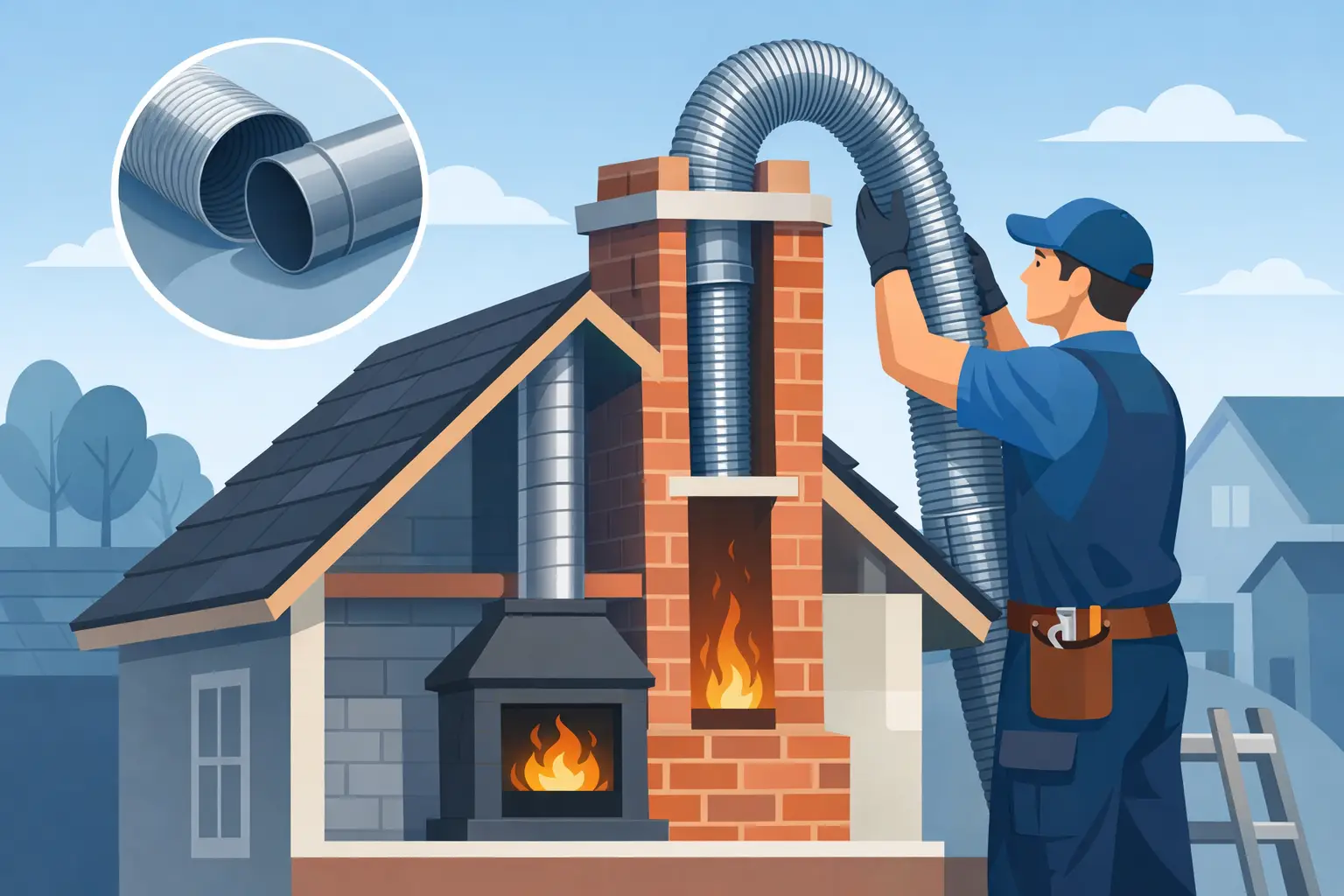
For many relining projects, the liner is carefully lowered from the top of the chimney and connected to the appliance or connector system at the bottom. Insulation may be added when needed for performance, clearance, or code-related reasons. The liner is then secured at the top, finished with appropriate components, and protected by a properly fitted cap.
The final step is just as important as the installation itself. The system should be checked for correct connections, draft, and safe operation. Homeowners should receive a clear explanation of the work performed and any future maintenance the chimney will need.
A liner is not simply a metal tube placed inside a chimney. Its size and insulation affect how efficiently the system vents. A wood-burning insert, for example, generally needs a full liner that runs from the appliance to the top of the chimney. This helps maintain draft and reduces the chance that smoke or creosote will collect in an oversized masonry flue.
Insulation can help keep flue gases warmer as they travel upward. That can improve draft and reduce condensation in certain installations. However, the need for insulation depends on the specific chimney and appliance. It should be determined through professional evaluation rather than added or omitted as a shortcut.
The most costly mistake is treating a chimney liner as a one-size-fits-all product. A low price may leave out necessary cleaning, insulation, appliance connection work, top termination components, or repairs to the surrounding chimney. Ask what the proposal includes and how the liner has been matched to your appliance.
Another mistake is focusing only on the flue while overlooking the masonry. If water is entering through cracked crown material, failed flashing, open mortar joints, or an inadequate cap, that water can continue damaging the chimney even after a new liner is installed. A complete recommendation should distinguish between required safety work and exterior repairs that protect the investment over time.
Homeowners should also avoid using a fireplace or stove when there are signs of a damaged flue. Continued use can expose the home to heat transfer, smoke leakage, or carbon monoxide concerns. If you notice a sudden draft change, smoke spillage, unusual odors, or debris falling into the firebox, schedule an inspection before using the system again.
A new liner still needs regular care. Wood-burning appliances should be inspected and swept based on use and the amount of creosote present. Gas appliances also need inspection because venting issues, corrosion, animal nests, and damaged components can develop without visible soot.
Keep the chimney cap in good condition, watch for water staining near the chimney, and address masonry deterioration early. These practical steps help preserve both the liner and the structure around it. Chimney Sweeps and Masonry of America can evaluate the full system, from the firebox and flue to the crown, cap, flashing, and masonry exterior.
If your chimney has been damaged, your appliance has changed, or your fireplace has not been inspected in years, a professional assessment can replace uncertainty with a clear plan. Safe, properly matched venting is one of the most valuable improvements you can make before the next heating season.
We are a member of The National Chimney Guild. Certified Chimney Professional
 Optimized by Seraphinite Accelerator