- 330-505-6800
- Info@alifeprotector.com
- 11 North Main St , Niles Ohio 44446.

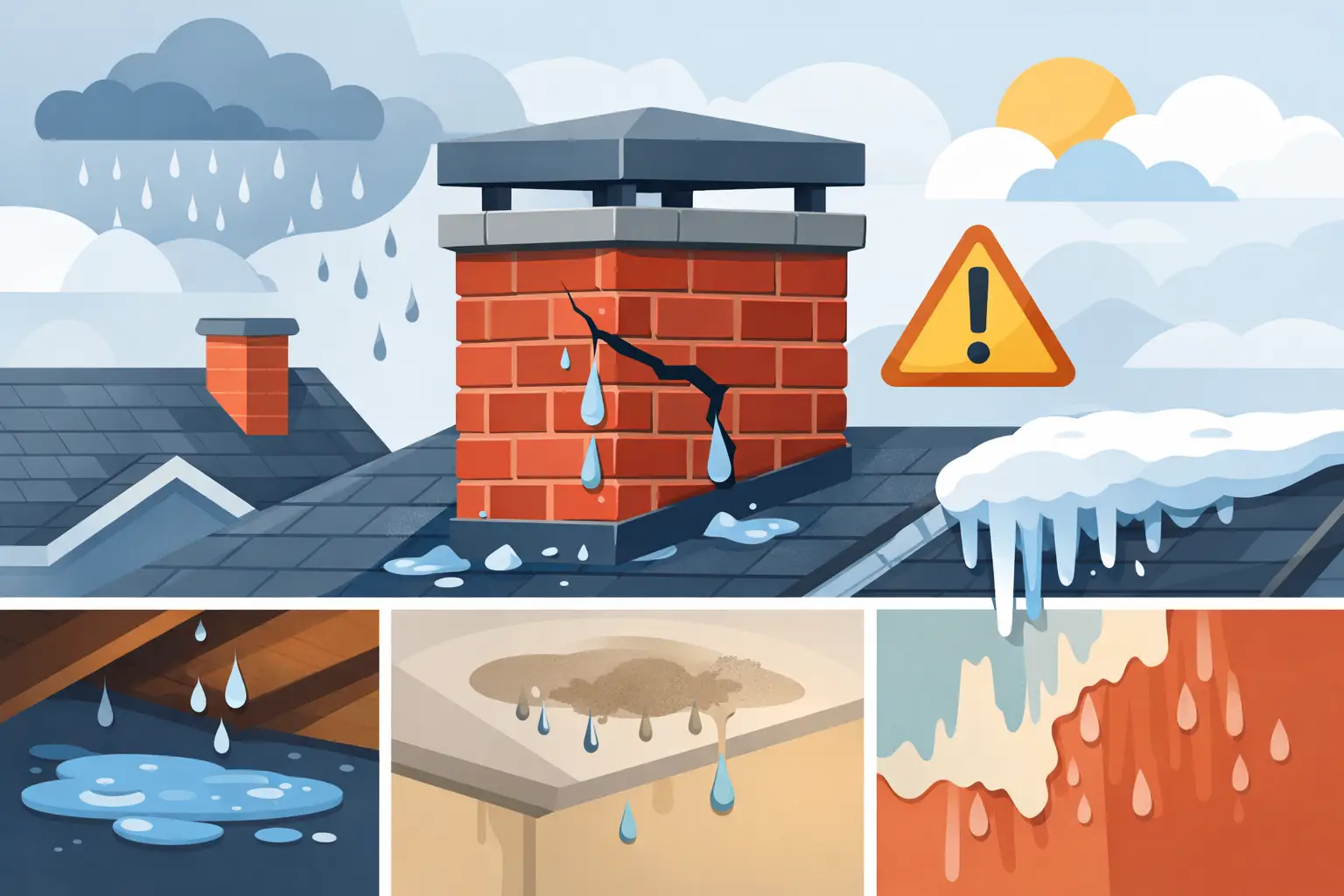
A brown stain spreading across the ceiling near a fireplace is rarely just a cosmetic problem. Chimney leak causes can be difficult to pinpoint because water may enter at the top of the chimney, travel through masonry or framing, and show up several feet away indoors. In northeastern Ohio and western Pennsylvania, freeze-thaw weather, wind-driven rain, snow, and aging masonry all make prompt investigation worthwhile.
A chimney should safely direct smoke, gases, and moisture out of the home while keeping rain and snow outside. When one component fails, water can damage brick, mortar, wood framing, insulation, drywall, fireplace components, and even the flue system. The right repair depends on where water is entering, not simply where the stain appears.
A chimney cap is one of the simplest and most effective defenses against water intrusion. It covers the flue opening while allowing smoke and combustion gases to exit. Without one, rain and snow can fall directly into the flue, where moisture can affect the liner, damper, smoke chamber, and firebox.
Caps also help keep leaves, nesting material, and animals out of the chimney. A cap that is loose, rusted through, undersized, or improperly attached may allow water in even if it appears intact from the ground. The proper cap design depends on the chimney’s flue configuration and condition, so a one-size-fits-all replacement is not always the best answer.
The chimney crown is the sloped cement surface at the very top of a masonry chimney. Its job is to shed water away from the flue and brickwork. When the crown develops cracks or loses its slope, rain can collect on top and soak into the chimney structure.
Small crown cracks often grow quickly through Ohio winters. Water enters the crack, freezes, expands, and breaks away more material. A crown that is badly deteriorated may need to be rebuilt rather than coated or patched. A professional assessment can distinguish between a surface issue and a failure that is allowing water into the masonry below.
Flashing is the metal system installed at the joint between the chimney and the roof. It is one of the most common sources of a chimney-area leak, especially after strong winds, roof work, or years of seasonal movement. When flashing separates, rusts, bends, or is sealed with failing caulk, rain can enter the roof structure.
Flashing leaks are often mistaken for a roof leak because the first sign may be wet drywall in an upstairs room or attic. The repair may involve resecuring or replacing step flashing and counterflashing, as well as addressing any damaged roof materials nearby. Caulk alone is rarely a durable substitute for properly installed flashing.
Brick masonry is not waterproof. It is designed to manage moisture and dry over time. As brick faces wear away or mortar joints crack and recede, water can penetrate deeper into the chimney. In freezing weather, trapped moisture can cause spalling, where the brick surface flakes, chips, or breaks away.
Repointing replaces failed mortar in the joints, while damaged bricks may need individual replacement. These repairs need compatible materials and careful workmanship. Mortar that is too hard for older brick can contribute to damage by forcing moisture through the brick instead of allowing the wall to manage it as intended.
A sound masonry chimney can benefit from a vapor-permeable water repellent. Unlike a paint-like coating, a proper masonry water repellent limits rain absorption while allowing moisture already inside the brick to escape. That distinction matters. Trapping moisture behind an unsuitable coating can worsen deterioration.
Waterproofing is not a cure for cracked crowns, missing mortar, or failing flashing. Those conditions should be repaired first. Once the masonry is structurally sound, the right treatment can reduce water absorption and help preserve the chimney through repeated wet and freezing conditions.
Not every chimney is exposed brick. Prefabricated fireplaces often have a framed chimney chase covered with siding or other exterior material. At the top, a metal chase cover performs a role similar to a masonry crown. Rust holes, open seams, or an improperly fitted cover can let water into the chase, where it may damage wood framing and fireplace components before anyone sees it.
Masonry chimneys can also develop structural cracks from settling, moisture damage, or deteriorated materials. A vertical crack may look minor, but its location, width, and movement help determine whether it is a surface repair or a larger concern. This is one reason an in-person inspection is more useful than guessing from a photo.
Sometimes the moisture is not entering from rainfall at all. Condensation can form inside a chimney when warm, moist air meets a cold flue, particularly with an unused fireplace, an improperly sized liner, or certain gas appliances. A damaged or missing liner can also allow moisture and combustion byproducts to affect surrounding masonry.
The clues can differ from a rain-related leak. You may notice a persistent damp odor, rust on the damper or firebox, white staining on masonry, or moisture even during dry weather. Resolving an internal moisture issue may involve liner work, ventilation changes, appliance evaluation, or repairs to the chimney system rather than exterior waterproofing alone.
Water damage often begins quietly. A musty smell near the fireplace, peeling paint on an adjacent wall, rusted fireplace doors, crumbling mortar, white powdery staining called efflorescence, and loose brick are all reasons to have the chimney checked. Water stains in the attic or ceiling around the chimney should also be addressed promptly, especially after heavy rain or snowmelt.
Do not assume that a chimney leak stops because the visible stain dries. The water may still be entering during storms, and repeated moisture can weaken masonry over time. If you see falling debris in the firebox, notice a damper that no longer opens smoothly, or find water pooling in a fireplace, avoid using the appliance until it has been inspected.
A homeowner may see a leak at the ceiling and assume the roof is failing. Another may see damaged brick and assume waterproofing will solve it. Both may be partly right, but chimney systems have several connected components. A crown issue can affect masonry below it. Failed flashing can cause interior staining. A liner concern can create moisture symptoms that look like an exterior leak.
A Level 1 chimney inspection gives a trained professional the opportunity to examine accessible portions of the chimney, fireplace, flue, cap, crown, flashing, and visible masonry. For active leaks or more complex conditions, further evaluation may be needed to identify concealed damage. A clear diagnosis prevents money from being spent on a repair that treats only the visible symptom.
Routine attention is usually less disruptive than major restoration. Have the chimney inspected regularly, particularly before relying on a fireplace or wood stove for the heating season. Keep caps and crowns in good condition, watch for masonry changes from ground level, and address loose flashing or damaged mortar before winter expands the problem.
If your chimney has already leaked, avoid applying sealant, paint, or a quick patch without identifying the entry point. Some temporary measures can conceal the evidence while water continues to damage the structure behind the surface. Chimney Sweeps and Masonry of America provides straightforward chimney and masonry assessments for homeowners who want reliable answers and repairs matched to the condition of the system.
A dry chimney is not just better for appearance. It helps protect the structure around your fireplace, preserves masonry, and supports safer use of the appliance you depend on when cold weather returns. Scheduling an inspection when you first notice a warning sign gives you more repair options and a better chance of stopping damage early.
We are a member of The National Chimney Guild. Certified Chimney Professional
 Optimized by Seraphinite Accelerator