- 330-505-6800
- Info@alifeprotector.com
- 11 North Main St , Niles Ohio 44446.

A fireplace that suddenly sends smoke into the room is not always a chimney problem. Often, the issue is chimney draft versus house pressure: the chimney is trying to move combustion gases upward while the home is pulling air in another direction. In northeastern Ohio and western Pennsylvania, where homes range from older masonry houses to tightly renovated properties, that pressure battle can change from one season to the next.
Understanding the difference helps homeowners recognize when a simple operating adjustment may help and when a professional inspection is the safer next step.
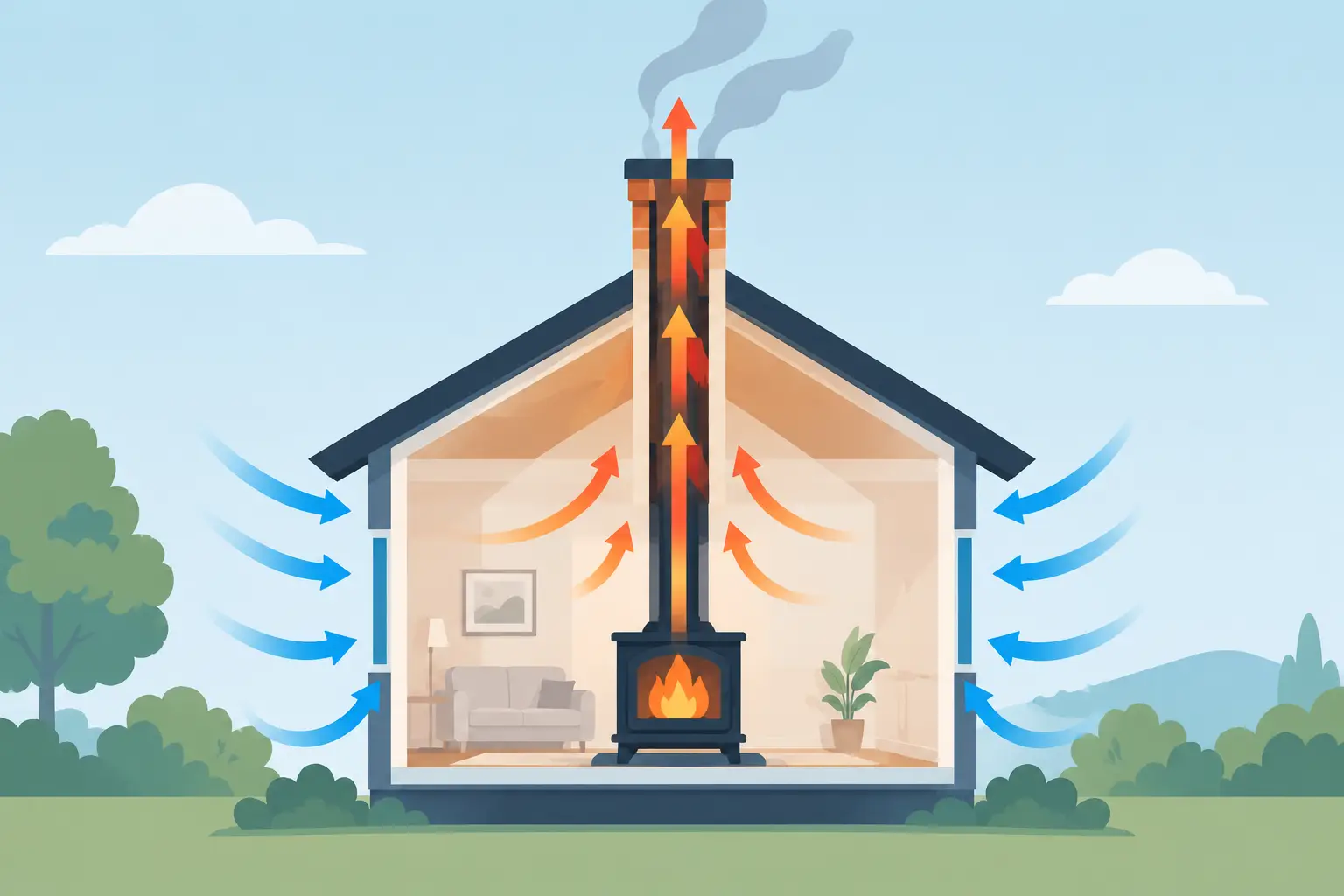
Chimney draft is the natural upward movement of smoke, exhaust, and hot gases through the flue. It works because warm air inside the chimney is lighter than cooler outdoor air. As the flue warms, those gases rise and create a small negative pressure inside the chimney, drawing more combustion air into the firebox or appliance.
A properly drafting chimney should carry smoke outdoors, support steady combustion, and keep combustion byproducts out of the living area. The amount of draft is affected by the height and condition of the chimney, flue size, outside temperature, the temperature of the flue, and wind conditions around the roofline.
This is why a cold fireplace may smoke when first lit but perform better after the flue has warmed. It is also why a wood stove, fireplace insert, or gas appliance needs a correctly sized and properly maintained venting system. A chimney is not simply a pipe through the roof. It is part of a working combustion system.
House pressure refers to the air pressure inside your home compared with the air pressure outdoors. When indoor pressure is lower than outdoor pressure, the house is under negative pressure. Air will naturally try to enter through available openings, which can include a fireplace, wood stove, or chimney flue.
Modern improvements can make this more noticeable. New windows, added insulation, air sealing, and weatherstripping reduce uncontrolled air leaks. Those upgrades are good for comfort and energy efficiency, but they also mean exhaust appliances have fewer places to draw replacement air.
Kitchen range hoods, bathroom fans, clothes dryers, and powered attic ventilation can all remove air from the house. If enough air is being exhausted, the chimney may become the easiest path for replacement air. Instead of smoke traveling up the flue, outdoor air can push down the chimney, bringing smoke, odors, or cold air with it.
Older homes can experience the same issue, especially when several exhaust fans run at once or when the lower levels of the home are closed off from upper floors. The cause is not always obvious from the fireplace opening alone.
When chimney draft is stronger than the negative pressure in the home, smoke and combustion gases generally move up and out as intended. When negative house pressure is stronger, the chimney can struggle to establish draft or can reverse direction entirely. This is commonly called backdrafting.
Backdrafting is more than an inconvenience. Smoke can damage finishes, leave persistent odors, and introduce fine particles into the home. With fuel-burning appliances, poor venting may also allow carbon monoxide and other combustion gases into occupied areas. Carbon monoxide has no color or odor, so working carbon monoxide alarms are essential wherever fuel-burning equipment is present.
A fireplace that spills smoke only on windy days may have a different cause than one that smokes every time the dryer runs. Wind, a short chimney, nearby trees, a damaged or poorly fitted cap, flue restrictions, and pressure imbalances can produce similar symptoms. That is why guessing at the repair can lead to unnecessary work while the real cause remains.
Pressure-related draft issues often have a pattern. You may notice smoke entering the room when the kitchen hood is on, when the dryer is running, or when a bathroom fan has been operating for several minutes. A fireplace may be difficult to start, then work normally after the chimney gets hot.
Cold air descending from a fireplace, a lingering smoky odor after a fire, or a gas fireplace that shuts down unexpectedly can also warrant attention. In some homes, opening a nearby window slightly improves fireplace performance. That observation can be useful because it suggests the home needs makeup air, but it is not a permanent repair or a substitute for an inspection.
Do not continue using a wood-burning fireplace, stove, or gas appliance if smoke or exhaust is entering the home. Turn off the appliance if you can do so safely, ventilate the area, and contact a qualified professional. If a carbon monoxide alarm sounds or anyone feels dizzy, nauseated, confused, or unusually tired, leave the building and seek emergency assistance.
House pressure can expose weaknesses that have been present for years. A chimney with a heavy soot buildup, creosote deposits, an improperly sized liner, broken flue tiles, or a blockage from nesting material has less margin for error. When the house pulls against it, the restricted flue may not be able to overcome the resistance.
Exterior masonry also matters. A deteriorated crown, missing cap, damaged flashing, or open mortar joints can allow water into the chimney system. Over time, freeze-thaw cycles can damage masonry, liners, and components that affect safe operation. A cap may help keep out rain and animals, but it must also be correctly designed and installed so it does not restrict the flue.
A proper evaluation looks beyond whether the chimney is visibly open. It considers the appliance, connector pipe where applicable, liner, firebox or smoke chamber, chimney height, termination, and the home’s ventilation conditions. For gas fireplaces and appliances, venting and manufacturer requirements must also be considered.
A few operating habits can reduce minor draft difficulties. Open the damper fully before lighting a wood-burning fireplace. Build a small, hot kindling fire first rather than loading large logs into a cold firebox. Allow the flue to warm before increasing the fire.
If your fireplace has repeatedly smoked, avoid running the range hood, dryer, or powerful bath fans during startup until the cause has been assessed. Make sure fireplace doors, dampers, and stove controls are being used according to the appliance instructions. Never modify a damper, block vents, or install an unapproved insert or liner arrangement to force a draft solution.
These steps can support normal operation, but they cannot correct a blocked flue, an undersized liner, a damaged chimney, or a significant negative-pressure problem. Persistent symptoms deserve professional attention, particularly before the heating season.
A Level 1 chimney inspection is often the appropriate starting point for a system that has not changed but is showing draft concerns. The inspection can identify accessible signs of buildup, damage, obstructions, cap issues, and venting concerns. If conditions suggest hidden damage or a more complex issue, additional evaluation may be recommended based on what is found.
The best recommendation depends on the home. One property may need sweeping and removal of a flue obstruction. Another may benefit from liner repair, a properly fitted chimney cap, masonry restoration, or coordination with an HVAC professional regarding makeup air and exhaust equipment. There is no honest one-size-fits-all fix for draft problems.
Chimney Sweeps and Masonry of America provides clear, local assessments for homeowners in Trumbull, Mahoning, and Mercer counties. The goal is to identify the condition of the whole system and recommend only the work needed to help it operate safely and reliably.
A chimney should move smoke and combustion gases out of the home without becoming the path that outside air uses to replace exhausted indoor air. If your fireplace has become unpredictable, schedule an inspection before the next fire gives that pressure imbalance another chance to make itself known.
We are a member of The National Chimney Guild. Certified Chimney Professional
 Optimized by Seraphinite Accelerator