- 330-505-6800
- Info@alifeprotector.com
- 11 North Main St , Niles Ohio 44446.

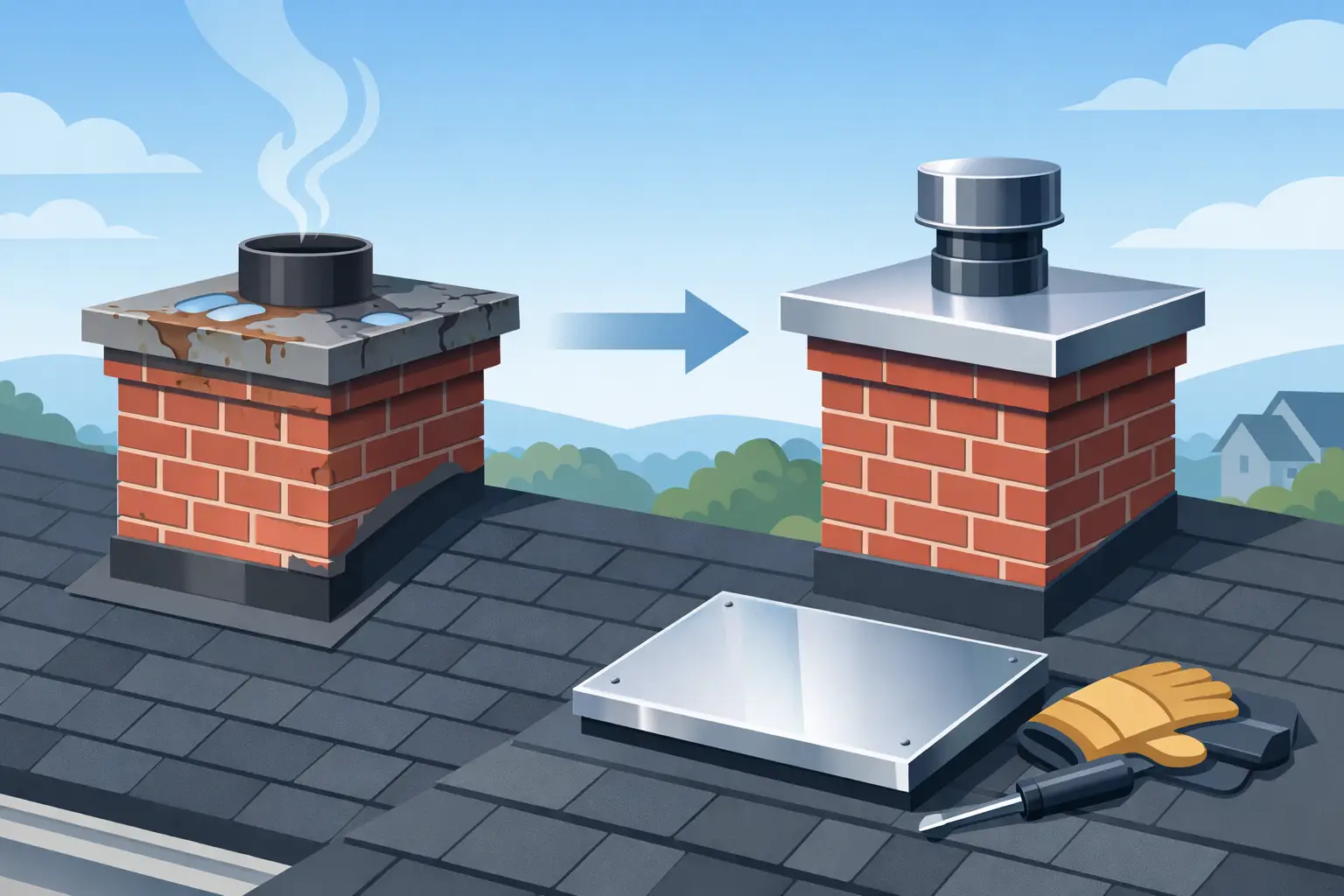
A chimney chase cover may sit out of sight above the roofline, but it has one of the most demanding jobs on the entire chimney system. Chimney chase cover replacement is often needed after rust, standing water, loose seams, or a poor fit allows rain and snow into the framed chimney structure. In northeastern Ohio and western Pennsylvania, repeated freeze-thaw cycles can turn a small opening at the top of a chase into expensive damage below.
A factory-built chimney is commonly enclosed in a wood-framed or siding-covered structure called a chase. The metal cover at the top seals that enclosure around the flue pipe. When it fails, water can reach the chase framing, insulation, firestop components, siding, and nearby roofing materials. Addressing the problem early helps protect both the chimney and the home around it.
A chase cover is not the same as a chimney cap. The chase cover is the broad metal pan that covers the top of a framed chimney chase. It is custom fitted around one or more flue pipes, then sloped to direct water away from the openings. A chimney cap is the smaller protective component installed over an individual flue termination to help keep out rain, animals, leaves, and debris.
Because the cover is exposed to sun, rain, snow, ice, wind, and temperature changes, it must be made from durable material and installed with care. A properly built cover should have a downward slope, sealed seams, formed edges, and a drip edge that sends water beyond the outer walls of the chase. Flat, thin, or poorly sealed covers tend to collect water, rust prematurely, and allow moisture to work its way into the structure.
Water entry at the top of a chase can be deceptive. A homeowner may first notice a ceiling stain, peeling paint near a fireplace, a musty smell, or rust streaks on siding. By that point, the source may have been admitting water for some time. A professional chimney inspection can identify whether the cover is responsible or whether flashing, roofing, siding, or another component needs attention.
Rust is one of the clearest warning signs. Galvanized steel chase covers can corrode as their protective coating wears away. Surface rust may be manageable in limited cases, but flaking metal, pinholes, rust-through, or brown water stains running down the chimney chase call for a closer look. Painting over severely corroded metal does not restore its ability to keep water out.
A chase cover should shed water rather than hold it. If the cover has little slope, water can puddle around the flue opening and work through seams or failed sealant. Standing water also accelerates corrosion, especially when leaves and debris remain on the surface. A cover that was installed flat should usually be replaced with a properly pitched custom cover instead of repeatedly patched.
Wind, thermal movement, and age can cause seams and fasteners to loosen. Caulk may crack, shrink, or pull away from the flue collar. These issues should not be ignored simply because the cover still looks intact from the ground. Open seams near the flue pipe are especially concerning because water can enter directly into the chimney chase.
Darkened siding, soft trim, blistering paint, water stains near the fireplace, or visible deterioration around the chase are all reasons to schedule an evaluation. Water intrusion can damage wood framing before it becomes obvious from the exterior. If moisture has reached combustible materials surrounding a factory-built chimney, the condition deserves prompt, qualified attention.
A bent cover, displaced cap, or opening around the flue can create an access point for birds, squirrels, and other animals. Nesting material can obstruct the chimney termination and create a mess inside the chase. Damage caused by animals also gives rain a direct route into the structure, so the cover and cap should be assessed together.
The right recommendation depends on the condition of the metal and how the cover was originally installed. A small, isolated sealant failure may be corrected if the cover is structurally sound, properly sloped, and free of corrosion. Likewise, a loose cap can sometimes be secured or replaced without replacing the full chase cover.
Replacement becomes the more responsible choice when metal has rusted through, the cover is buckled, the slope is inadequate, seams have failed in several places, or the dimensions do not correctly fit the chase. A cover that is too small or lacks a drip edge can keep causing moisture trouble even after fresh sealant is applied. Honest service means distinguishing between a limited repair that will last and a patch that merely delays a larger problem.
Before recommending replacement, a qualified technician should inspect the visible chase condition, flue termination, cap, flashing, siding, and accessible fireplace or chimney components. If water has already entered the chase, damaged framing or exterior materials may need repair as well. This is why a whole-system assessment is more useful than treating the cover as an isolated piece of sheet metal.
Stainless steel is often an excellent choice for a replacement chase cover because it resists corrosion and stands up well to wet, snowy weather. Aluminum can also perform well in appropriate applications, while galvanized steel is generally more vulnerable to rust over time. The best material depends on the chimney design, surrounding materials, budget, and the level of long-term protection the homeowner wants.
Custom fabrication matters just as much as material. The cover should match the chase dimensions, account for each flue opening, and include enough overhang to protect the chase walls. A properly formed drip edge helps prevent water from curling back underneath the cover. The flue openings need correctly fitted collars and weather-resistant sealing, while still allowing the chimney system to function as designed.
Chimneys with multiple flues, offset pipes, unusual chase shapes, or adjacent roof intersections require added attention. A one-size-fits-all cover may leave gaps, interfere with caps, or create drainage issues. In these situations, a measured custom cover is usually the better investment.
Reliable chimney chase cover replacement starts with determining why the previous cover failed. The technician should evaluate its pitch, edges, seams, flue collars, fasteners, and the condition of the chase beneath it. If the roof flashing or siding has been affected, those concerns should be clearly explained before work begins.
The damaged cover is removed carefully so the chase top and surrounding chimney components can be examined. Any necessary repairs to deteriorated wood, trim, or exterior surfaces should be completed before the new cover is installed. Covering rotted materials with new metal may hide the problem, but it does not preserve the structure.
The replacement cover is then fitted, secured, and sealed at critical points. The work should also include checking the chimney cap or termination for proper condition and secure attachment. For homes with fireplaces, wood stoves, or gas appliances, this is a good time to consider whether a Level 1 chimney inspection or cleaning is due. Water protection and safe venting work together to support dependable system performance.
A chase cover is only one part of keeping water away from the chimney. Annual visual checks from the ground can help homeowners spot rust streaks, missing caps, loose siding, or debris buildup, but roof-level evaluation is safer and more complete when performed by a trained professional. After major storms, high winds, or heavy snow and ice, an inspection can catch damage before the next rainfall reaches the chase.
Regular chimney service also helps identify issues that are easy to miss. At Chimney Sweeps and Masonry of America, our local team can assess chase covers alongside chimney caps, flashing, masonry, liners, and the fireplace system itself. Property owners in Trumbull, Mahoning, and Mercer counties deserve recommendations based on the actual condition of their home, not unnecessary replacement work.
If rust, water staining, or a damaged chimney top has raised concerns, schedule an evaluation before another season of rain, snow, and freezing temperatures adds to the damage. A well-fitted chase cover is a straightforward repair that can protect much more than the top of your chimney.
We are a member of The National Chimney Guild. Certified Chimney Professional
 Optimized by Seraphinite Accelerator