- 330-505-6800
- Info@alifeprotector.com
- 11 North Main St , Niles Ohio 44446.
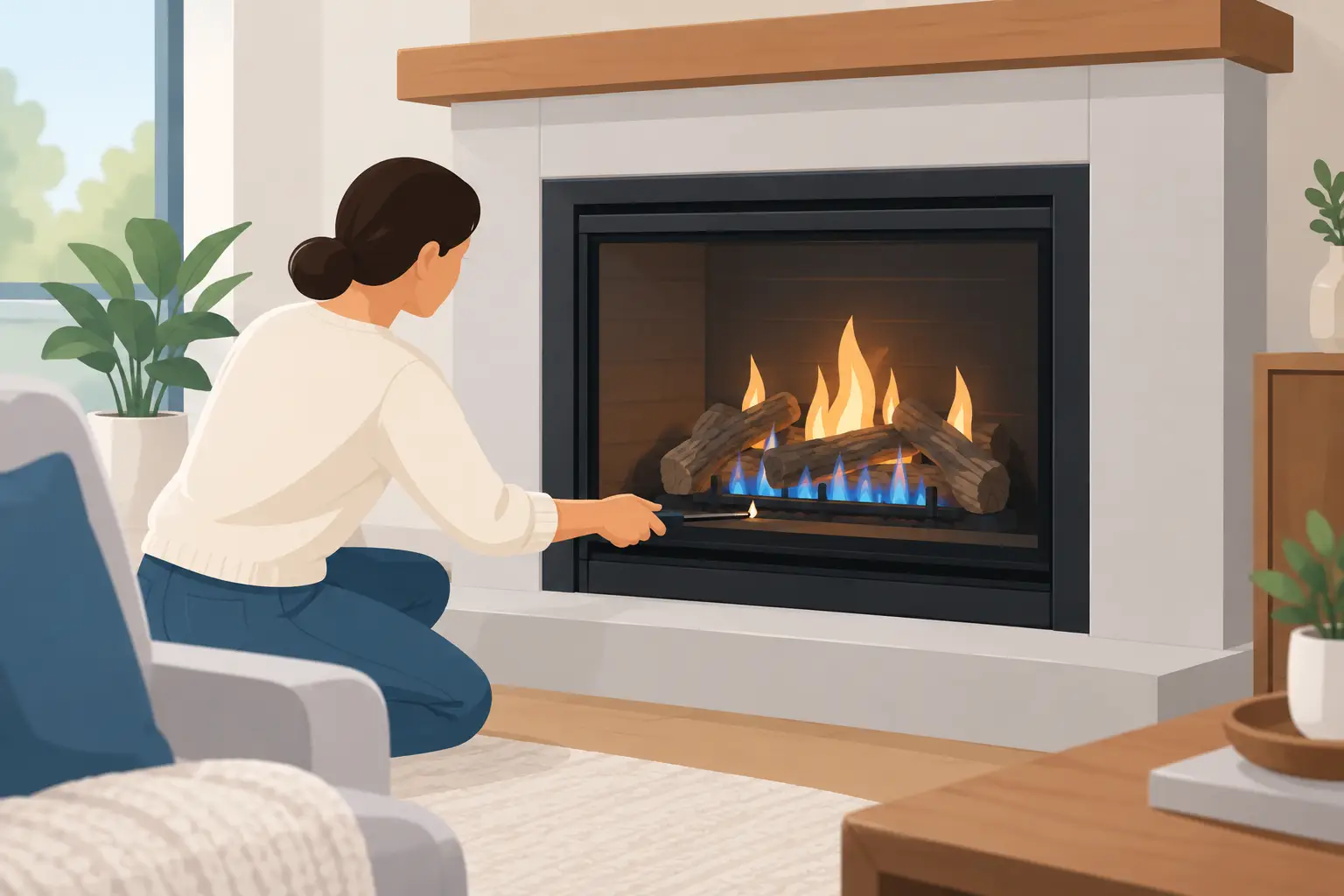
A gas fireplace should provide comfortable heat with a simple, controlled start. If you are learning how to light a gas fireplace, the most important step is not finding the ignition button. It is confirming that the fireplace is safe to operate before gas is introduced. A few minutes of care can prevent a frustrating no-start, damage to the appliance, or a dangerous gas-related situation.
Gas fireplaces are not all lit the same way. Older units commonly use a standing pilot light, while many newer fireplaces use electronic ignition, a wall switch, remote, or thermostat. Always use the lighting instructions printed on the fireplace rating plate or in its owner’s manual when they differ from general guidance.
Before touching the controls, make sure the room does not smell like gas. Natural gas and propane are treated with a distinctive sulfur-like odor so a leak can be recognized quickly. If you smell gas, hear a hissing sound, or suspect a leak, do not light the fireplace. Do not operate switches, use a phone inside the home, or create a flame or spark. Leave the area and contact your gas utility or emergency services from a safe location.
If there is no gas odor, check that the fireplace glass is intact and properly seated. Do not operate a direct-vent gas fireplace with broken, cracked, or removed glass. Keep rugs, furniture, holiday decorations, and other combustible items clear of the unit. The front glass and surrounding metal can become extremely hot, even when the fire looks modest.
It is also wise to look at the exterior vent termination before the heating season. Leaves, nests, snow, and debris can interfere with venting. If your fireplace has not been cleaned or inspected recently, or it has developed soot, unusual odors, delayed ignition, or poor flame appearance, schedule service before relying on it for heat.
A standing-pilot fireplace has a small pilot flame that may remain lit throughout the heating season. The controls are often behind a lower access panel beneath the firebox. You may see a control knob labeled OFF, PILOT, and ON, along with an igniter button and a wall switch or rocker switch.
First, turn the wall switch or remote to OFF. Open the access panel and locate the gas control knob. If the knob is in the OFF position, wait at least five minutes before attempting to relight the pilot. This waiting period allows any unburned gas to clear from the firebox area.
After waiting, turn the knob to PILOT. Press and hold the knob in, then press the igniter button repeatedly until the pilot flame lights. Some fireplaces use a piezo igniter that makes a clicking sound. Keep holding the pilot control for about 30 to 60 seconds after the pilot lights. This gives the thermocouple or thermopile time to warm up and confirm that a flame is present.
Release the knob slowly. If the pilot stays lit, turn the knob to ON. Close the access panel, then use the wall switch, remote, or built-in control to light the main burner. The burner should ignite promptly and burn evenly.
If the pilot goes out when you release the knob, do not keep repeating the process indefinitely. Turn the knob to OFF, wait five minutes, and try once more according to the manufacturer’s instructions. A pilot that will not stay lit can point to a dirty pilot assembly, weak thermocouple, failing thermopile, gas supply issue, or another component that needs professional attention.
Some older fireplaces include match-light instructions, but many modern systems are not designed for that method. Never improvise by placing a match, lighter, or candle near the burner or pilot. The appliance’s listed lighting procedure exists for a reason, and using another method can cause delayed ignition or damage components.
Many newer gas fireplaces do not have a continuously burning pilot. Instead, they use intermittent pilot ignition or electronic ignition. With these systems, turning on a wall switch, remote, thermostat, or control module starts the ignition sequence automatically.
Begin by confirming that electrical power is available to the fireplace and that the gas shutoff valve is open. The shutoff valve is typically located on the gas line near the fireplace. In most installations, a handle parallel with the gas pipe indicates an open valve, but do not force a valve or alter gas piping if you are uncertain.
Set the remote, wall switch, or thermostat to ON. Depending on the appliance, you may hear clicking as the igniter operates, followed by the pilot and then the main burner. Some systems take several seconds to complete this sequence. A brief delay can be normal, but a loud bang, repeated failed attempts, or a strong gas odor is not.
If an electronic fireplace does not respond, check the simple items first. The remote may need fresh batteries, the receiver may be switched off, a wall switch may be in the wrong position, or a GFCI outlet may have tripped. Some units also have a battery backup for operation during a power outage. Refer to the appliance manual for the correct battery type and control settings.
Avoid removing panels or bypassing safety switches to force a start. If fresh batteries and correct control settings do not solve the problem, the unit may need diagnosis by a qualified gas fireplace technician.
After the fireplace lights, watch the flame for a minute or two. Gas logs and fire media often look different from one model to another, but the flame should generally appear stable and distribute naturally across the burner. A little blue at the base is common, with yellow or orange flames developing as the unit warms up.
Do not rearrange ceramic logs, lava rock, embers, or decorative glass unless the manufacturer’s placement diagram specifically allows it. Log placement affects how the burner flames, and a misplaced log can create soot or interfere with safe combustion.
Turn the fireplace off and arrange for service if you see black soot on the glass or surrounding trim, persistent lazy flames, flames lifting away from the burner, repeated clicking, delayed burner ignition, or condensation and discoloration around the vent. These are not issues to cover up or ignore. They can signal dirty burners, venting concerns, damaged gaskets, or combustion problems.
A fireplace that worked last winter may still need attention before it is used again. Do not light the unit if the glass is damaged, the control compartment is wet, the vent cap is blocked, the fireplace has been exposed to a chimney or house fire, or the unit has not been operating normally.
Also pause if you recently had masonry work, roofing work, or an animal issue near the venting system. Exterior changes can affect vent clearances and termination openings. For direct-vent fireplaces, the vent system is part of the appliance, not simply a pipe that can be altered without consideration.
Annual professional service is a practical way to catch problems early. A trained technician can clean the pilot and burner, inspect the ignition components, check the glass gasket and venting, verify flame performance, and identify worn parts before a cold evening turns into a no-heat call.
The easiest time to deal with a weak pilot or dirty burner is before you need the fireplace. Test the unit early in the fall, replace remote batteries as needed, and keep the owner’s manual in a known location. If your fireplace requires repeated relighting or has begun producing soot or unusual odors, dependable service is a better choice than repeated trial and error.
For homeowners in Trumbull, Mahoning, and Mercer counties, Chimney Sweeps and Masonry of America provides professional gas fireplace cleaning, inspection, and repair with clear recommendations based on what the system actually needs. A properly serviced fireplace should feel simple to use and reassuring to enjoy when colder weather arrives.
We are a member of The National Chimney Guild. Certified Chimney Professional