- 330-505-6800
- Info@alifeprotector.com
- 11 North Main St , Niles Ohio 44446.

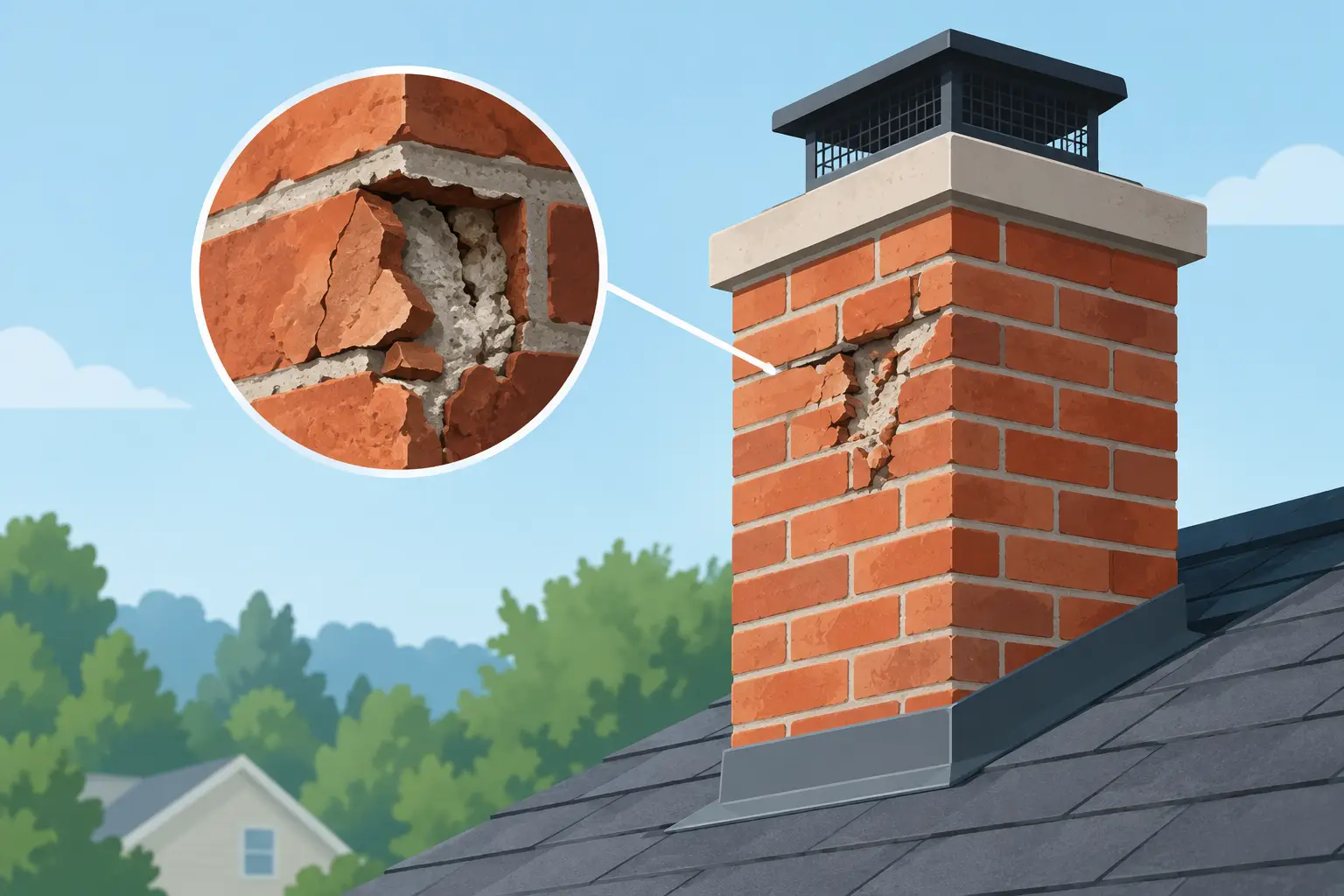
A few loose flakes of brick near the base of a chimney can look like ordinary aging. In northeastern Ohio and western Pennsylvania, however, they may be the first sign of a water-related masonry problem. Learning to identify chimney spalling early gives homeowners time to make a focused repair before moisture reaches deeper into the chimney structure.
Spalling is not merely a cosmetic issue. As the face of a brick breaks away, the brick becomes more exposed to rain, snow, and freeze-thaw cycles. Left unaddressed, surface damage can turn into crumbling masonry, open mortar joints, interior water stains, and a chimney that needs more extensive rebuilding than it otherwise would.
Spalling occurs when the outer surface of brick, block, or stone flakes, chips, peels, or breaks off. Instead of a smooth, solid brick face, you may see shallow pits, rough patches, missing corners, or layers coming away from the masonry. The damage may affect one isolated area, but it often appears on the chimney’s most weather-exposed sides or near the top of the stack.
The debris is another useful clue. Brick fragments on the roof, in the gutter, on a porch roof, or around the foundation deserve attention. Healthy masonry should not routinely shed pieces. A few small chips after an impact are different from ongoing deterioration, especially when several bricks show similar surface loss.
Color changes can also reveal a problem. Spalled bricks may look lighter or more uneven than surrounding masonry because the original fired face has come off. In some cases, you may see white, powdery mineral deposits known as efflorescence. Efflorescence itself does not always mean the brick is failing, but it does show that moisture is moving through the masonry.
Most homeowners can spot early warning signs from the ground using binoculars or from an upper-story window. There is no reason to climb onto a roof or lean a ladder against a questionable chimney. Damaged brick and weakened mortar can make an already risky task more dangerous.
Look closely at the chimney after a season of heavy rain, snow, or repeated freezing temperatures. Check the corners, the courses just below the crown, and the area where the chimney meets the roof. Compare the brick faces across the stack. A chimney with a few darker, damp-looking bricks, chipped faces, and mortar beginning to recede may be taking in water.
Pay attention indoors as well. A musty odor near the fireplace, dampness in the attic around the chimney, peeling paint near an interior chimney breast, or water marks on nearby ceilings can point to water entry. These symptoms do not prove that spalling is the source, since flashing or roof issues may also be involved. They do show that a professional inspection is worthwhile.
It helps to separate brick damage from mortar-joint damage. Spalling affects the brick itself. Repointing addresses deteriorated mortar between otherwise sound bricks. Many aging chimneys have both conditions, but the repair plan should match the actual material failure.
Normal weathering may leave bricks slightly discolored or worn without causing pieces to break away. Spalling is more concerning because it means the protective outer face has failed. Once that dense outer layer is gone, the softer interior of the brick absorbs water more easily and can deteriorate faster.
Cracking is another separate concern. Hairline cracks in a crown or mortar joint may allow water in, while wide stair-step cracks can signal movement or structural stress. A trained chimney professional can determine whether the work calls for crown repair, tuckpointing, brick replacement, flashing repair, or a combination of services.
Water is usually at the center of chimney spalling. Brick is durable, but it is not invincible. When masonry absorbs water and temperatures drop below freezing, that water expands. Repeated freeze-thaw cycles place pressure on the brick from within, eventually forcing the surface apart.
A failed or poorly built chimney crown is a common contributor. The crown is the sloped concrete cover at the top of the chimney, designed to direct water away from the brickwork. Cracks, improper slope, inadequate overhang, or gaps around the flue can allow water to run down and saturate the masonry below.
Other common causes include missing or damaged chimney caps, leaking flashing, worn mortar joints, and bricks that were previously coated with a non-breathable sealant or paint. Masonry needs to release moisture. A coating that traps water inside can speed deterioration, even if it initially appears to protect the surface.
Sometimes the issue traces back to prior repairs. Using mortar that is too hard for older brick can cause the brick, rather than the mortar joint, to take the stress of expansion and contraction. This is why material selection matters, particularly for older homes throughout Trumbull, Mahoning, and Mercer counties. The right repair is not always the largest repair, but it must be compatible with the existing masonry.
Do not ignore active brick loss, but do not assume the entire chimney needs to be torn down either. The proper scope depends on how many bricks are affected, how deep the damage goes, whether water is still entering the system, and whether the chimney is structurally sound.
A professional evaluation should examine the chimney from top to bottom. That includes the crown, cap, flue area, flashing, brick faces, mortar joints, and accessible interior areas. If the chimney serves a fireplace, stove, or gas appliance, the inspection should also consider the condition of the liner and the safety of the venting system.
For localized damage, a masonry professional may remove and replace individual failed bricks, match mortar as closely as practical, and repair nearby joints. Addressing the moisture source at the same time is essential. Replacing spalled brick without repairing a cracked crown or leaking flashing can lead to the same problem again within a few seasons.
More widespread spalling may require partial rebuilding. This can sound intimidating, but rebuilding only the damaged upper section is often more sensible than waiting until the chimney becomes unstable. A clear assessment should explain what is damaged now, what needs prompt repair, and what can be monitored. Honest recommendations matter because every chimney ages differently.
Long-lasting chimney repair is about controlling water, not just improving appearance. A properly installed chimney cap keeps out direct rain, snow, leaves, and animals while allowing the chimney to vent as designed. A sound crown sheds water away from the brick. Properly installed flashing protects the vulnerable roof-to-chimney connection.
Repointing can restore mortar joints that have eroded enough to admit water. When bricks have lost their faces or become soft, replacement is generally more reliable than patching over them. In appropriate situations, a breathable masonry water repellent may be applied after repairs and proper curing. It should reduce water absorption without sealing moisture inside the wall.
Routine maintenance also makes a difference. A yearly chimney inspection can reveal early crown cracks, loose mortar, cap damage, or flashing concerns before they create widespread masonry failure. For wood-burning systems, regular sweeping and inspection support both fire safety and a clearer view of the chimney’s overall condition.
Schedule service promptly if brick pieces are falling, several bricks are flaking, mortar is missing, or you see water stains near the fireplace or chimney. The same is true if the chimney looks visibly bowed, cracked, or unstable. Avoid using a fireplace or wood stove if damage may affect the flue, liner, or structural integrity until it has been evaluated.
For less urgent surface changes, arrange an inspection before winter or after a harsh freeze-thaw season. Chimney Sweeps and Masonry of America provides knowledgeable chimney and masonry assessments for homeowners who want a practical explanation of what they are seeing and what repair will best protect the home.
A chimney does not need to look perfect to be safe, but it should remain solid, weather-resistant, and properly maintained. Catching a few damaged bricks today can preserve the structure, reduce water intrusion, and help keep your hearth system dependable for the seasons ahead.
We are a member of The National Chimney Guild. Certified Chimney Professional
 Optimized by Seraphinite Accelerator