- 330-505-6800
- Info@alifeprotector.com
- 11 North Main St , Niles Ohio 44446.

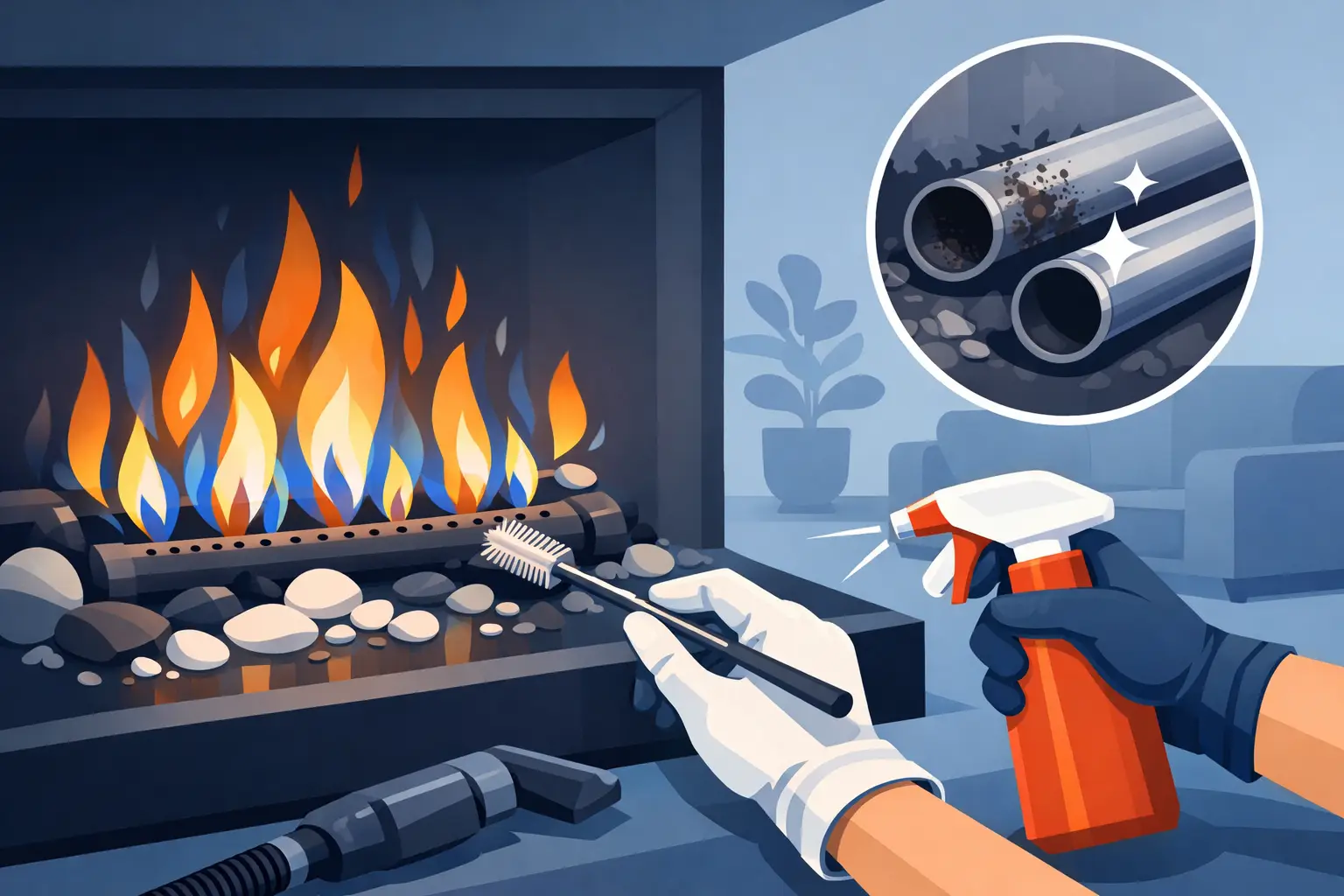
A gas fireplace should light with a steady flame, burn evenly across the burner, and operate without unusual odors, soot, or repeated clicking. When it does not, the issue may be as simple as dust or debris in the firebox – but gas fireplace burner cleaning is not a job to approach like ordinary household dusting. The burner, pilot assembly, ignition system, gas connections, and venting all work together. Cleaning the visible surfaces helps, but safe service requires knowing where a homeowner should stop.
For homeowners in Trumbull, Mahoning, and Mercer counties, routine care is especially worthwhile before the heating season begins. A fireplace that has sat unused through a humid Ohio or Pennsylvania summer can collect dust, pet hair, insects, and debris that affect ignition and flame appearance.
The burner is the component that distributes gas beneath the logs or media and creates the flame pattern designed for the appliance. Its ports are small openings that must remain clear for gas to flow and ignite evenly. Dust, rust flakes, spider webs, and loose fireplace media can interfere with that pattern.
A partially blocked burner may produce uneven flames, delayed ignition, or flames that lift away from the burner instead of burning cleanly near it. Some buildup can also contribute to sooting. While a small amount of darkening on logs or glass may have a normal cause depending on the appliance, persistent soot is a reason for professional evaluation. It can point to burner obstruction, incorrect log placement, an air-mixture concern, or a venting problem.
Cleaning also supports efficiency. A fireplace that lights reliably and burns as designed provides more dependable supplemental heat. That can reduce wasted fuel and help the unit operate with less environmental impact. Still, cleaning alone cannot correct worn ignition parts, damaged logs, a failing gas valve, or a venting defect. Honest service means identifying the actual cause rather than treating every problem as a cleaning issue.
Start with the manufacturer’s instructions for your specific fireplace. Every model has its own log arrangement, access method, and cleaning limits. If the manual says a component should only be removed by a qualified technician, follow that direction.
Turn the fireplace off, allow it to cool completely, and make sure the gas control is in the off position before doing any light cleaning. Never work around a warm burner or pilot assembly. If you smell gas, hear hissing, or suspect a leak, do not attempt cleaning or relighting. Leave the area, avoid switches or open flames, and contact your gas utility or emergency services as appropriate.
Once the unit is cool, homeowners can generally vacuum loose dust from the firebox floor and around accessible areas using a soft brush attachment. Keep the nozzle away from the burner ports, pilot opening, wiring, and decorative media. A soft, dry paintbrush can lift dust from the face of a ceramic log or from non-electrical metal surfaces. Avoid household cleaners, water, abrasive pads, and compressed air. Moisture can damage components, while compressed air can push debris deeper into the burner or pilot assembly.
Clean the glass only after it is fully cool and only with a cleaner approved for fireplace glass. Regular glass cleaner may leave residue or damage the glass surface. Before replacing the glass front, confirm that its gasket and latches are properly seated. An improperly installed glass panel can affect combustion and presents a serious safety concern.
Do not insert pins, wire, toothpicks, or drill bits into burner ports. It may seem like an easy way to clear a blockage, but it can enlarge or damage the openings and alter the flame pattern. The same caution applies to pilot components. These parts are small, sensitive, and directly related to ignition and flame safety.
A yearly fireplace service visit is a practical choice for many households, particularly if the unit is used regularly. It is also wise to schedule service when performance changes. A qualified technician can remove and inspect components according to the appliance requirements, clean the burner correctly, check the pilot and ignition system, assess the condition of the logs and glass, and verify proper operation after reassembly.
Call for service if you notice one or more of these concerns:
Some symptoms overlap. For example, a weak pilot may come from debris, but it can also result from a failing thermocouple, thermopile, or electronic ignition component. Soot may relate to dirty burner ports, but it may also signal incorrect log placement or a venting issue. That is why a visual check alone is not enough when a gas fireplace is behaving differently.
Direct-vent gas fireplaces move combustion gases outdoors through a dedicated vent system. Vent-free units have different installation and maintenance requirements, while older natural-draft systems may connect to a chimney. The cleaning needs depend on the appliance type, but every system needs clear airflow and proper draft conditions.
Outside, leaves, nests, snow, and insect activity can obstruct a termination cap. Inside, moisture can cause corrosion or staining. Chimney and venting concerns are not always visible from the firebox, which is one reason a trained professional should inspect the whole system rather than focusing only on the burner.
For a gas fireplace vented through a chimney, the chimney structure matters too. A damaged cap, failed crown, deteriorated mortar, or loose flashing can allow water into the system. Water intrusion can shorten the life of metal components and create problems that look like routine burner trouble. Addressing both the appliance and the masonry around it protects the investment more effectively than repeated surface cleaning.
For most homes, arrange professional gas fireplace cleaning and inspection once a year, ideally before the colder months. This timing gives you an opportunity to correct minor issues before you depend on the fireplace for daily comfort. If the fireplace sees heavy use, has experienced water exposure, or has shown any performance changes, an earlier appointment may be appropriate.
Keep the area around the fireplace clear of furniture, decorations, and combustible storage. Between service visits, watch the flame pattern when you use the unit. A stable, consistent flame is reassuring; a new change is useful information to report to the technician.
Chimney Sweeps and Masonry of America provides reliable gas fireplace cleaning, inspection, and repair with clear recommendations for local homeowners. The goal is not to replace parts that still have useful life. It is to identify what your fireplace needs to operate safely, efficiently, and dependably.
A clean burner is part of responsible fireplace care, not a substitute for skilled inspection. Before the first cold evening makes the fireplace a daily habit, give the system the attention it needs so the warmth in your home feels as dependable as it should.
We are a member of The National Chimney Guild. Certified Chimney Professional
 Optimized by Seraphinite Accelerator