- 330-505-6800
- Info@alifeprotector.com
- 11 North Main St , Niles Ohio 44446.

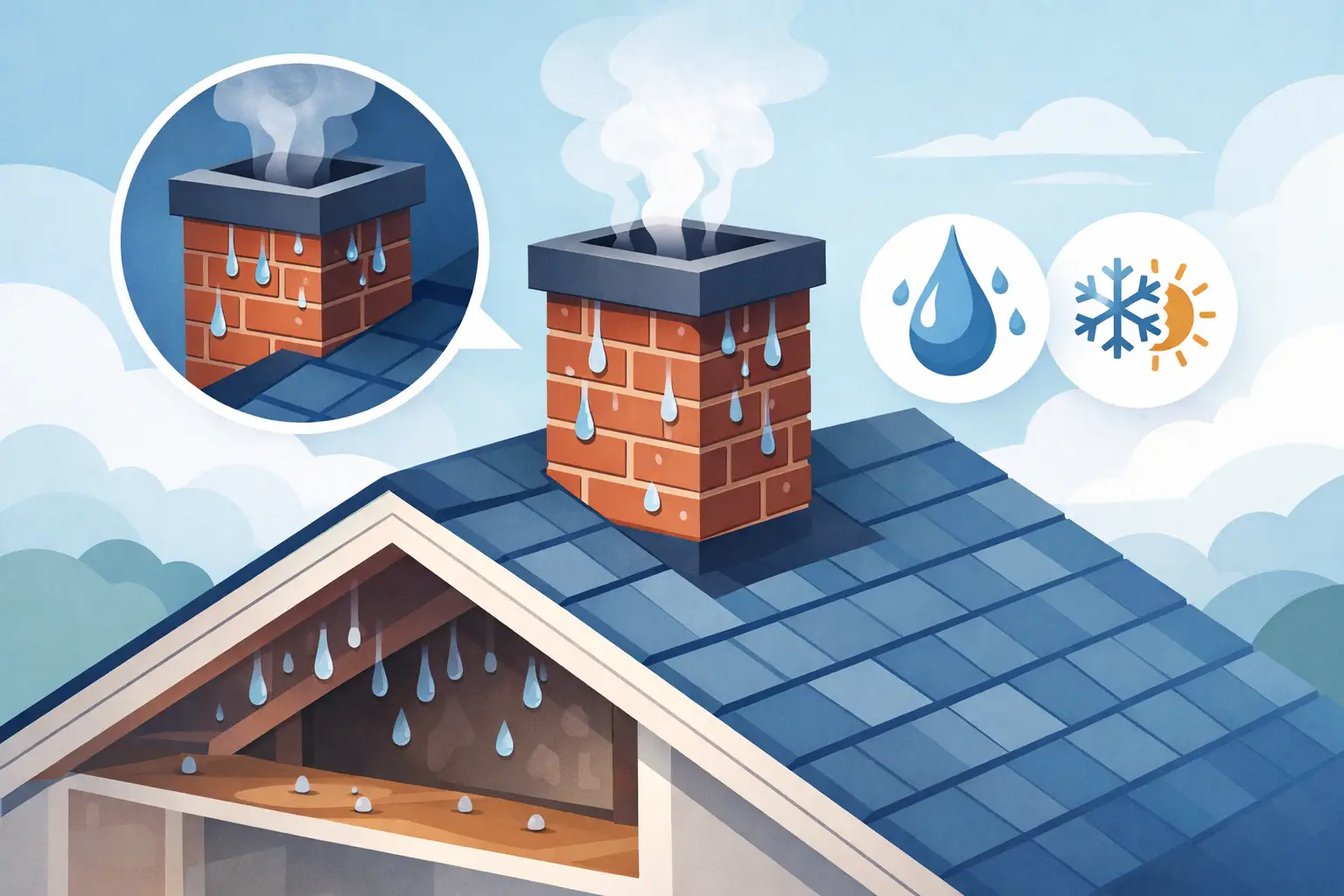
A damp smell near the fireplace, white staining on exterior brick, or water inside the firebox after cold weather can point to a chimney moisture problem. Knowing how to prevent chimney condensation helps protect more than appearance. Left unaddressed, repeated moisture can damage flue liners, mortar joints, metal components, and the heating appliance that depends on the chimney to vent safely.
For homeowners in northeastern Ohio and western Pennsylvania, the problem is often most noticeable during the heating season. A warm exhaust stream meets a cold chimney, water vapor cools into liquid, and that moisture has nowhere good to go. The right solution depends on the chimney design, fuel type, and condition of the masonry. A cap may be part of the answer, but it is rarely the whole answer.
Every fuel-burning appliance produces water vapor. Wood creates it, and gas appliances produce a significant amount of it. As the exhaust travels upward, it loses heat to the chimney walls. If the flue gases cool below their dew point before reaching the top of the chimney, vapor condenses on the flue interior.
Older masonry chimneys are especially prone to this issue. Their flues can be oversized for a modern gas appliance or wood stove insert, and uninsulated clay tile liners absorb heat quickly. A large, cold chimney gives exhaust more surface area and more travel time to cool. The result may be damp residue, acidic deposits, rusted dampers, deteriorating mortar, or a musty odor around the hearth.
Condensation is not always the same as a leak. Rain entering through a missing cap, failed crown, damaged flashing, or porous brick can create similar symptoms. A qualified inspection is the best way to tell whether water is coming from outside the chimney, from inside the flue, or from both directions.
The most dependable approach is to keep the chimney system appropriately sized, warm enough to draft properly, and protected from exterior water. That sounds straightforward, but the details matter.
An oversized flue is one of the most common causes of condensation after a home converts from an older furnace or fireplace to a more efficient appliance. The smaller appliance sends less heat up the chimney, while the large flue remains cold. Relining the chimney with a correctly sized liner helps exhaust move efficiently and retain enough heat for proper draft.
For many gas appliances, an aluminum or stainless steel liner may be appropriate depending on the appliance and venting requirements. Wood stoves and inserts generally require a stainless steel liner rated for solid fuel. The liner diameter, height, insulation needs, and connection method should be selected for the specific appliance, not guessed based on the chimney opening.
A liner is not an automatic recommendation for every chimney. If the existing flue is correctly sized, structurally sound, and suitable for the appliance, repair or maintenance may be all that is needed. A professional assessment should identify the actual cause before any major work is recommended.
Insulation helps a liner stay warmer, especially where a chimney runs along an exterior wall or extends high above the roofline. A warmer flue improves draft and reduces the chance that vapor will condense before it exits the top.
Insulation is particularly valuable with wood stove inserts, long exterior chimneys, and masonry chimneys in cold winter conditions. It can also provide a useful layer of protection between a liner and combustible framing when clearances are limited. Whether insulation is needed depends on the appliance, liner system, chimney construction, and applicable code requirements.
Wet or poorly seasoned firewood creates cooler, dirtier exhaust. That increases smoke, creosote, and water vapor inside the flue. Use properly seasoned firewood with a moisture content of about 20% or less, and avoid letting a wood fire smolder for long periods.
A hot, clean-burning fire warms the chimney more effectively than a low, oxygen-starved fire. This does not mean overfiring a stove or fireplace. Follow the appliance manufacturer’s operating instructions, use the correct fuel, and have the system inspected and cleaned on schedule.
A chimney cap prevents direct rain, snow, leaves, and animal entry. It is a basic protective component, but it cannot stop flue condensation by itself. Still, keeping outside water out of the chimney reduces the overall moisture burden and makes it easier to identify an internal venting problem.
The chimney crown and flashing deserve equal attention. A cracked crown can allow water into the chimney structure, while failed flashing lets water enter where the chimney meets the roof. During Ohio’s freeze-thaw cycles, absorbed water expands and can break down brick faces and mortar joints. Timely crown repair, flashing repair, repointing, and masonry repair can prevent a manageable moisture issue from becoming a larger structural repair.
Homeowners sometimes close off openings, stuff insulation around a fireplace damper, or block vents in an effort to keep cold air out. These shortcuts can create draft problems and may interfere with the safe operation of fuel-burning equipment.
Gas appliances, wood stoves, fireplaces, and furnaces need venting systems that match their design. A chimney that drafts poorly can allow combustion gases, including carbon monoxide, to spill into the home. If you notice exhaust odors indoors, soot around an appliance, headaches that seem worse when the appliance operates, or a carbon monoxide alarm, stop using the appliance and seek qualified help promptly.
A top-sealing damper can reduce heat loss from an unused fireplace, but it must be compatible with how the fireplace is used and kept open before lighting a fire. For an appliance connected to a liner, the proper solution may be a listed cap, termination, or damper arrangement designed for that system.
Condensation is often discovered after visible damage has started. Schedule an inspection if you see persistent moisture, rusty fireplace parts, peeling wallpaper near the chimney, crumbling mortar, or white powdery staining called efflorescence. These signs do not prove condensation, but they show that moisture is moving through the system.
Four conditions deserve particular attention:
A Level 1 chimney inspection is a practical starting point for many homeowners. It evaluates readily accessible parts of the chimney and appliance connection to identify obvious safety concerns, maintenance needs, and signs of moisture intrusion. If the findings point to hidden flue damage or a complex venting issue, a more detailed inspection may be appropriate.
Chimney cleaning matters, but cleaning alone cannot correct an improperly sized or damaged venting system. A sweep removes soot and creosote so the flue can be evaluated more clearly. The inspection that accompanies service is what helps reveal rust, cracked tiles, failed joints, poor draft conditions, and water damage before they become more expensive problems.
Gas fireplaces also need regular attention. Although they do not create creosote like wood-burning appliances, they can produce moisture and leave deposits that affect burners, logs, ignition components, and venting performance. Annual service is a sensible habit for equipment used during the heating season.
For a chimney that serves a wood stove insert, fireplace, gas appliance, or another heating system, consistent care protects efficiency as well as safety. A properly vented appliance uses fuel more effectively, produces fewer unwanted deposits, and places less stress on the chimney structure.
The best repair is the one that addresses the source of the moisture. That may mean a new cap and crown repair, masonry restoration, relining, liner insulation, appliance adjustment, or a combination of services. It may also mean confirming that a chimney is performing correctly and only needs routine maintenance.
Chimney Sweeps and Masonry of America provides inspection, cleaning, liner, fireplace, and masonry services for property owners throughout Trumbull, Mahoning, and Mercer counties. A careful evaluation can separate condensation from rain intrusion and provide clear recommendations based on the condition of your home, chimney, and appliance.
A dry chimney is not merely a cleaner-looking chimney. It is a safer, longer-lasting part of the home, and early attention gives you more repair options before another winter adds to the damage.
We are a member of The National Chimney Guild. Certified Chimney Professional
 Optimized by Seraphinite Accelerator