- 330-505-6800
- Info@alifeprotector.com
- 11 North Main St , Niles Ohio 44446.

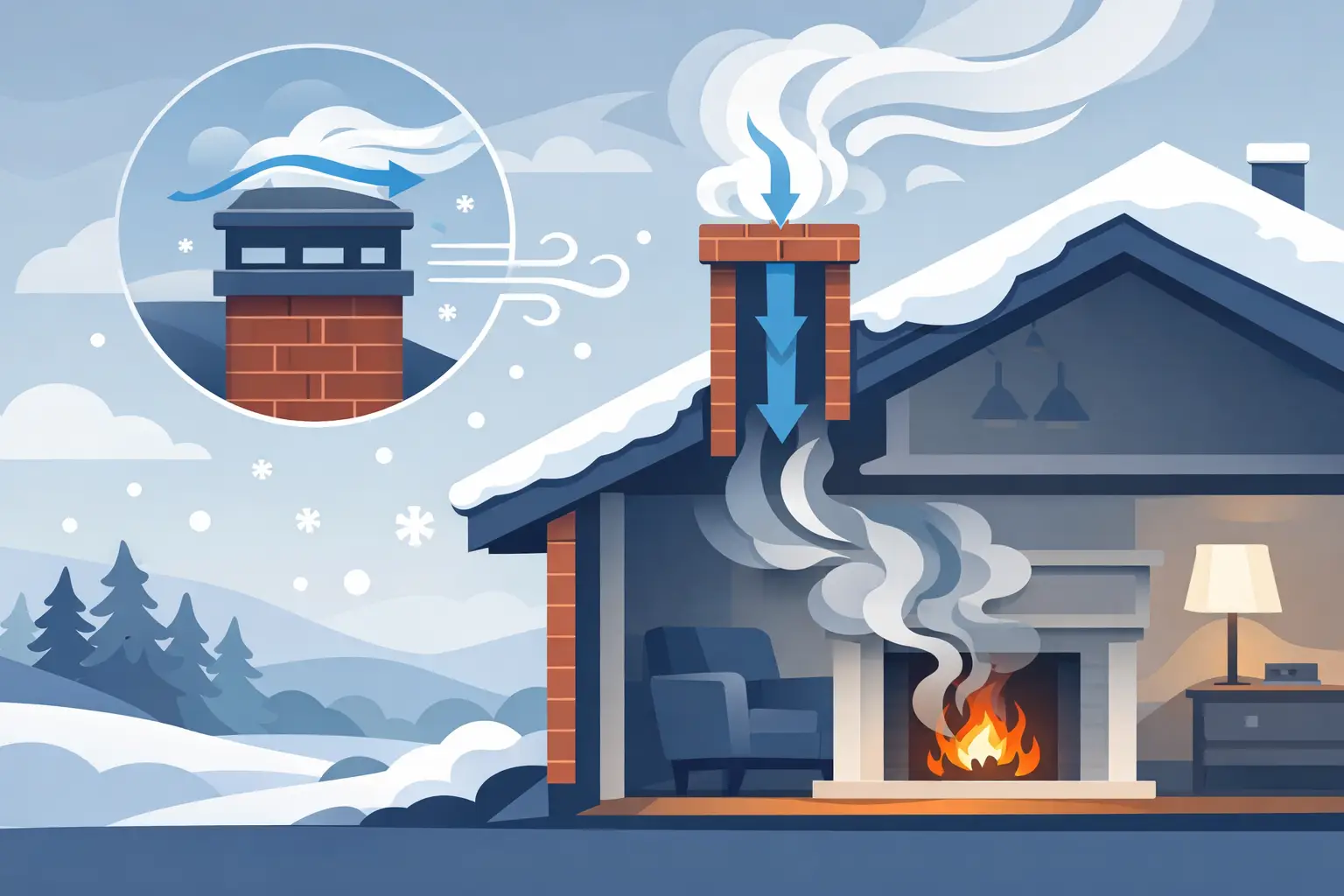
Cold air spilling from a fireplace is more than an annoyance when the wind picks up. A chimney downdraft can carry smoke, soot, and potentially harmful combustion gases back into the living space. To stop chimney downdraft safely, the first step is identifying why the chimney is pulling air in the wrong direction rather than guessing at a quick fix.
For homeowners across northeastern Ohio and western Pennsylvania, this problem often appears during the first cold fires of the season, after a storm, or when a bathroom fan, range hood, or newer furnace is running. The right repair depends on the chimney, the appliance, the house, and the conditions outside.
A working chimney uses warm air to create upward draft. As the fire warms the flue, the rising gases draw smoke and combustion byproducts up and out. Downdraft occurs when outside air pressure, wind, a cold flue, or indoor pressure overcomes that upward pull.
Wind is one common cause. A chimney that is too short, poorly positioned near a roofline, or surrounded by taller trees or neighboring structures can fall into a wind pattern that forces air down the flue. This may happen only with winds from one direction, which can make the issue seem unpredictable.
A cold chimney is another frequent factor. Masonry absorbs heat slowly. If the flue is cold and the fire is started with large wood pieces right away, smoke may roll into the room before the draft has a chance to establish itself. This is especially common with fireplaces that are used only occasionally.
House pressure matters as well. Modern weatherization can make a home tighter, while exhaust fans, clothes dryers, kitchen hoods, and some HVAC equipment remove indoor air. That air has to be replaced somehow. If the fireplace opening is the easiest path, the house can pull outdoor air and smoke down the chimney.
Structural and maintenance problems can contribute too. A damaged chimney crown, missing cap, deteriorated mortar, blocked flue, or improperly sized liner can affect performance and safety. In some cases, a fireplace that has always struggled may have a design or sizing issue that requires a professional assessment rather than another accessory.
A brief puff of smoke while lighting a fire can sometimes be corrected by warming the flue. Repeated smoke entering the room is different. Homeowners should schedule an inspection when they notice persistent cold air from the fireplace, smoky odors when no fire is burning, soot around the firebox, trouble getting fires started, or smoke that worsens whenever exhaust fans operate.
Do not ignore a sulfur-like odor, visible debris falling into the firebox, water staining near the chimney, or signs that masonry is cracking or leaning. Those symptoms may point to water intrusion or deterioration that extends beyond a draft issue.
If a gas fireplace is producing unusual odors, shutting off unexpectedly, or showing soot where it should not, stop using it until it has been evaluated. Gas appliances require proper venting, and their symptoms should never be treated as a simple comfort problem.
Some solutions are safe for homeowners to try, provided the chimney and fireplace are otherwise in good condition. Start by opening the damper fully. It sounds basic, but a partially closed damper can restrict flow enough to send smoke back into the room.
Before lighting a wood fire, warm the flue. Roll a sheet of newspaper into a loose torch, light it, and hold it near the damper area using a fireplace tool until the air begins moving upward. A commercial fire starter placed high in the firebox can serve the same purpose. Keep your face and hands clear, and never use gasoline, lighter fluid, or other accelerants.
Use dry, seasoned firewood. Wet wood burns cooler and creates more smoke, making it harder for the chimney to establish a strong draft. Wood should generally be split, stored off the ground, protected from rain, and properly seasoned before burning.
You can also reduce competing exhaust sources while starting the fire. Turn off kitchen and bath fans, pause the clothes dryer, and avoid running a powerful range hood for a few minutes. If the draft improves when a nearby window is cracked open, negative indoor pressure is likely part of the problem. That observation is useful information for a chimney professional.
These steps can help with a cold flue or temporary pressure imbalance. They will not correct a blocked chimney, failing liner, inadequate height, or wind-driven downdraft caused by the chimney’s location.
A Level 1 chimney inspection is a sensible starting point for a recurring draft problem. It gives a trained technician the opportunity to examine accessible portions of the chimney and venting system, check for obstructions and visible damage, and assess whether cleaning or repairs are needed.
A properly fitted chimney cap keeps out rain, leaves, nesting animals, and debris. Certain cap styles can also reduce wind turbulence around the flue opening. However, a cap is not automatically the answer to every downdraft complaint. The wrong style or size can restrict flow, and adding a cap without examining the flue may hide a more serious issue.
A professional can recommend whether a standard cap, a wind-resistant cap, or a different correction makes sense for the specific chimney. Cap installation should be paired with an evaluation of the crown and masonry, since water damage around the top of the chimney often creates related repair needs.
If the chimney terminates too low relative to the roof or nearby structures, wind can disrupt the draft. Extending the chimney may improve performance, but it must be designed and supported correctly. A taller stack changes the load on the existing masonry and may require stabilization, rebuilding, or code-conscious planning.
This is not a do-it-yourself project. Height changes affect draft, structural integrity, and clearances, particularly on aging masonry chimneys common throughout Trumbull, Mahoning, and Mercer counties.
A chimney liner that is damaged, undersized, oversized, or incompatible with the connected appliance can create draft problems. Liner work may be appropriate when converting fuel types, installing a wood stove insert, repairing a deteriorated flue, or correcting an appliance connection.
The best liner size depends on the appliance and the chimney system. Bigger is not always better. An oversized flue can remain too cool and draft poorly, while an undersized liner can restrict exhaust. A qualified evaluation protects both performance and safety.
Cracked crowns, failing flashing, open mortar joints, and loose brick may not directly cause every downdraft, but they allow water into the chimney. Over time, freeze-thaw damage can weaken the structure, damage liners, and create openings where cold air and moisture enter.
Repointing, crown repair, flashing installation, and masonry restoration preserve the chimney’s exterior while helping protect the venting system inside. Addressing small defects early is usually more practical than waiting for a larger rebuild.
Do not block a chimney flue with insulation, cloth, cardboard, or a homemade plug. These measures can create a fire hazard and may trap moisture inside the chimney. A top-sealing damper may be useful for an unused fireplace, but it must be compatible with the system and fully opened before any fire is lit.
Avoid relying on a glass fireplace door as a cure for smoke problems. Doors may reduce room air loss when the fireplace is not in use, but they do not repair an inadequate draft. Likewise, air fresheners can mask smoke odor without addressing where the odor is coming from.
Carbon monoxide alarms are essential near sleeping areas and on every level of the home, but they are an alarm system, not a repair. If an alarm activates, leave the home, call emergency services if anyone feels ill or symptoms persist, and do not use the appliance again until the source has been identified.
A downdraft may be solved with cleaning, a properly selected cap, changes to fireplace operation, or repair to the chimney top. Other homes need a more involved solution involving liner work, masonry repair, or chimney height. The difference becomes clear only after looking at the complete system.
Chimney Sweeps and Masonry of America provides local chimney inspections, cleaning, liner work, cap installation, and masonry repair with recommendations based on the condition of the chimney, not a one-size-fits-all sales pitch. A careful inspection can help you use your fireplace or stove with greater confidence through the heating season.
If your fireplace is sending smoke or cold air into the room, schedule service before the next hard freeze or holiday fire. A chimney should carry heat and exhaust safely away from your home, not become another source of discomfort inside it.
We are a member of The National Chimney Guild. Certified Chimney Professional
 Optimized by Seraphinite Accelerator