- 330-505-6800
- Info@alifeprotector.com
- 11 North Main St , Niles Ohio 44446.

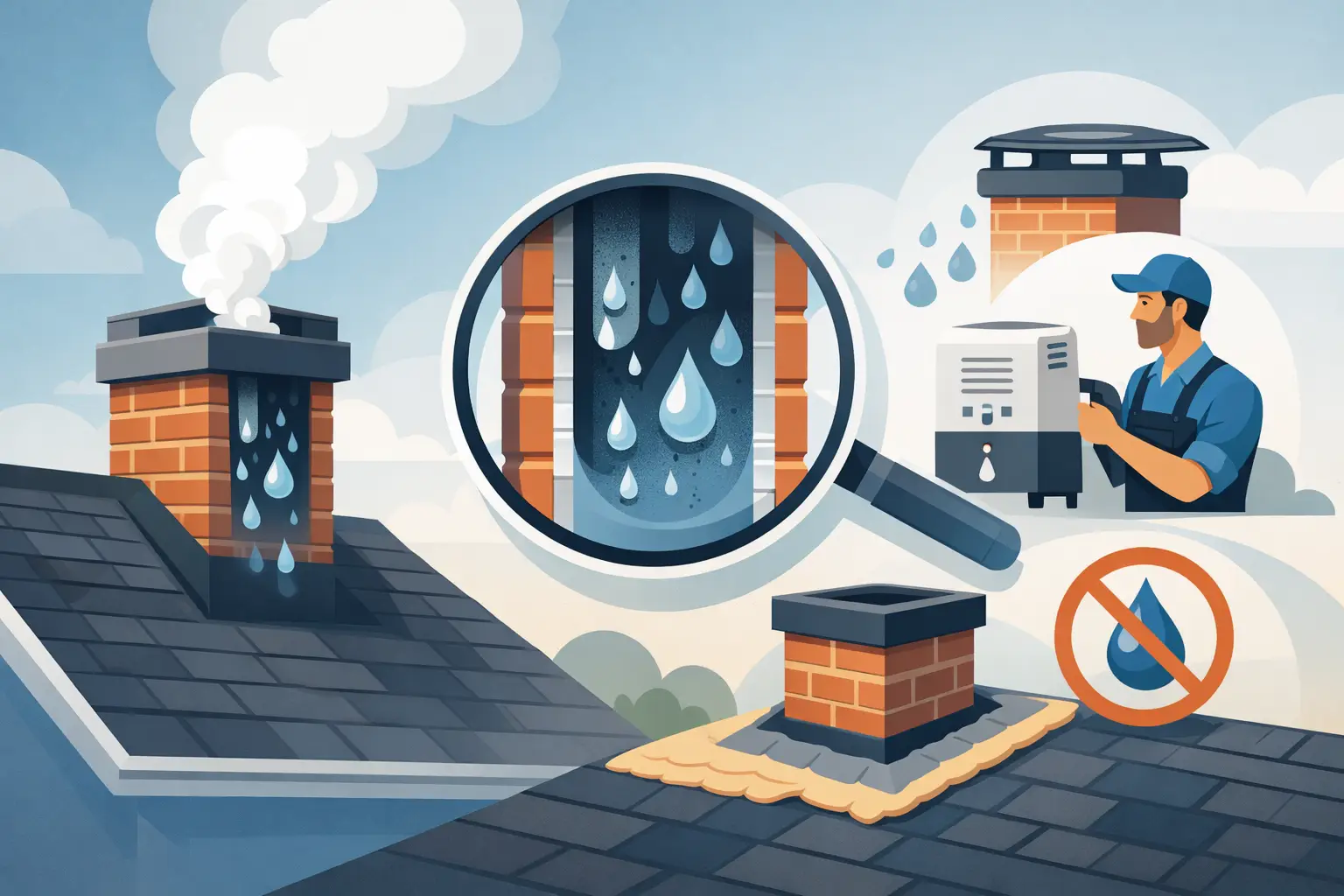
A damp fireplace odor after a cold spell, white staining on chimney brick, or water appearing in the firebox can point to the same underlying issue: moisture is forming where it should not. Understanding chimney condensation causes helps homeowners protect the flue, masonry, and heating equipment before a small moisture problem becomes a costly repair.
Condensation is different from a roof leak or rain entering through a missing cap, although more than one water problem can exist at the same time. It occurs when warm, moisture-laden exhaust gases cool below their dew point inside the chimney. That moisture then collects on the liner or masonry instead of safely leaving the home with the flue gases.
A chimney is designed to carry combustion gases upward while they are warm enough to rise. When the flue stays too cool, exhaust slows down, moisture condenses, and acidic residue can settle on the chimney system. The exact cause depends on the appliance, fuel, chimney design, and condition of the masonry.
Cool temperatures are one of the most common chimney condensation causes. Exterior chimneys are especially vulnerable in northeastern Ohio and western Pennsylvania because they are exposed to long periods of cold weather on three sides. A chimney on an interior wall retains more heat, while an exterior masonry chimney can cool exhaust gases quickly before they reach the top.
The problem can be more noticeable with a fireplace or stove that is used only occasionally. The chimney mass begins cold, and a short, low-temperature fire may not produce enough sustained heat to establish a strong draft. Moisture may form before the flue has a chance to warm.
A flue must be properly sized for the appliance it serves. If a wood stove insert, furnace, or fireplace appliance vents into an oversized masonry flue, the exhaust can spread out and lose heat too quickly. Instead of moving efficiently upward, it cools and leaves condensation on the flue walls.
Older homes may also have damaged clay tiles, gaps in the flue, or no properly sized liner for a newer appliance. Installing an appropriately sized chimney liner can improve draft, contain combustion byproducts, and reduce the conditions that lead to damaging moisture. The right liner is not a one-size-fits-all decision, which is why a professional inspection should come before recommending repairs.
Gas burns cleaner than wood, but it still produces water vapor. In fact, gas appliances can create substantial moisture in their exhaust. When a conventional gas appliance vents through a cold or oversized chimney, that vapor may condense before it exits the flue.
High-efficiency gas equipment requires particular care. Many units are designed to vent through approved materials and configurations that differ from a traditional masonry chimney. Connecting an appliance to the wrong venting system can create recurring condensation, corrosion, performance issues, and safety concerns. A qualified technician can determine whether the appliance and chimney are properly matched.
For wood-burning fireplaces and stoves, fuel quality matters. Green or poorly seasoned firewood contains excess moisture. Burning it uses heat to drive off water rather than producing a clean, hot fire, which creates cooler, wetter smoke. That smoke can condense in the flue and contribute to creosote buildup.
Closing down a stove too early, burning smoldering fires overnight, or using a fireplace with restricted airflow can have a similar effect. A slow burn may seem efficient, but it can lower flue temperatures and increase deposits. The trade-off is real: a controlled burn is necessary for safe operation, but starving a wood fire of air is not an effective way to extend burn time.
Not all chimney moisture is condensation. Rain and snow can enter through a damaged or missing chimney cap, cracked crown, deteriorated mortar joints, failed flashing, or porous masonry. This exterior water can look very similar to a condensation issue once it reaches the firebox or stains interior walls.
A chimney cap helps keep precipitation, animals, and debris out of the flue. The crown sheds water away from the top of the chimney, while flashing protects the vulnerable area where the chimney meets the roof. Repointing failing mortar and repairing damaged brick help preserve the chimney structure itself. When any of these components fail, the masonry can absorb water, freeze and thaw, and deteriorate over time.
Homeowners often notice the effects of condensation before they identify the cause. A sour, smoky, or musty odor near the fireplace is common, especially during humid weather. Dark stains in the firebox, rust on a damper or fireplace doors, flaking clay tile, and white powdery residue on exterior brick are also warning signs.
In severe cases, moisture and acidic deposits can damage the liner, corrode metal components, weaken mortar, and stain nearby walls or ceilings. A gas fireplace may show rust around the burner area or vent components. A wood-burning system may develop heavier-than-normal creosote deposits, poor draft, smoke spillage, or trouble keeping a fire burning.
These signs do not automatically mean the chimney needs a complete rebuild. Sometimes the solution is a cap, crown repair, flashing repair, a properly sized liner, or changes in how the appliance is operated. A thorough inspection separates a localized repair from a larger structural or venting concern.
Chimney moisture does more than create an unpleasant smell. Condensation from combustion gases can be acidic, particularly when it combines with soot and creosote. Over time, it can erode clay flue tiles, corrode metal liners, and compromise joints that keep smoke and gases contained.
Masonry also suffers when it stays wet. In our freeze-thaw climate, absorbed water expands as it freezes. Brick faces can pop off, mortar can crumble, and small cracks can become openings that admit even more water. Addressing moisture early is often the most practical way to extend the life of a chimney and avoid unnecessary replacement work.
There is also a safety consideration. A damaged liner, obstructed flue, or poor draft can affect how combustion gases leave the home. Carbon monoxide is colorless and odorless, so working carbon monoxide alarms are essential wherever fuel-burning appliances are present. If you smell gas, suspect a carbon monoxide issue, or notice severe smoke spillage, stop using the appliance and seek prompt professional help.
A Level 1 chimney inspection is often the right starting point for a homeowner who sees stains, smells odors, or has concerns about draft. The inspection evaluates readily accessible portions of the chimney, fireplace, appliance connection, and venting system. It can reveal obvious issues such as a missing cap, cracked crown, deteriorated mortar, damaged damper, or heavy deposits.
When symptoms suggest a concealed problem, additional evaluation may be appropriate. A technician may assess liner sizing and condition, look for signs of water entry, and consider the appliance type, fuel, use patterns, and chimney location. The goal is to identify why moisture is present before proposing work.
For example, installing a new cap is a sensible repair when rain is entering an otherwise sound flue. It will not correct an oversized liner that is allowing gas exhaust to cool and condense. Likewise, a liner may improve a venting mismatch, but exterior masonry repairs are still necessary if the crown, flashing, or mortar is failing.
The best prevention plan starts with the specific chimney system. Keep the flue clean and inspected on a regular schedule, especially before the heating season. Cleaning removes creosote and debris that can restrict draft, while inspection identifies early corrosion, masonry damage, and water entry points.
For wood-burning appliances, use dry, properly seasoned firewood and follow the manufacturer’s operating guidance. Build fires that establish a healthy draft rather than relying on smoky, low-temperature burns. For gas appliances, schedule professional cleaning and service so burner performance, venting, and safety components can be checked.
Make sure the chimney exterior is protected as well. A correctly installed cap, sound crown, intact flashing, and well-maintained mortar work together to keep water out. If the flue is oversized, deteriorated, or unsuitable for the connected appliance, a properly selected liner may be the long-term solution.
Chimney Sweeps and Masonry of America provides clear, professional assessments for homeowners throughout Trumbull, Mahoning, and Mercer counties. If moisture, odors, staining, or draft problems are affecting your fireplace, stove, or gas appliance, scheduling an inspection can provide answers before another winter puts more stress on the system.
A dry, properly vented chimney supports safer heating, stronger masonry, and fewer surprises when the temperature drops. Acting when the first signs appear gives you more repair options and helps preserve the home you have worked hard to maintain.
We are a member of The National Chimney Guild. Certified Chimney Professional
 Optimized by Seraphinite Accelerator