- 330-505-6800
- Info@alifeprotector.com
- 11 North Main St , Niles Ohio 44446.

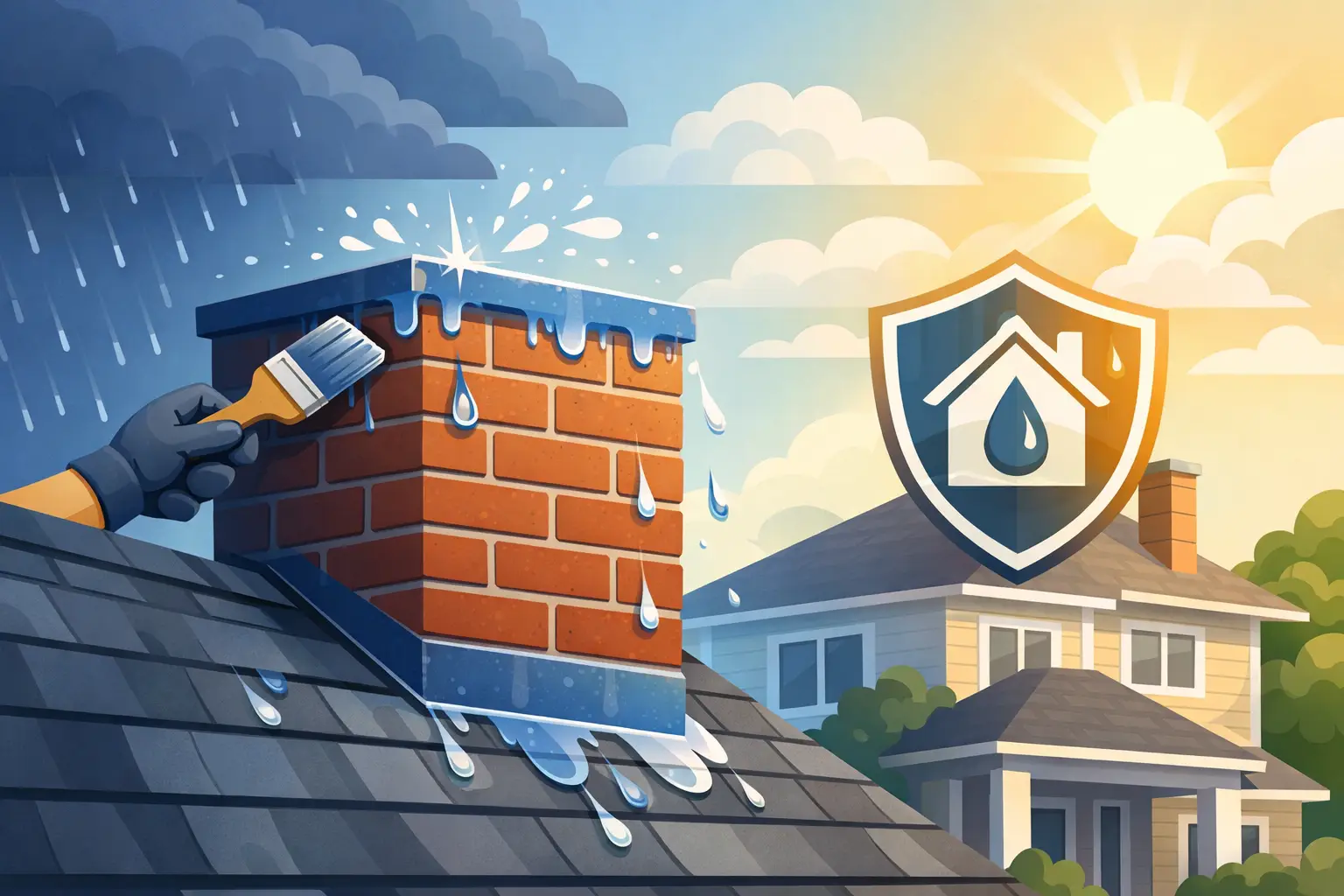
A chimney can look solid from the ground while quietly absorbing water with every rainstorm, thaw, and freeze. Chimney waterproofing is one of the most effective ways to protect exposed masonry, but it works best when it is part of a complete assessment of the crown, flashing, mortar joints, cap, and brickwork.
For homeowners in northeastern Ohio and nearby western Pennsylvania, water is not a minor seasonal concern. Repeated freeze-thaw cycles can turn a small crack or porous brick into loose mortar, spalling faces, interior staining, and larger structural repairs. Addressing moisture early helps preserve the chimney, the fireplace system below it, and the home around it.
A chimney extends above the roofline, where it receives direct rain, snow, wind, and temperature changes. Unlike many exterior walls, it is exposed on all sides and often built from materials that naturally absorb some moisture. Brick and mortar are durable, but they are not waterproof.
Once water enters masonry, cold weather creates the real damage. Moisture freezes and expands inside small pores and cracks. Over time, the surface of a brick may break away, mortar joints may crumble, and gaps can open wider. This process is often called spalling, and it is a common issue on aging chimneys throughout our region.
Water does not always enter through the brick itself. A failed chimney crown, missing cap, deteriorated flashing, or open mortar joint may be the actual source. That is why applying a water-repellent product without identifying the cause of moisture can delay, rather than solve, the problem.
Effective chimney waterproofing begins with an exterior evaluation. A qualified technician should look beyond the visible face of the chimney and determine where water is entering, where it is collecting, and whether masonry repairs are needed before treatment.
Water-repellent treatments are designed to protect sound, repair-ready masonry. They do not restore missing mortar, hold loose bricks in place, or bridge large cracks in a crown. If joints are deteriorated, repointing may be necessary. If bricks are cracked, flaking, or loose, masonry repair should come before a waterproofing application.
This order matters. Sealing over active deterioration can trap problems behind a better-looking surface and make future repairs more complicated. An honest recommendation should separate what needs immediate attention from maintenance that can be planned for later.
The crown is the concrete or mortar surface at the top of the chimney, surrounding the flue tile. Its job is to shed water away from the chimney structure. A properly built crown slopes outward and extends beyond the brickwork to help prevent runoff from soaking into the sides.
Hairline cracks in a crown can become major entry points for water. Depending on its condition, a crown may be repaired with a suitable coating or rebuilt when damage is extensive. Waterproofing the sides of the chimney will not compensate for a badly cracked crown that is allowing water directly into the masonry below.
Roof flashing is where the chimney meets the roof. When flashing is loose, rusted, improperly installed, or separated from the masonry, water can enter the attic or living space. Stains near the fireplace, damp ceiling areas, or leaks that appear during wind-driven rain may point to flashing rather than porous brick.
A chimney cap protects the flue opening from rain, snow, nesting animals, and debris. It also helps limit moisture inside the flue, where it can affect liners, dampers, firebox components, and the chimney structure. A cap is not a substitute for masonry waterproofing, but the two work together as part of a complete moisture-control plan.
The best products for chimney masonry are generally breathable water repellents, not thick paint-like coatings. A quality vapor-permeable treatment resists rain penetration while allowing water vapor already within the masonry to escape.
That distinction is critical. A non-breathable sealant can trap moisture inside brick and mortar. During a Northeast Ohio winter, trapped moisture may freeze, expand, and contribute to further damage. Some coatings can also peel, discolor, or create a shiny appearance that does not belong on traditional masonry.
The right product and application method depend on the chimney materials and their condition. Older brick, soft mortar, painted surfaces, and prior repairs all require careful consideration. A professional should choose a masonry-compatible treatment rather than apply a one-size-fits-all product from a shelf.
Homeowners do not need to climb onto the roof to notice early warnings. Look for changes in the brick, mortar, ceilings near the chimney, and fireplace area. A musty odor after rain, visible white mineral deposits on the masonry, and dampness around the hearth are all worth investigating.
Exterior signs include flaking brick faces, crumbling mortar, vertical cracks, missing crown material, rust on the damper or firebox, and staining below the roofline. Inside, peeling paint near the chimney breast, warped trim, or water spots can indicate a moisture issue. These symptoms do not identify the exact cause on their own, but they do signal that the chimney should be inspected.
Do not assume every leak is a roofing issue or every masonry stain requires full reconstruction. In some cases, targeted flashing repair, crown work, repointing, cap installation, and water repellent application can extend the life of an otherwise sound chimney. In other cases, more substantial masonry restoration is the responsible choice.
Dry weather is generally best for masonry treatment because the chimney needs time to dry and the product must be applied under suitable conditions. Spring through fall is often practical, but timing depends on temperature, recent rainfall, the condition of the masonry, and the repair work required first.
The best time to schedule an assessment is before a small concern becomes an emergency. If you see brick deterioration after winter, arrange service before the next round of severe weather. If your chimney is due for sweeping or a Level 1 inspection, ask for the exterior masonry and moisture-control components to be reviewed at the same time.
For homes that burn wood, gas, or other fuels, it is especially helpful to address water concerns before the heating season. Moisture can accelerate corrosion and deterioration in the chimney system, while repairs may be more difficult to schedule once the fireplace is in regular use.
A proper recommendation should be clear about the scope of work. You should understand whether the chimney needs cleaning, a Level 1 inspection, repointing, crown repair, flashing work, cap installation, water repellent treatment, or a combination of services. Photos and plain-language explanations help homeowners make informed decisions without pressure.
Chimney Sweeps and Masonry of America approaches chimney care as a connected system. The goal is not simply to coat the outside of a chimney. It is to identify the source of water exposure, make durable repairs where needed, and help protect the chimney’s safety, efficiency, and service life.
Routine care also supports responsible home maintenance. Preserving existing masonry when practical can reduce unnecessary replacement, prevent avoidable water damage, and help homeowners get more years from the systems already in place.
A chimney should shed water, not absorb it. If you have noticed deteriorating mortar, cracked brick, a damaged crown, or signs of a leak near your fireplace, a timely professional assessment can provide a clear path forward before the next storm makes the problem larger.
We are a member of The National Chimney Guild. Certified Chimney Professional
 Optimized by Seraphinite Accelerator