- 330-505-6800
- Info@alifeprotector.com
- 11 North Main St , Niles Ohio 44446.

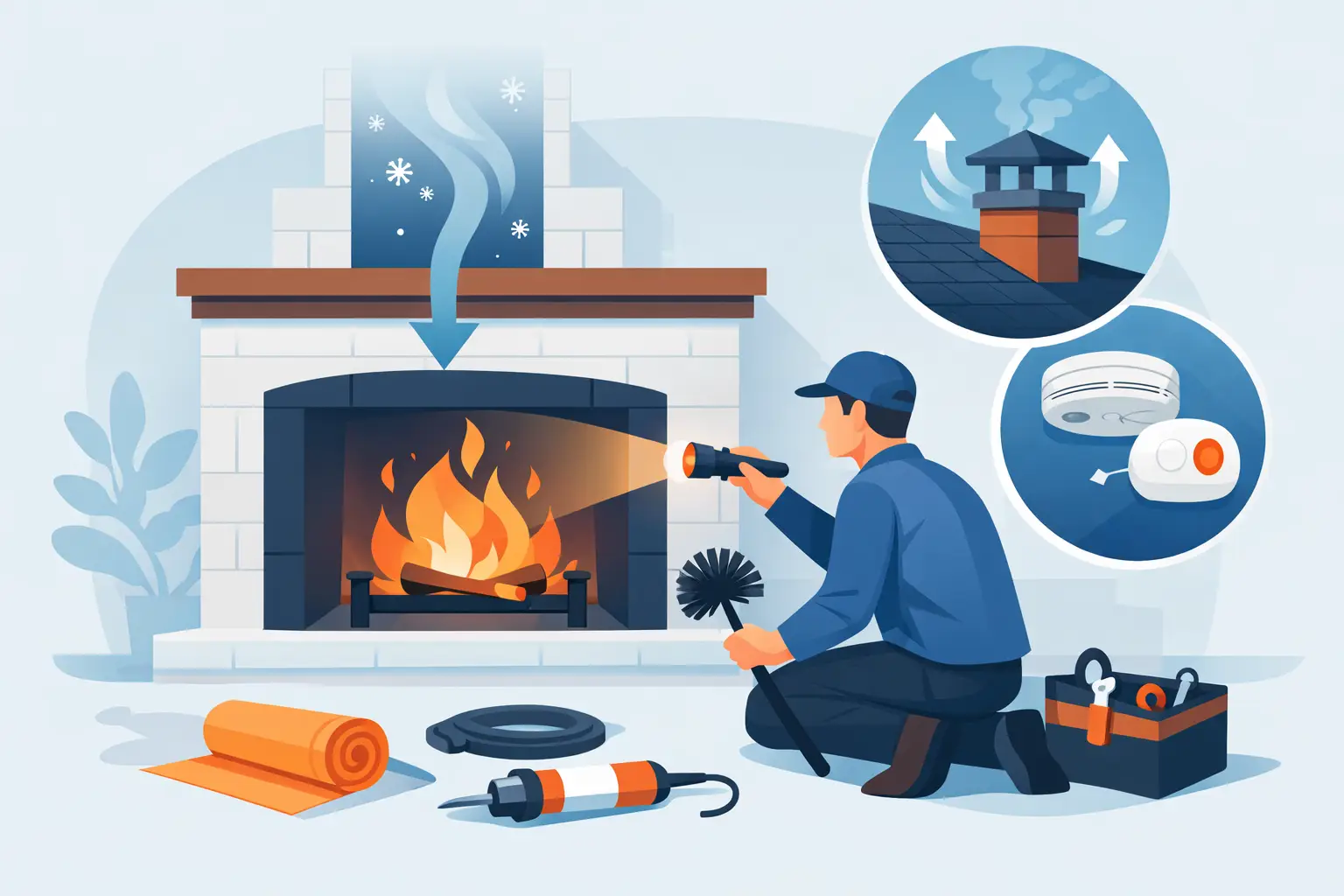
A fireplace should pull smoke, gases, and odors up the chimney – not send them back into your living room. If you are searching for how to fix fireplace draft issues, start by treating the problem as a safety concern rather than a simple comfort problem. A poor draft can signal a cold flue, restricted chimney, competing exhaust appliances, or damage that needs professional attention.
For homeowners in northeastern Ohio and western Pennsylvania, draft problems often show up when the first cold-weather fire is lit. Chimneys that have sat unused through humid summers can have dampness, debris, animal nesting material, or deteriorating components that affect performance. The right solution depends on what is preventing the chimney from establishing a steady upward flow.
A chimney drafts because warm air and combustion gases rise. When the flue is warm and open from the firebox to the top of the chimney, it creates upward movement that carries smoke outside. Anything that blocks, cools, or overpowers that movement can cause smoke to spill into the room.
The most common cause is a cold flue. Cold air is heavier than warm air, and on a mild day or after a long period without use, that cold air can sit in the chimney like a plug. Starting a fire with large logs before the flue has warmed can force smoke into the room.
Restricted airflow is another frequent culprit. Creosote buildup, fallen masonry, leaves, bird nests, and damaged chimney caps can narrow the passage where smoke should travel. A closed or partially closed damper can create the same symptoms. So can an improperly sized flue, a chimney that is too short for the home, or a chimney cap that is poorly designed or clogged.
Modern homes can also be too tight for a fireplace to receive enough replacement air. Kitchen range hoods, bathroom fans, clothes dryers, and high-efficiency HVAC equipment may pull air out of the house faster than the fireplace can pull air up the chimney. In that situation, the fireplace may compete with the rest of the home for airflow.
Before lighting another fire, make sure the damper is fully open. The damper is usually located above the firebox, and its handle or control may be difficult to identify in older fireplaces. Do not assume it is open because the handle moves. A chimney professional can verify its position and condition during an inspection.
Next, look for obvious signs of blockage without reaching into the flue or climbing onto the roof. Check whether the firebox contains unusual debris, whether daylight is visible when it should be, and whether a strong odor, dampness, or loose material is present. A blocked chimney is not a do-it-yourself cleaning project, particularly if there is creosote or damaged masonry inside the system.
If the chimney is clear and the damper is open, try warming the flue before building a full fire. Open the damper, open a nearby window slightly, and hold a lit rolled newspaper or fire starter near the upper area of the firebox to encourage the cold air in the flue to reverse direction. Keep your face and hands clear, use only appropriate fire-starting materials, and stop if smoke continues entering the room.
Once the flue begins drawing upward, build a small, hot fire with properly seasoned firewood. Wet or green wood produces more smoke and cooler combustion, making a draft issue worse while also adding creosote to the chimney. Avoid using cardboard, trash, treated lumber, or liquid fire starters. These materials can produce excessive flames, harmful fumes, or chimney damage.
If smoke still enters the room after these basic checks, do not keep experimenting with larger fires. Repeated smoke spillage can expose your household to carbon monoxide and leave soot throughout the home.
A fireplace that drafts well on one day but smokes on another may be affected by negative air pressure. This is especially common when a powerful exhaust fan or dryer is operating. The appliance pulls indoor air out, and the home may try to replace that air through the fireplace and chimney.
As a simple diagnostic step, turn off exhaust fans and the dryer, then open a nearby window one or two inches before starting a small fire. If the fireplace suddenly drafts properly, the home likely needs more makeup air when the fireplace is in use.
The long-term fix varies by house. It may be as simple as changing when certain appliances run. In other homes, a qualified contractor may recommend a dedicated outside-air solution, HVAC adjustments, or an evaluation of the fireplace and chimney design. The goal is not merely to get smoke moving upward once. It is to create reliable, safe combustion conditions every time you use the appliance.
A chimney sweep can remove soot, creosote, nesting material, and other obstructions that interfere with draft. Cleaning is often the right answer when the fireplace previously worked well but has gradually become smoky, smells unpleasant, or has not been serviced in several seasons.
Creosote deserves special attention. It is a flammable byproduct of burning wood, and it can build up faster when fires smolder, wood is damp, or the chimney stays cool. A restricted flue may draft poorly, but it can also create a chimney fire risk. Cleaning should be paired with an inspection so the technician can identify whether buildup is the only issue or a symptom of a larger problem.
Gas fireplaces can have draft-related concerns as well. Although they do not create wood smoke, venting systems can become obstructed, corroded, disconnected, or improperly adjusted. If a gas fireplace has unusual odors, soot, delayed ignition, pilot problems, or changes in flame appearance, turn it off and arrange professional service. Do not attempt to alter gas components or vent connections yourself.
Some draft problems come from the chimney structure rather than the firebox. A cracked crown, missing cap, deteriorated mortar joints, damaged flashing, or loose brickwork can allow water into the system. Over time, moisture damages liners and masonry, creates obstructions, and weakens components that support proper venting.
A damaged or undersized liner can also affect performance. Chimney liners protect the masonry from heat and corrosive byproducts while providing a correctly sized path for exhaust. If a fireplace, stove insert, or heating appliance was changed without properly sizing the liner, the system may struggle to draft as intended. Liner work should be designed around the specific appliance, fuel type, chimney height, and manufacturer requirements.
Chimney height and placement matter, too. Wind patterns around a roofline, nearby trees, additions, or taller neighboring structures can create downdrafts. A professional inspection can determine whether the chimney meets proper height and clearance requirements and whether an appropriate cap or targeted modification could help. Adding a random cap is not always the answer. The wrong cap can restrict flow or fail to address the actual cause.
Stop using the fireplace and schedule a qualified chimney inspection if smoke repeatedly enters the house, if you notice a strong smoky odor when the fireplace is not in use, or if you see falling tile, brick, or mortar in the firebox. Other concerns include a stuck damper, visible creosote, water stains near the chimney, rust on metal components, or carbon monoxide alarm activation.
A Level 1 chimney inspection is a practical starting point for many homeowners. It evaluates readily accessible portions of the fireplace and chimney system, helping identify conditions that may affect safe operation. If the inspection reveals hidden damage, a technician can explain what further evaluation or repair is actually needed, without treating every draft issue as a full rebuild.
Regular maintenance is the most reliable way to prevent a small airflow concern from becoming a frustrating or dangerous problem. Have wood-burning fireplaces and stoves inspected regularly and swept when needed based on use and buildup. Burn dry, seasoned wood, keep the damper fully open during a fire, and allow the fire to establish before adding large logs.
Protect the exterior system as well. A properly installed chimney cap helps keep out rain, animals, and leaves, while sound crowns, flashing, and mortar joints reduce water intrusion. These repairs preserve both the chimney’s structure and its ability to vent efficiently.
For homeowners in Trumbull, Mahoning, and Mercer counties, Chimney Sweeps and Masonry of America can assess draft concerns with a clear, safety-focused approach. A careful inspection can separate a simple cold-flue issue from a blockage, liner concern, or masonry repair that deserves prompt attention. A fireplace should add warmth to your home – and with the right care, it can do so without bringing smoke, uncertainty, or avoidable risk indoors.
We are a member of The National Chimney Guild. Certified Chimney Professional
 Optimized by Seraphinite Accelerator