- 330-505-6800
- Info@alifeprotector.com
- 11 North Main St , Niles Ohio 44446.

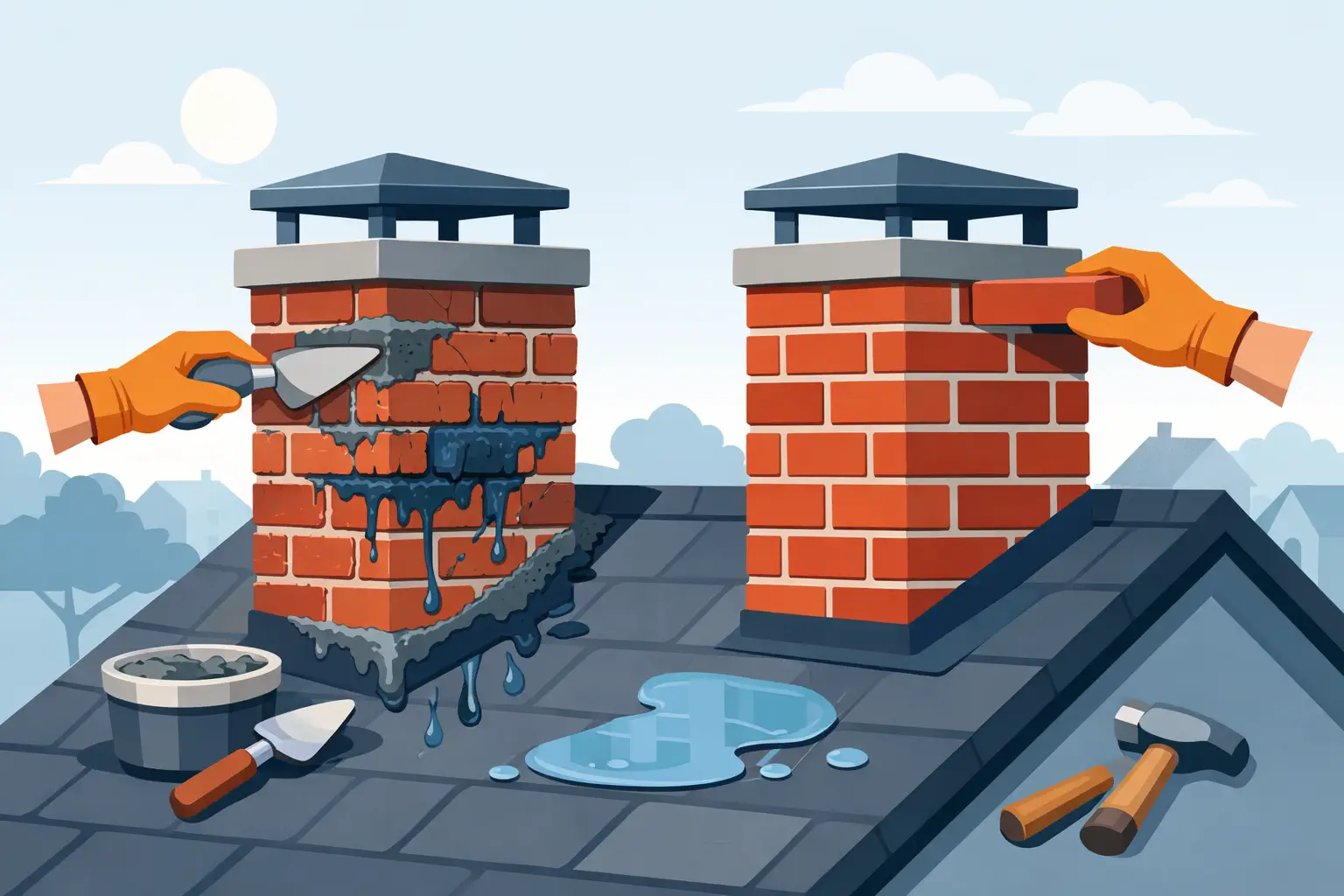
A few loose brick faces or a white, chalky stain may look like a small exterior problem. On a chimney, they can be early signs that water has entered the masonry system. To repair water damaged chimney bricks correctly, the damaged material must be addressed, but the source of the water must be corrected too. Otherwise, new mortar and replacement bricks can fail through the next Ohio or Pennsylvania freeze-thaw season.
Chimneys are exposed above the roofline, often on every side. Rain, melting snow, wind, and temperature swings all work against the brick, mortar, crown, flashing, and cap. A reliable repair begins with a clear assessment of how water is getting in and how far the deterioration has spread.
Some chimney moisture is obvious. You may see cracking mortar joints, bricks that are flaking or crumbling, discoloration, moss growth, or rust staining below the cap. Other warning signs appear indoors, including a damp odor near the fireplace, water marks on a ceiling or wall, or bits of tile or masonry collecting in the firebox.
Spalling is one of the most common forms of water damage. It occurs when brick absorbs water, then freezes and expands during cold weather. The pressure pushes the brick face outward until it chips, flakes, or breaks away. Once the protective outer face is gone, the brick can absorb even more water and deteriorate faster.
Deteriorated mortar deserves equal attention. Mortar is intended to be the sacrificial part of a masonry wall, meaning it should wear before the bricks do. When joints become cracked, recessed, or soft enough to scrape out easily, water can move behind the brickwork. Left alone, this can weaken a chimney stack, create gaps for pests, and allow moisture into the home.
Not every dark brick needs replacement. Surface dirt, soot, and harmless color variation can be cosmetic. But loose bricks, missing mortar, deep cracks, visible spalling, or a chimney that appears to lean require a professional masonry evaluation. Structural movement and widespread water damage are not repairs to postpone until spring.
Brick is porous by nature, so a chimney needs several components working together to shed water. Repairing the visible brick without checking these components is one of the most expensive mistakes a property owner can make.
The chimney crown is often a major source of trouble. This sloped concrete top should extend beyond the chimney sides and direct water away from the masonry. Cracks in the crown allow water directly into the chimney structure, where it can damage bricks from the inside out. A properly built crown repair or replacement can prevent repeated deterioration below it.
Flashing is another frequent culprit. Flashing seals the area where the chimney meets the roof. If it has pulled loose, rusted through, or been improperly installed, water may enter the attic, roof structure, or masonry behind the brick. A roof leak near the chimney is not always a brick problem, but it should be investigated promptly.
The chimney cap and flue cover matter as well. A cap helps keep rain, snow, leaves, and animals out of the flue. Missing or damaged caps can lead to moisture inside the chimney, liner damage, and staining around the fireplace. In some cases, condensation from an improperly sized or damaged liner can also contribute to interior moisture concerns.
A thorough inspection looks at the full system: brickwork, mortar joints, crown, flashing, cap, flue, and the condition of the chimney from the roofline down. That approach identifies the actual cause instead of recommending work that only covers the symptoms.
The appropriate repair depends on the depth and extent of damage. For isolated failed mortar joints, repointing may be enough. A masonry professional carefully removes deteriorated mortar to a suitable depth without damaging adjacent bricks, then installs new mortar that is matched to the existing masonry as closely as possible in strength, color, and profile.
Mortar matching is more than an appearance issue. Mortar that is too hard can force moisture through older, softer brick instead of allowing the joint to manage movement and weathering as intended. This is particularly relevant for historic homes and aging chimneys throughout northeastern Ohio and western Pennsylvania. The right repair protects the original masonry rather than creating a new point of failure.
When individual bricks have spalled, cracked through, or become loose, they should be removed and replaced. The surrounding mortar is carefully cut out, the damaged brick is taken out, and a compatible replacement is set in fresh mortar. A skilled repair blends the replacement into the existing bond pattern while restoring the chimney’s strength.
More extensive deterioration may call for partial rebuilding. If multiple courses of brick are failing, if the top of the chimney has been damaged by a broken crown, or if the stack is unstable, rebuilding the affected section may be safer and more cost-effective than patching one brick at a time. This is also the time to correct crown and flashing defects so the rebuilt masonry has a fair chance to last.
After masonry repairs have cured appropriately, a breathable water-repellent treatment may be recommended for some chimneys. This is not the same as painting or sealing the masonry with a non-breathable coating. Brick needs to release normal moisture vapor. Trapping moisture behind an inappropriate coating can accelerate spalling and cause the repair to fail.
Hardware-store caulk, surface mortar smears, and paint can make a damaged chimney look better temporarily. They rarely solve water intrusion. In fact, patches that bridge over cracked mortar or conceal failed brick can hold moisture in the wall and make a later repair more involved.
Pressure washing is another concern. High-pressure water can erode soft mortar, drive water deeper into cracks, and damage already weakened brick faces. Similarly, a homeowner should avoid climbing onto a steep or wet roof to inspect chimney damage. The fall risk is real, and an unstable chimney can make the work area even more hazardous.
Small, accessible mortar touch-ups may seem manageable, but chimney work requires careful judgment. The best repair method depends on the chimney’s age, brick condition, mortar composition, height, roof access, and the source of the leak. An honest assessment can distinguish between a targeted repair and work that needs to be expanded for safety and long-term performance.
Once the masonry has been restored, regular care helps protect the investment. Schedule a chimney inspection at least annually, especially before regular fireplace or wood stove use. An inspection can catch cracked crowns, failed flashing, damaged caps, liner concerns, and early mortar deterioration before water reaches the interior of the chimney.
Keep tree limbs trimmed back from the roofline when possible. Branches can scrape masonry, damage caps, and deposit leaves that hold moisture around the chimney. Watch for new stains, crumbling material, or water in the firebox after heavy rain or snowmelt. These changes are worth reporting even if the fireplace still appears to operate normally.
For homeowners who use wood-burning appliances, chimney sweeping and inspection are part of the same prevention strategy. Moisture damage, liner issues, and creosote buildup can affect both the masonry exterior and the safe operation of the heating system. Addressing them together helps avoid fragmented repairs and unnecessary disruption.
Chimney Sweeps and Masonry of America provides clear evaluations and high-quality chimney masonry repair for homeowners and businesses in Trumbull, Mahoning, and Mercer counties. If you notice failing brick or mortar, arrange an inspection before another season of rain, snow, and freezing temperatures turns a manageable repair into a larger restoration project. A sound chimney should keep water outside, where it belongs.
We are a member of The National Chimney Guild. Certified Chimney Professional
 Optimized by Seraphinite Accelerator